

The Silent Stage
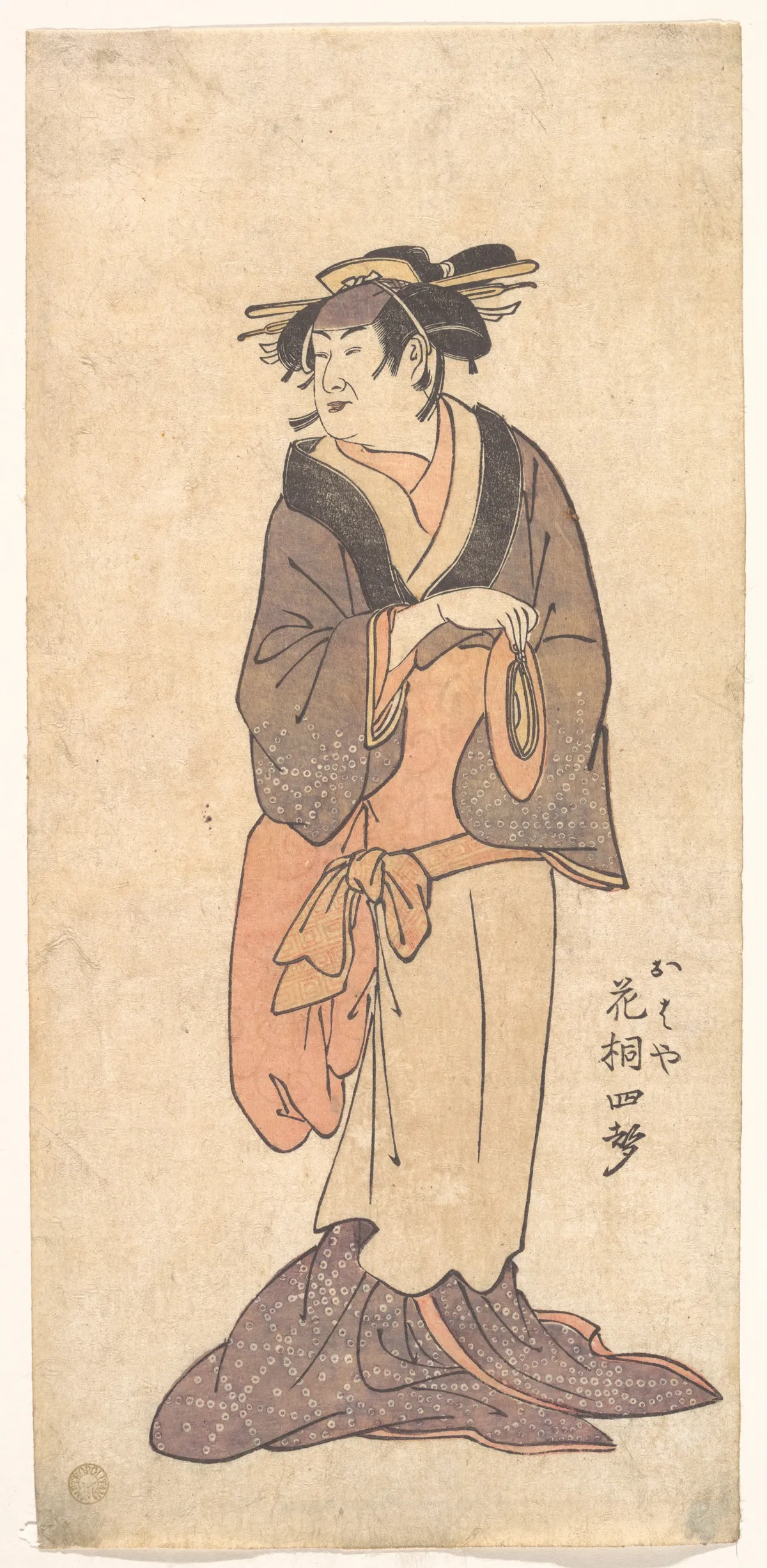
The lanterns flicker. Shadows dance on the narrow stage. Hanagiri Toyomatsu stands as Ohaya, the air heavy with anticipation. His kimono sways with a whisper of silk against wood. The audience breathes as one, awaiting the delicate turn of his wrist, the arch of his brow.
A hush falls like snow. The actor's eyes, painted with precision, scan the crowd. They hold secrets of past performances, echoes of roles once played. His movements are slow, deliberate. Each gesture a silent poem, each step a rhythmic beat on the wooden boards.
Toyomatsu embodies Ohaya, an illusion perfected by years of practice. The weight of the costume presses down, fabric layered like stories untold. He moves, a marionette of grace, each thread woven with skill and tradition.
A distant drum marks the passage of time. The fans flutter, a breeze in the stillness. His voice, though yet unheard, resonates in the minds of spectators. The story unfolds in muted elegance, a tapestry of motion against the canvas of night.
Historical Echo
In the dim light, the art of onnagata breathes life into the character of Ohaya. Hanagiri Toyomatsu, a master among peers, transforms on stage, transcending the boundaries of gender and identity. This print captures a moment in the vibrant world of Edo kabuki, where actors like Toyomatsu became living legends, their portrayals haunting the memory long after the curtain fell.