

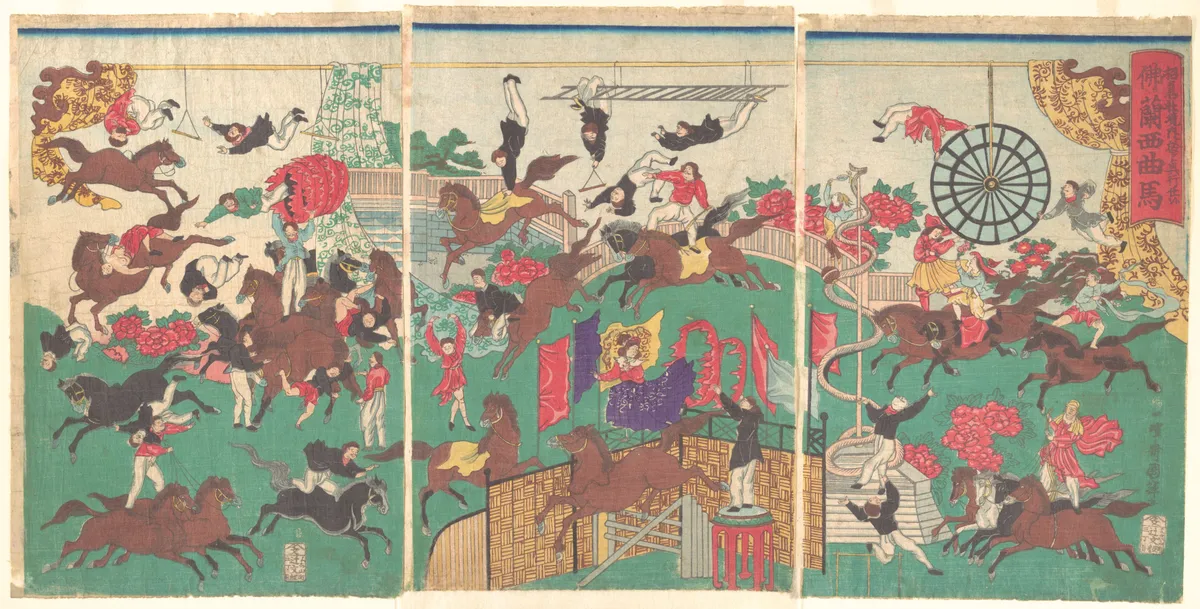
The Circus at Asakusa
The air is alive with murmurs and the scent of damp soil. Lanterns sway gently above, casting a warm, flickering glow on the bustling crowd. The ground of Asakusa Kannon temple, usually a place of solemn reverence, now vibrates with anticipation. The French equestrian circus has arrived.
A horse gallops into view, its hooves thudding softly against the earth. The rider, a foreigner with a confident air, balances effortlessly. Eyes widen and children gasp, their small hands clutching at their mothers' sleeves. The horse circles gracefully, its mane a cascade of motion.
Nearby, a vendor shouts, his voice barely rising above the din. The sweet aroma of roasted chestnuts mingles with the chill of the evening. Wooden stalls creak under the weight of curious onlookers, each eager to catch a glimpse of this Western marvel.
A clown cartwheels past, his bright costume a blur of colour against the muted tones of temple architecture. Laughs ripple through the crowd, breaking the night's stillness. An acrobat leaps, her silhouette momentarily framed against the starlit sky.
The temple bell tolls, its deep sound resonating through the night. The spectacle pauses, allowing the sacred and the worldly to coexist in this peculiar harmony. The circus, a fleeting wonder, etches itself into the memory of all who gather.
Historical Echo
In 1871, Japan was opening its doors to the world. The Meiji Restoration brought foreign influences, and with them, a fascination with the West. The French equestrian circus, a symbol of this cultural exchange, captivated audiences with its novelty and charm. Asakusa, a centre of entertainment in Edo, became a stage for this encounter. The air was thick with change, echoing the pulse of a nation on the brink of transformation.