

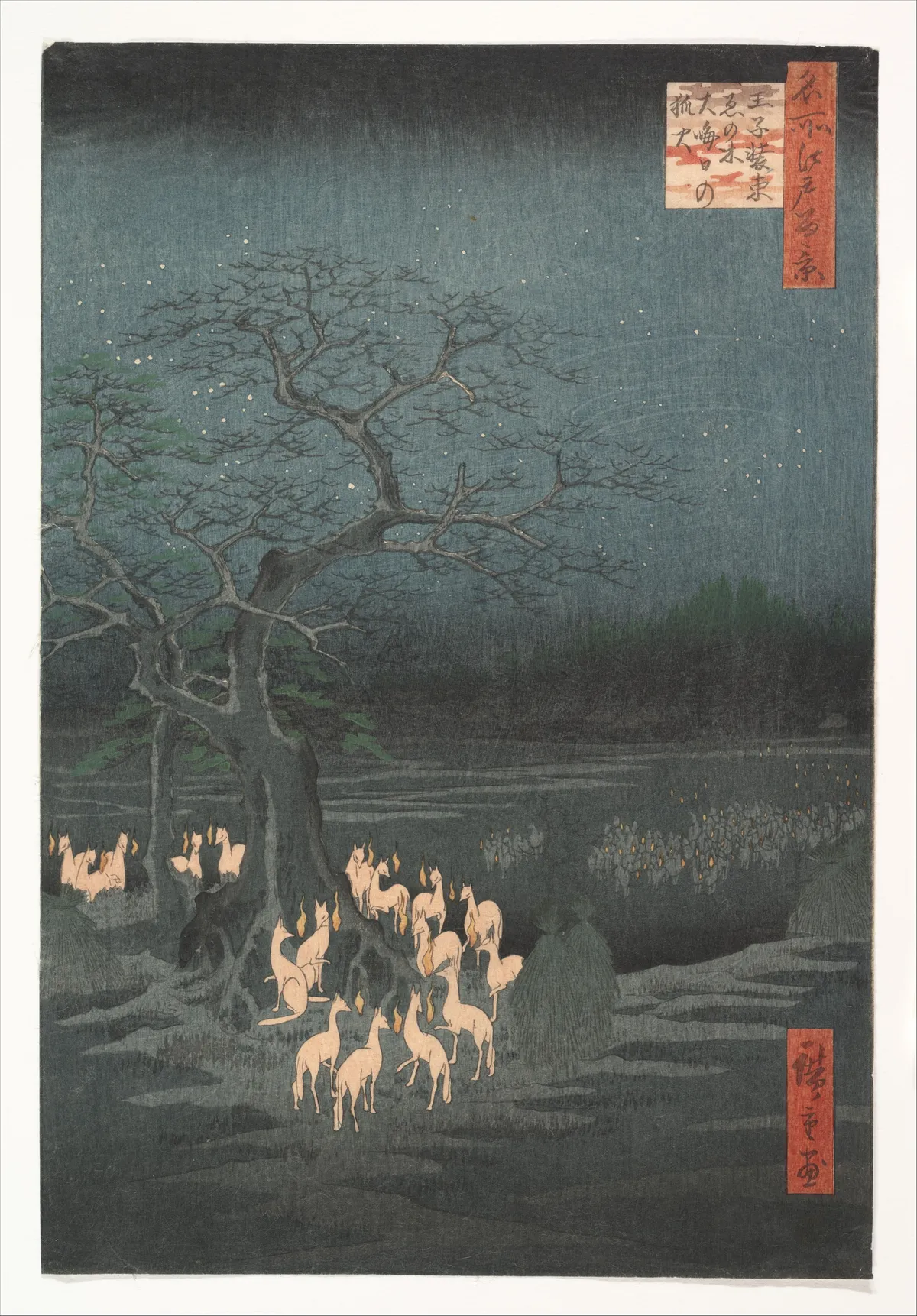
New Year's Eve Foxfires
The night air was cold, biting. On the outskirts of Ōji, a lone tree stood, its twisted branches stretching towards the dark sky. Beneath it, the ground was hard, frozen. Silence hung heavily, broken only by the distant rustle of dry leaves.
Then, a flicker. Small flames danced at the base of the tree, their light eerie and blue. Foxfires. They whispered in the night, casting shadows that played tricks on the eyes. The tree stood unchanged, a silent witness to the spectacle.
Figures appeared, slipping between the trees. Foxes, sleek and silent, drawn by the fire's call. Their eyes glowed, reflecting the flames. They moved with purpose, a procession weaving through the night, gathering under the ancient tree as they had for centuries.
The moon shone coldly above, watching the ritual unfold. A breeze stirred, carrying the scent of pine and earth. The foxes paused, listening.
In the distance, the faint echo of temple bells marked the passing of time. Midnight approached. The foxfires flared brighter, a beacon in the winter dark. A new year was coming, and the foxes would be ready.