

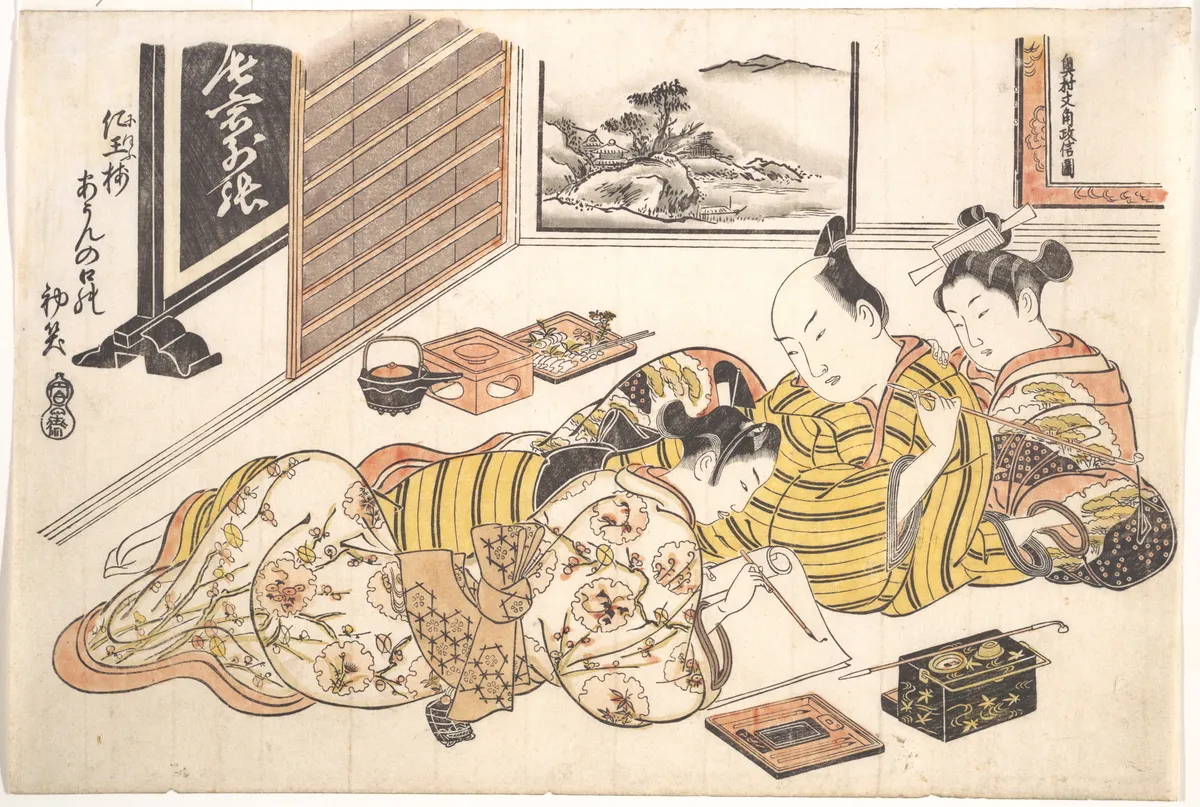
Mounds of Dyed Colours
The room is dimly lit. Shadows play on the shoji screens. A flickering candle casts a warm glow over silken fabrics. The air is thick with the scent of incense. Two figures, wrapped in layers of patterned kimono, move with deliberate slowness. The rustle of silk against tatami fills the room.
He whispers something inaudible, his breath a gentle breeze against her neck. She closes her eyes, feeling the weight of his words more than hearing them. The world outside fades, leaving only the soft contours of their shared space.
A distant bell tolls, marking time that slips unnoticed. They are cocooned in a world of their own. The pages of the erotic book capture their intimacy in vivid detail. Each brushstroke, a testament to fleeting moments of desire.
The candle flickers again, casting long shadows that dance across the walls. The figures remain, suspended in an eternal embrace. The night stretches on, silent witnesses to their quiet passion.
Historical Echo
In the Edo period, intimacy was both an art and a secret. Okumura Masanobu captured this delicate balance. His prints, whispered stories of private worlds. They were guides for the boudoir, teaching the art of seduction through ink and paper. The "Mounds of Dyed Colours" was not just a book. It was an invitation into another realm, where time and space blurred. An era when the beauty of the moment was more vivid than reality itself.