

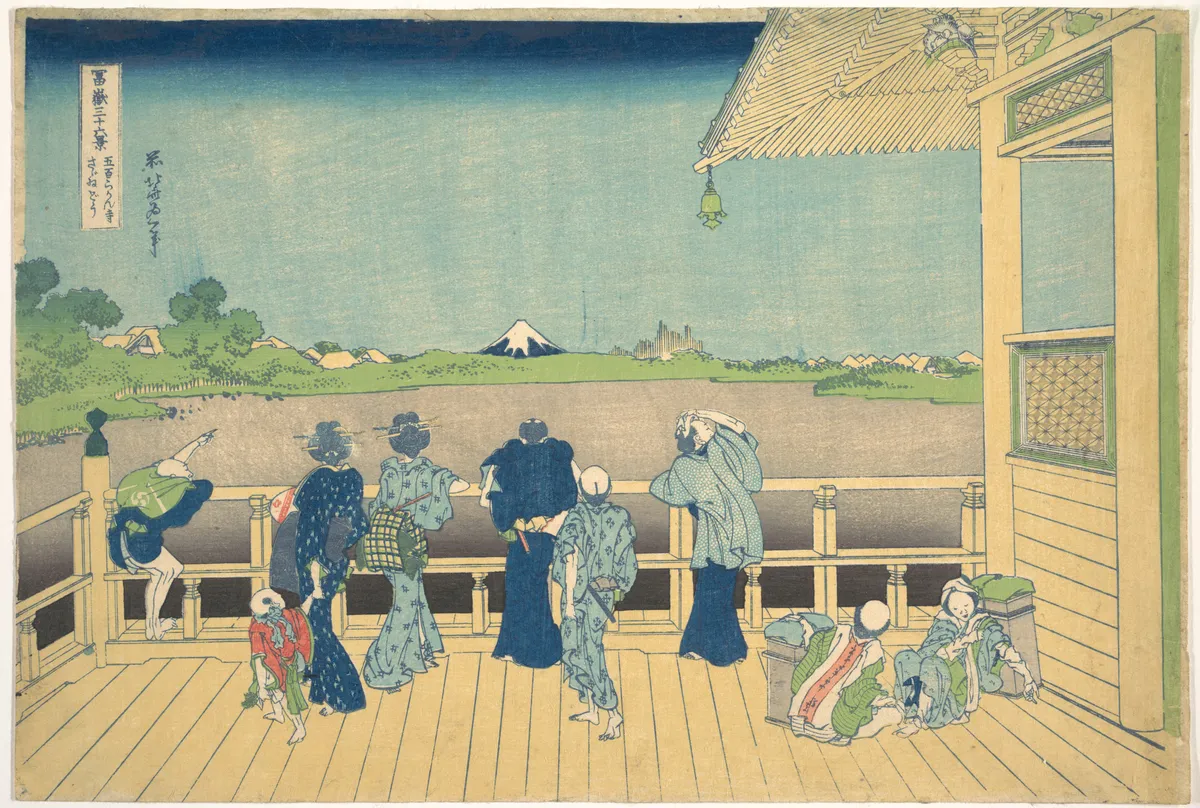
Silent Reverence
A soft mist clings to Sazai Hall. It is early. The air is still. Wooden beams creak in the silence. The hall perches above the temple grounds, spiralling into the sky. Each step is deliberate. Each step echoes in the hollow stairwell. Lanterns flicker. Shadows dance on paper screens.
Mount Fuji looms, distant yet present, a silent guardian. Its peak pierces the horizon, shrouded in clouds. Pilgrims tread the worn path. Their sandals whisper against the earth. They carry prayers in their hearts. The air is heavy with incense and devotion.
Leaves rustle. The temple monks move like shadows. Their robes brush the stone. They chant, voices low, steady. The prayers ripple, filling the hall, rising with the dawn.
Historical Echo
In the Edo period, spirituality intertwines with daily life. Sazai Hall stands at the Temple of the Five Hundred Arhats. It is a sanctuary, an architectural marvel. Built to inspire, to connect heaven and earth.
Katsushika Hokusai captures this serenity. His woodblock print is a doorway to a quiet world. A world where Mount Fuji watches over all, eternal and unmoving. Hokusai's lines are precise, his colours gentle. Through his art, the temple breathes.