

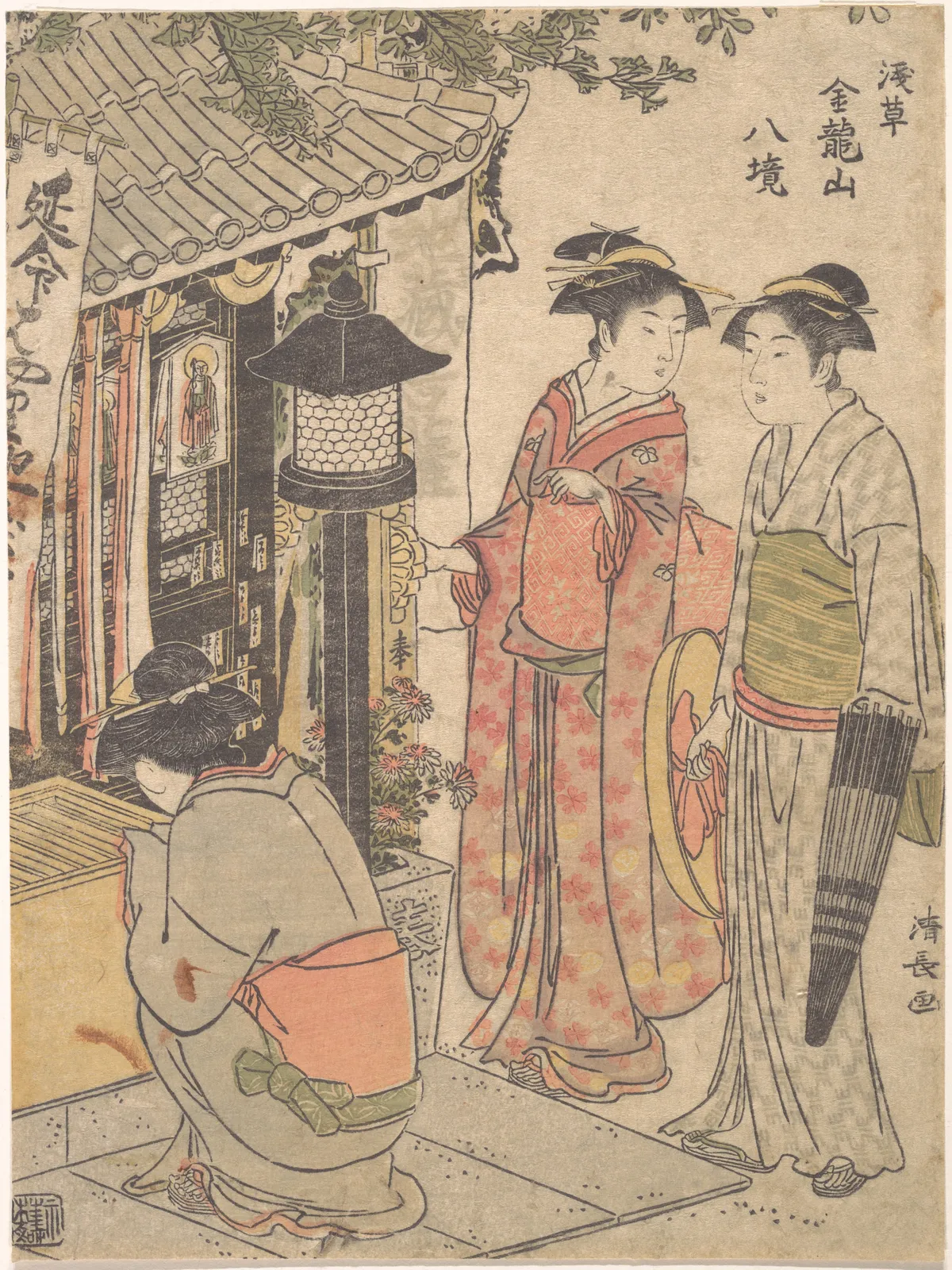
Enmei Jizo's Silent Watch
A gentle dusk envelops the scene. Shadows lengthen across the earth. The small Jizo statue stands, eternal and unmoving. Carved features softened by time. It gazes with quiet compassion, eyes half closed, mouth a serene line. Through the air, a faint scent of incense mingles with the earthy aroma of the forest floor. Nearby, leaves rustle with a whisper as a breeze passes through. The sacredness of the place hangs heavy, palpable, wrapping around the figure like a shroud.
A lone traveller stops to bow, the fabric of his kimono rustling softly. He lights a small candle, placing it gently at Jizo's feet. The flame flickers, casting a warm glow that dances across the statue's weathered face. His lips move in a silent prayer, a plea for protection on his journey. Silence follows, deep and profound.
The moon rises, illuminating the clearing with a silvery light. Shadows deepen, but Jizo remains steadfast. The traveller departs, footsteps fading into the night. Yet, Jizo watches, guardian of the weary, keeper of untold stories, as another night descends upon the Edo landscape.
Historical Echo
The figure of Jizo, a beloved deity of protection and mercy, has long been a comforting presence in Japanese culture. Known as the protector of travellers and children, Jizo statues are often found along roadsides, in cemeteries, and at temples. During the Edo period, such woodblock prints would evoke a sense of piety and reassurance, capturing the spiritual essence of the time. Torii Kiyonaga's delicate portrayal preserves this timeless reverence, allowing viewers to connect with the quiet spirituality of an era long past.