

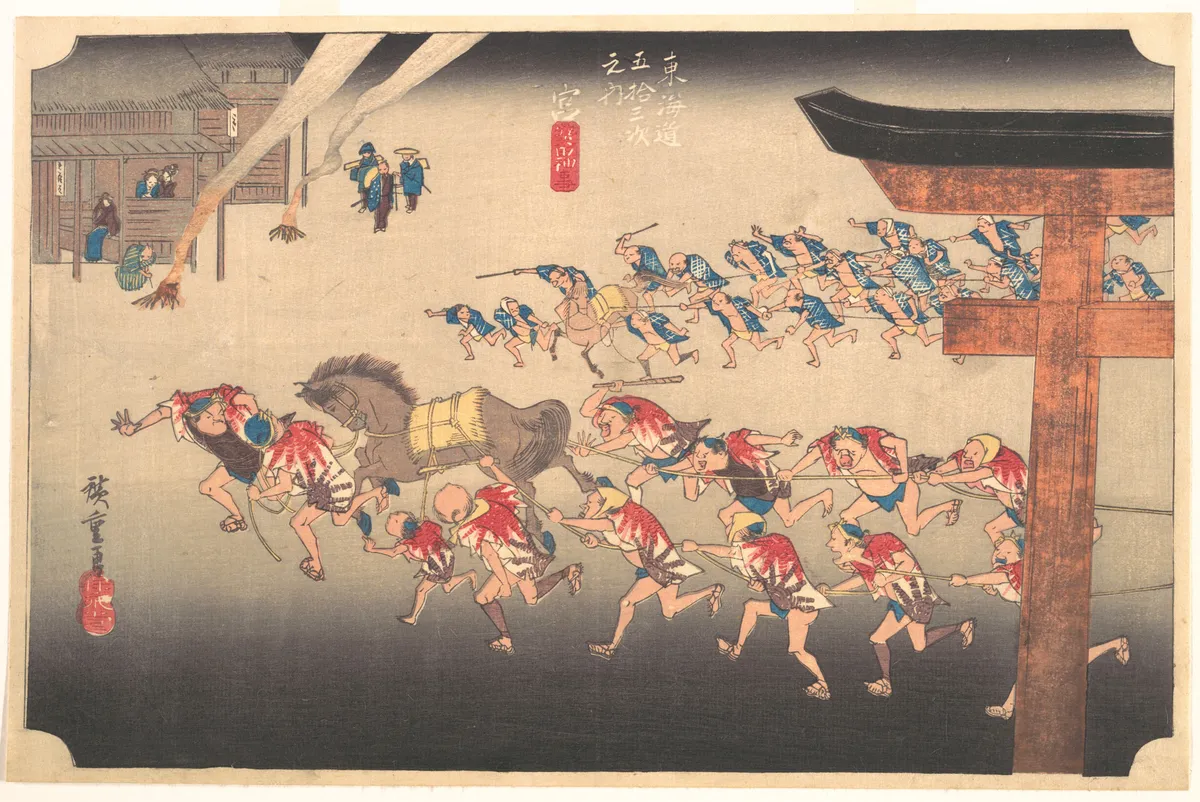
Festival at Atsuta Temple
Dusk falls over Atsuta Temple. Lanterns flicker in the cooling air. Their glow dances across eager faces. The festival hums like a distant sea. Crickets chirp in the underbrush, unseen but present. The crowd moves with a languid rhythm, ebbing and flowing beneath the temple's ancient eaves.
A breeze whispers through the pines. It carries scents of grilled fish and sweet sake. Children dart between stalls, laughter pealing like bells. A vendor calls out, his voice a sharp note against the evening's lull. His wares gleam under the lanterns' light—bright confections, small wooden toys.
Near the temple steps, an old man watches quietly. His eyes trace the silhouettes of dancers, their shadows long against the ground. He remembers another festival, many years past. Then too, lanterns had swayed in the night. Then too, the air had been thick with voices and incense.
Time folds into itself here. The temple stands, eternal and unmoving, amid the ceaseless flow of life. Beneath its roof, prayers rise like smoke, curling into the darkening sky.
Historical Echo
Atsuta Temple, a sacred site in Nagoya, has been a place of worship for centuries. Known for its festivals, it draws visitors from far and wide. Utagawa Hiroshige captured such a scene, embedding it in the wood and ink of his print. His work reflects the vibrant life of Edo Japan, a world where tradition and celebration entwined beneath the temple's watchful gaze.