

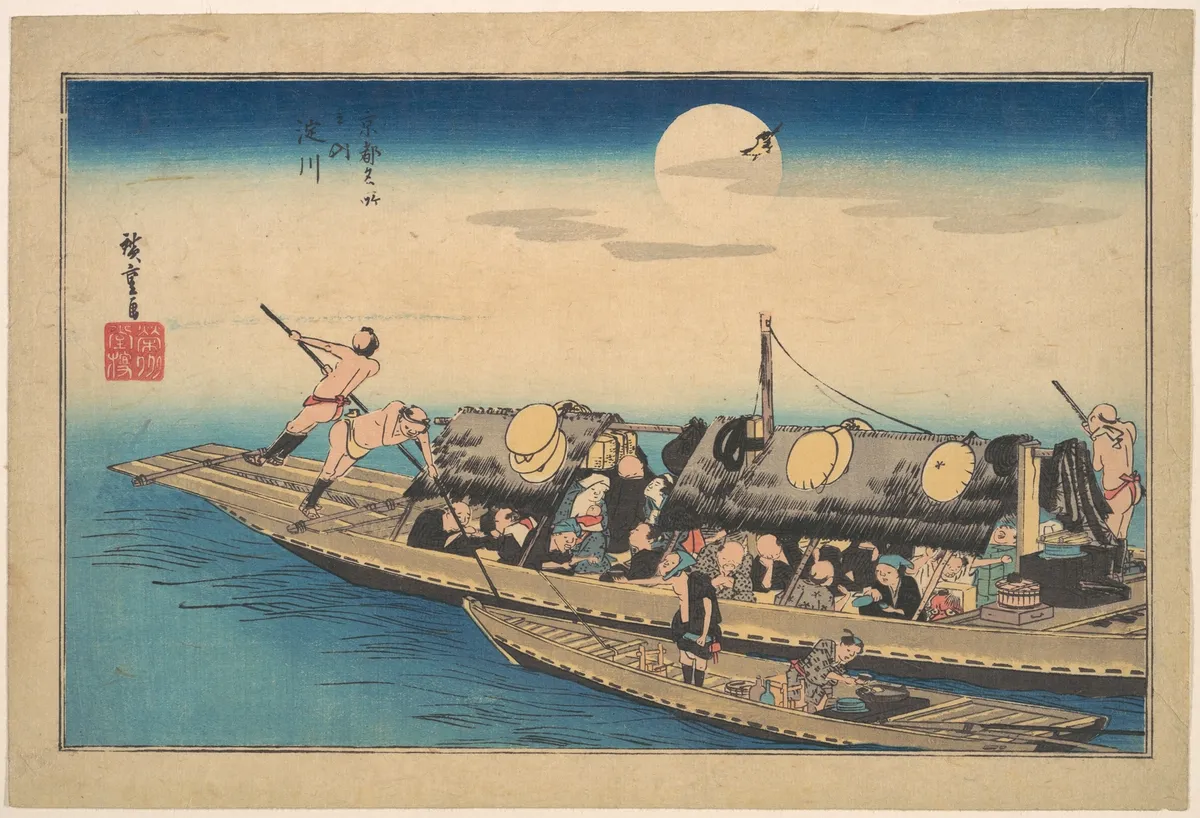
The Silent River
The Yodo River flows quietly. Mist clings to the water's surface, blurring the horizon. Boats drift, their sails catching the faintest breeze. Fishermen move with purpose, their nets heavy and damp. The air is thick with the scent of river reeds and wet earth. In the distance, the outline of Kyoto's mountains looms, softened by the morning light.
A lone figure stands on the shore, watching the river's slow course. He listens as water laps against the wooden hulls. The sound is steady, calming. He breathes deeply, feeling the weight of his robes, the chill of the morning air on his skin. The river is a constant, a witness to countless dawns.
The city awakens, but here by the Yodo, time stretches, languid and unhurried. The boats continue their gentle dance, a quiet symphony of movement. The figure turns away, footsteps soft on the damp ground. Behind him, the river flows on, eternal and unchanging.
Historical Echo
In 1834, Utagawa Hiroshige captured the Yodo River's tranquil beauty. This woodblock print, part of his series on Kyoto's famous places, reflects an era when life moved at the river's pace. The Yodo, vital for trade and travel, linked Kyoto to the sea. Hiroshige's work offers a glimpse into this world, where nature and humanity coexisted in harmonious rhythm.