

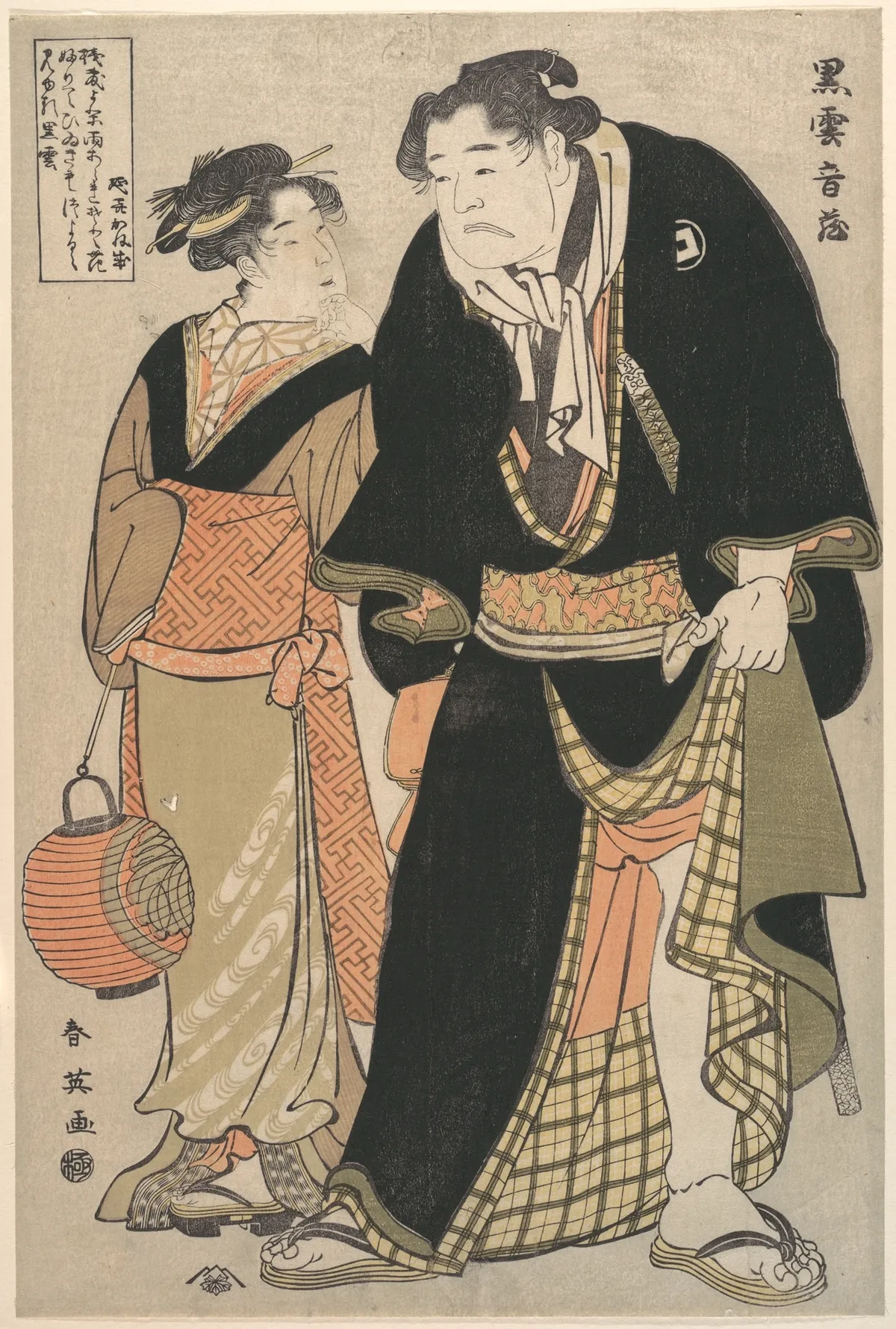
A Quiet Encounter
The air was thick with anticipation. A summer evening's glow settled over the narrow streets. Lanterns flickered, casting wavering shadows on the wooden panels of the teahouse. Inside, the soft rustle of silk and the murmur of voices created a gentle symphony.
Kurogumo Otozō, a towering figure of strength, stood at the entrance. His broad shoulders blocked the fading light as he entered. The floorboards creaked under his weight, each step measured and deliberate. His eyes, keen and observant, scanned the room.
Naniwaya Okita, delicate as a blossom, moved with grace among the patrons. Her presence was a soothing contrast to the sumo's imposing stature. As she approached Otozō, the room seemed to hold its breath. Her kimono whispered softly against the tatami, a subtle dance in the evening hush.
A simple exchange of glances, a fleeting moment, yet it spoke volumes. The weight of expectation, the unspoken connection between the wrestler and the waitress. In the quietude of the teahouse, time slowed, suspended in the embrace of their silent communication.
Outside, the city continued its relentless rhythm. Yet within these walls, a moment of stillness blossomed, fragile and profound.
Historical Echo
Katsukawa Shun'ei captured the essence of Edo's vibrant culture. The simplicity of everyday encounters, magnified in the quiet intimacy of his art. Here, in the early 1790s, the bustling world paused to reveal its hidden poetry.