

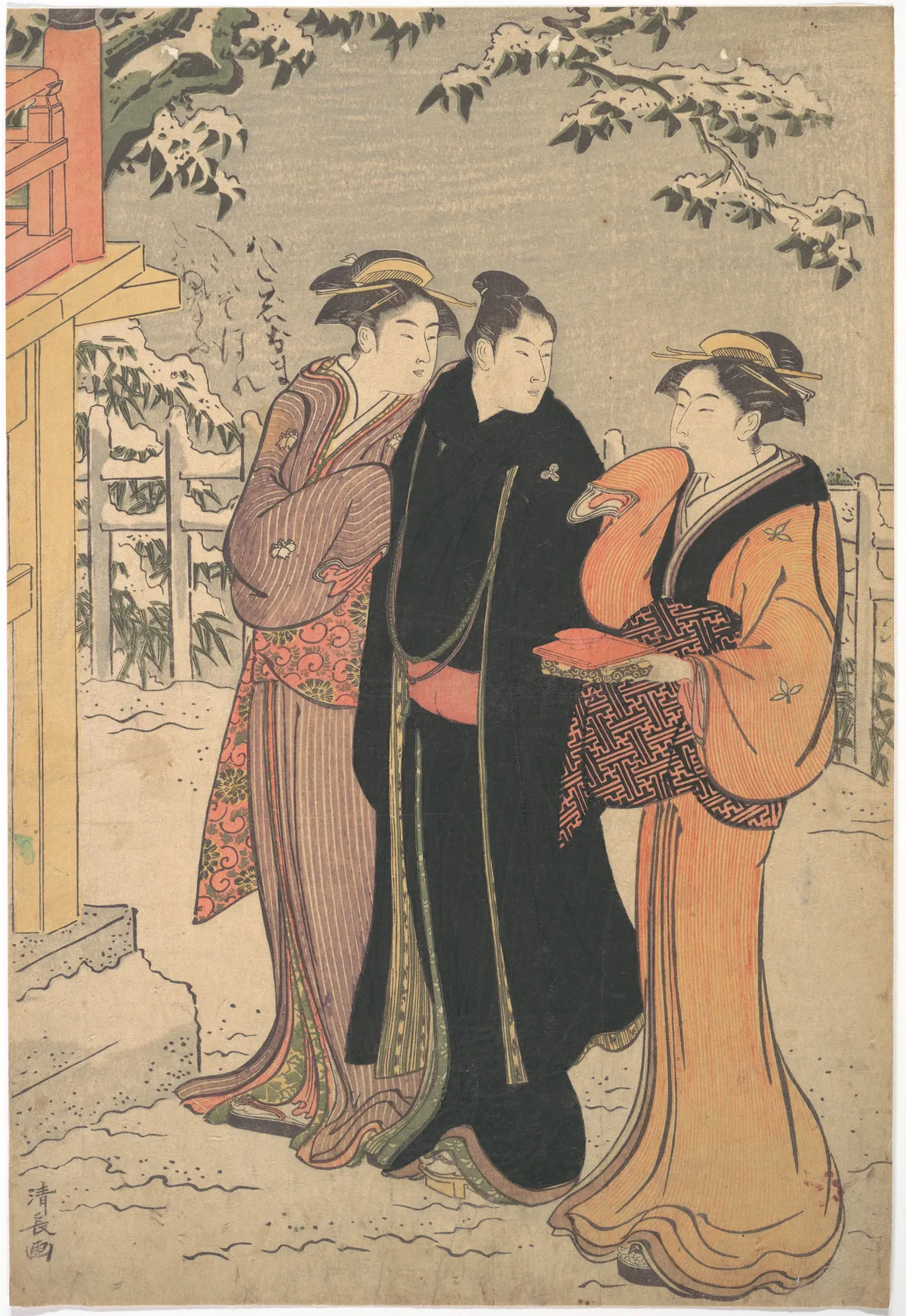
Approaching the Temple
The path was silent. Only the soft rustle of kimono against stone broke the stillness. A man in a black haori led the way, his silhouette stark in the fading light. Behind him, two women followed, their robes whispering secrets to the breeze.
The temple loomed ahead, its gates half-open, inviting yet solemn. Lanterns flickered, casting shadows that danced like spirits across the gravel. The scent of pine lingered in the air, mingling with the faint aroma of incense from within the temple grounds.
Each step was deliberate, a quiet conversation between footfalls and earth. The man's haori shifted with the evening breeze, a dark banner against the twilight. The women walked with grace, their eyes lowered, lost in thought or prayer.
The world around them was a muted palette of greys and blues, the day's colours drained away with the setting sun. Yet, in the silence, there was a warmth, a promise of solace within the temple's embrace. As they neared, the air grew heavier with anticipation, each breath a reminder of the sacred space they approached.
Historical Echo
In the Edo period, temple visits were common yet sacred rituals. The haori, worn by men, symbolised dignity and formality. Women, in their vibrant kimonos, added grace to the solemnity. Torii Kiyonaga captured such moments with an intimacy that echoes through time. His prints often depict the intersection of the everyday with the spiritual, where mundane paths lead to places of profound quietude.