

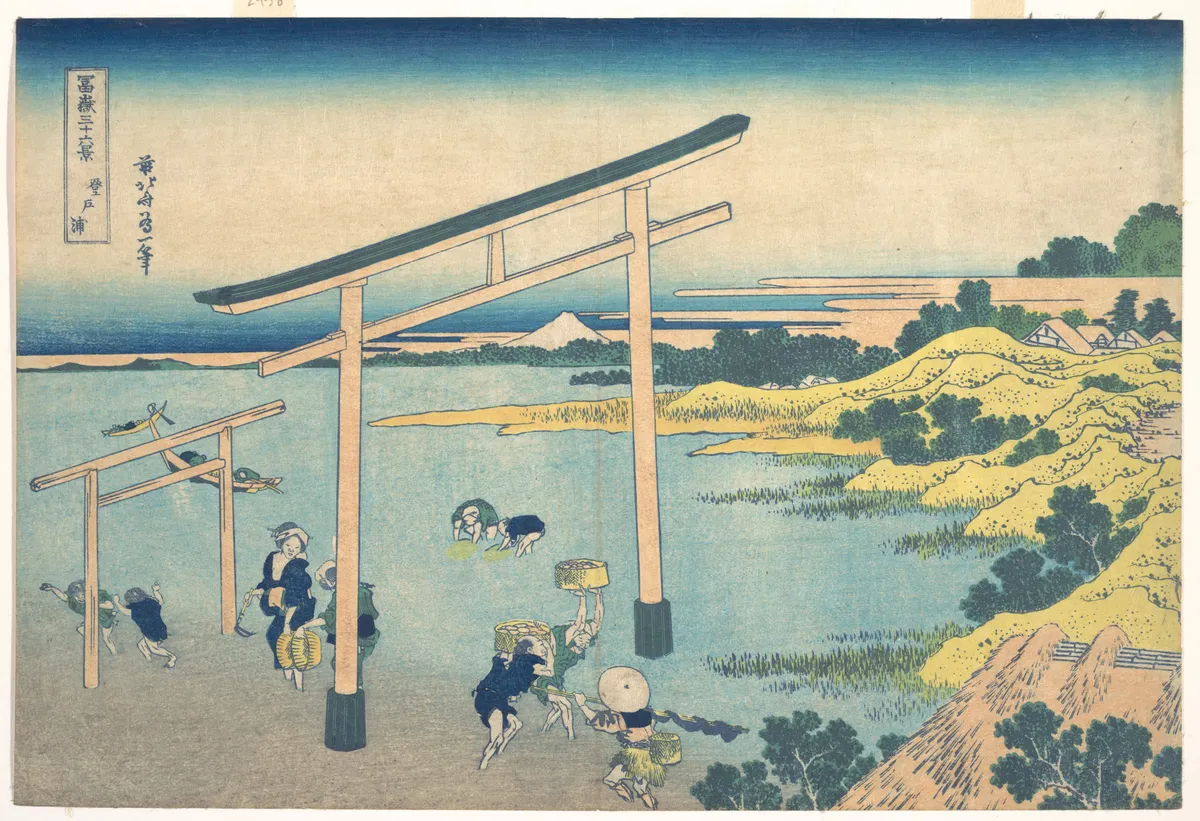
Calm Over Noboto Bay
The sea murmurs softly against the wooden hulls. Fishermen, silhouettes against the dawn, haul in their nets. Their movements are slow, patient. Overhead, the sky is a pale wash of blue, tinged with the first hints of morning light. Mount Fuji stands distant, its peak dusted with snow, a silent watchman over the bay.
The air is cool. It carries the scent of salt and damp earth. A lone bird calls out, its cry echoing across the water. Shadows shift as the sun begins its ascent. The fishermen pause, their eyes drawn to the mountain. It holds their gaze, a sacred presence in their daily toil.
In the quietude, time feels suspended. The rhythm of the sea, the gentle sway of the boats, the distant majesty of Fuji—together, they weave a moment of serene beauty. A moment captured in wood and ink, held forever in Hokusai's vision.
Historical Echo
In the early 19th century, Hokusai captured Japan’s landscapes with delicate precision. His 'Thirty-six Views of Mount Fuji' series celebrates the mountain's iconic presence. Each print reveals a different facet of Japanese life, framed by the ever-watchful Fuji. At Noboto Bay, the mountain becomes a backdrop to humble labour, an eternal witness to the ebb and flow of human endeavour. Hokusai's prints are not mere images; they are windows into a world where nature and humanity exist in quiet harmony.