

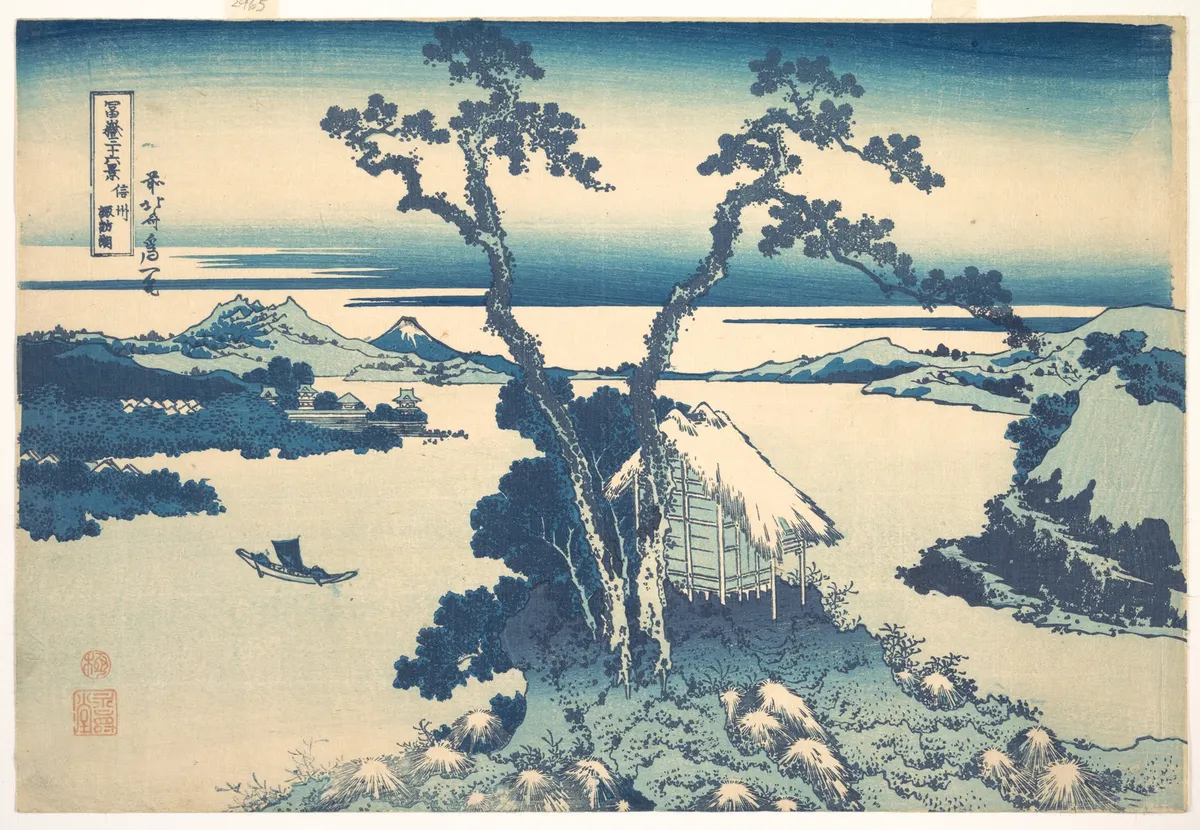
Lake Suwa at Dawn
The air is crisp. A mist hangs low over Lake Suwa, shrouding the distant peaks. The surface of the water is still, a mirror to the pale sky. In the hush of dawn, a solitary boatman guides his vessel. His silhouette cuts through the mist, every stroke deliberate, every movement serene.
Mount Fuji looms in the background, a silent guardian. Its peak is dusted with snow, catching the first light of morning. Shadows play across its slopes, a dance of light and dark. The boatman pauses, his breath visible in the cold air. He listens to the quiet, to the soft lapping of water against wood.
The world holds its breath. Each ripple on the lake is a whisper, each gust of wind a sigh. The boatman resumes his journey, the rhythm of his oar the only sound. In this moment, time is suspended, the present stretching infinitely between past and future.
Historical Echo
Katsushika Hokusai captured a timeless scene in his series, Thirty-six Views of Mount Fuji. This print, created around 1830–32, reflects the artist's profound connection to nature. Hokusai's work speaks of a Japan on the brink of change, yet deeply rooted in its reverence for the natural world. His landscapes are not just vistas, but meditations on existence, where every element is imbued with life.