

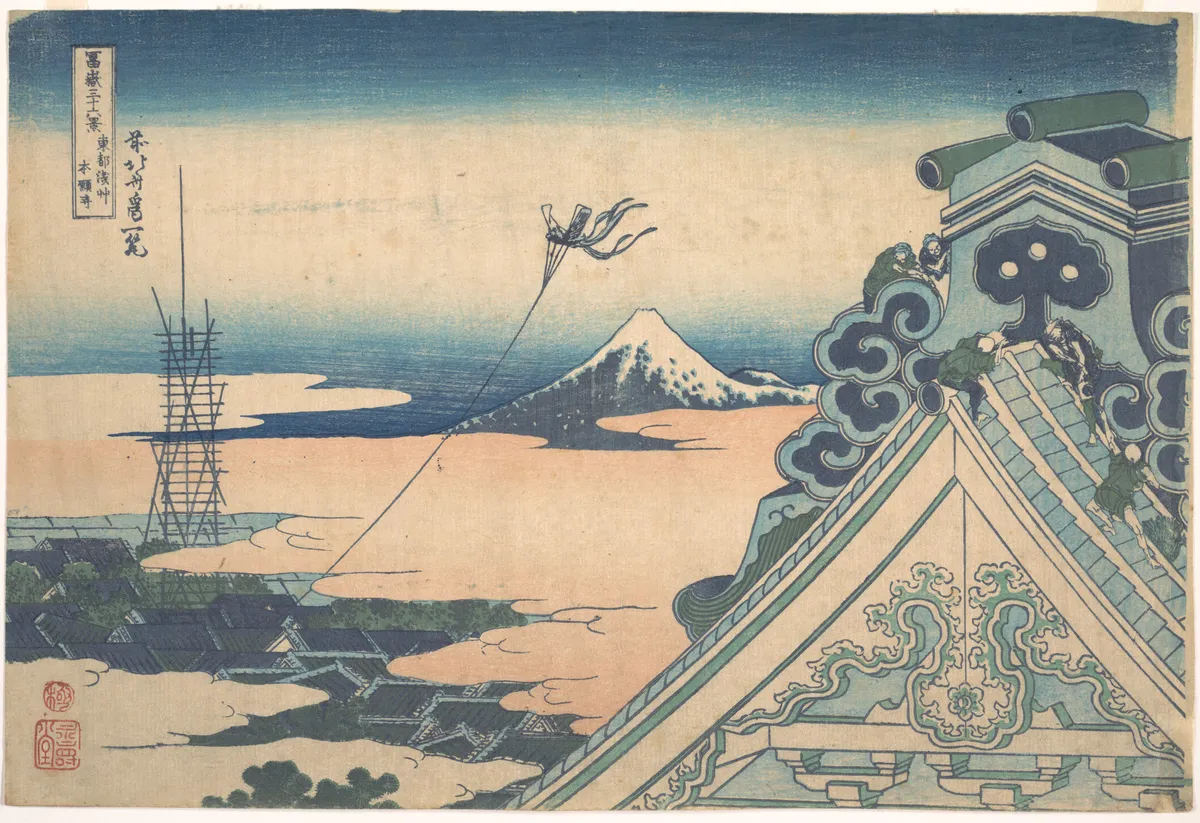
Honganji at Asakusa in Edo
The air is heavy with the scent of incense. A gentle breeze rustles through the paper lanterns, casting a dance of shadows on the stone path. People walk slowly, their wooden geta clacking softly against the ground. Above them, the curved roofs of Honganji temple rise against the backdrop of a pale sky. In the distance, Mount Fuji looms, its peak crowned with snow, silent and eternal. The temple's bell tolls, a deep, resonant sound that echoes through the narrow streets of Edo. A monk sweeps the courtyard, each stroke of the broom deliberate and measured. Nearby, a child pauses, entranced by a dragonfly's erratic flight. The city hums quietly around them, a tapestry of lives interwoven with the sacred and the mundane. Through Hokusai's eyes, we glimpse a moment suspended in time, where nature and humanity coexist in delicate harmony.
Historical Echo
In the early 19th century, Edo was a bustling city, the heart of Tokugawa Japan. Hokusai captured its essence in his famous series, "Thirty-six Views of Mount Fuji." This print showcases Honganji temple, a spiritual haven amidst the city's vibrant chaos. The temple, located in Asakusa, served as a place of worship and reflection. Its presence in the print speaks to the significance of Buddhism in Edo life. Hokusai's work offers a window into this world, where the sacred mountain, Fuji, watches over the city like a silent guardian. His art remains a testament to the enduring allure of Edo, a city where tradition and impermanence waltzed in the shadow of the great mountain.