

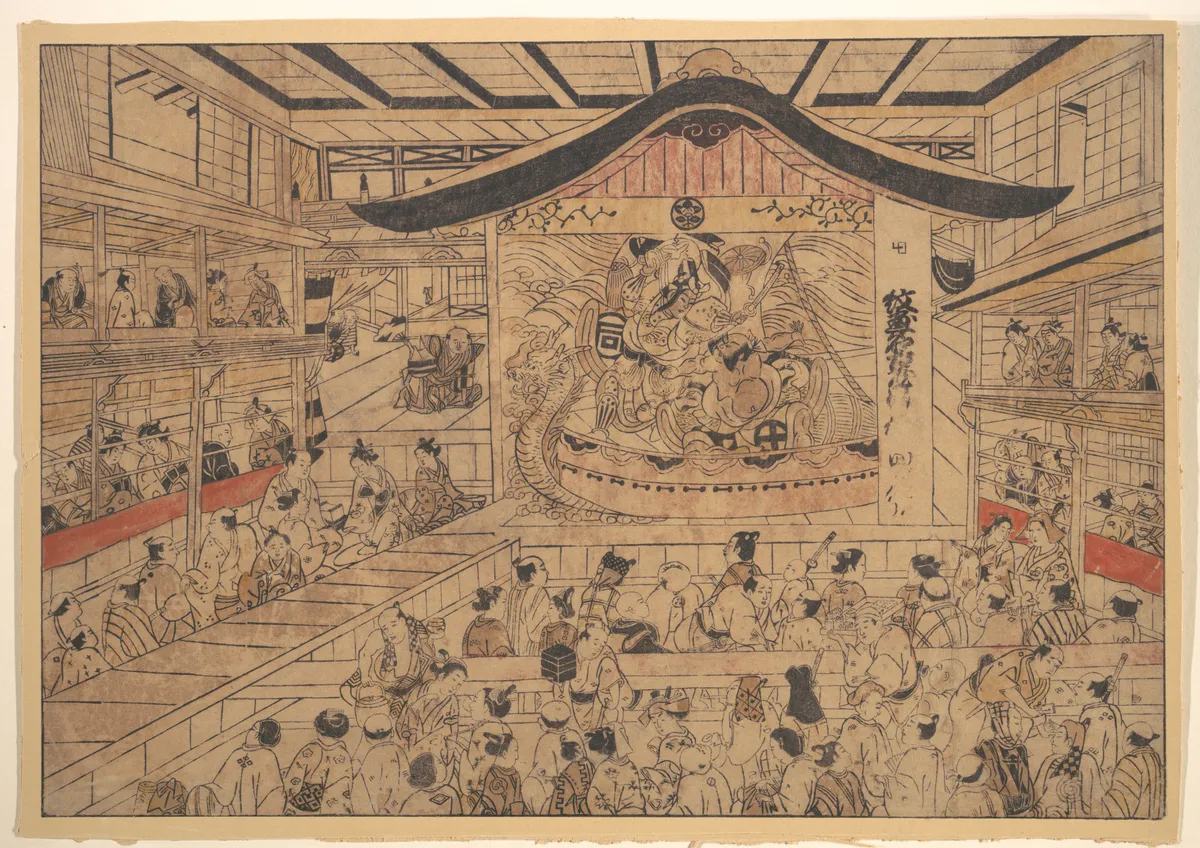
A Night at the Kabuki Theatre
In the dim glow of paper lanterns, the theatre murmurs. Shadows stretch across the wooden floor, where the actors move with deliberate grace. The air is thick with the scent of incense and the anticipation of the crowd. Silks rustle softly as patrons settle into their seats, the weight of their anticipation palpable.
On stage, the actors embody the rich tapestry of the Soga Brothers saga. Their voices, strong and resonant, weave through the hushed audience, each word a thread in the story of vengeance and honour. Masks of painted expressions flicker in the candlelight, concealing and revealing the emotions beneath. The audience leans forward, drawn into the drama, the boundaries between performer and observer blurring.
The musicians, hidden in the shadows, strike their instruments. The sharp twang of the shamisen punctuates the silence, guiding the narrative's ebb and flow. The theatre swells with the sound, a living organism breathing in unison with the drama unfolding on stage.
In this enclosed world, time slips away. The outside world fades, leaving only the eternal dance of light and shadow, sound and silence, that is Kabuki. The actors, the audience, all are part of this transient art, a fleeting moment captured forever in memory.
Historical Echo
Okumura Masanobu's print captures the essence of Edo-period Kabuki theatre. During this time, Kabuki was both a popular entertainment and a cultural phenomenon. The performance of "The Crest Patterns of the Soga Brothers and Nagoya Sanza" reflects themes of loyalty, revenge, and the complexities of human emotion. Masanobu, known for his innovative perspective prints, brings the vibrancy and immediacy of the theatre to life. Through his eyes, we glimpse a world where art and life intertwine, each performance a shared experience, a moment suspended in time. The uki-e technique, with its dramatic perspective, draws viewers into the scene, offering a window into the past. The print is more than an artwork; it is a relic of a vibrant, theatrical tradition.