

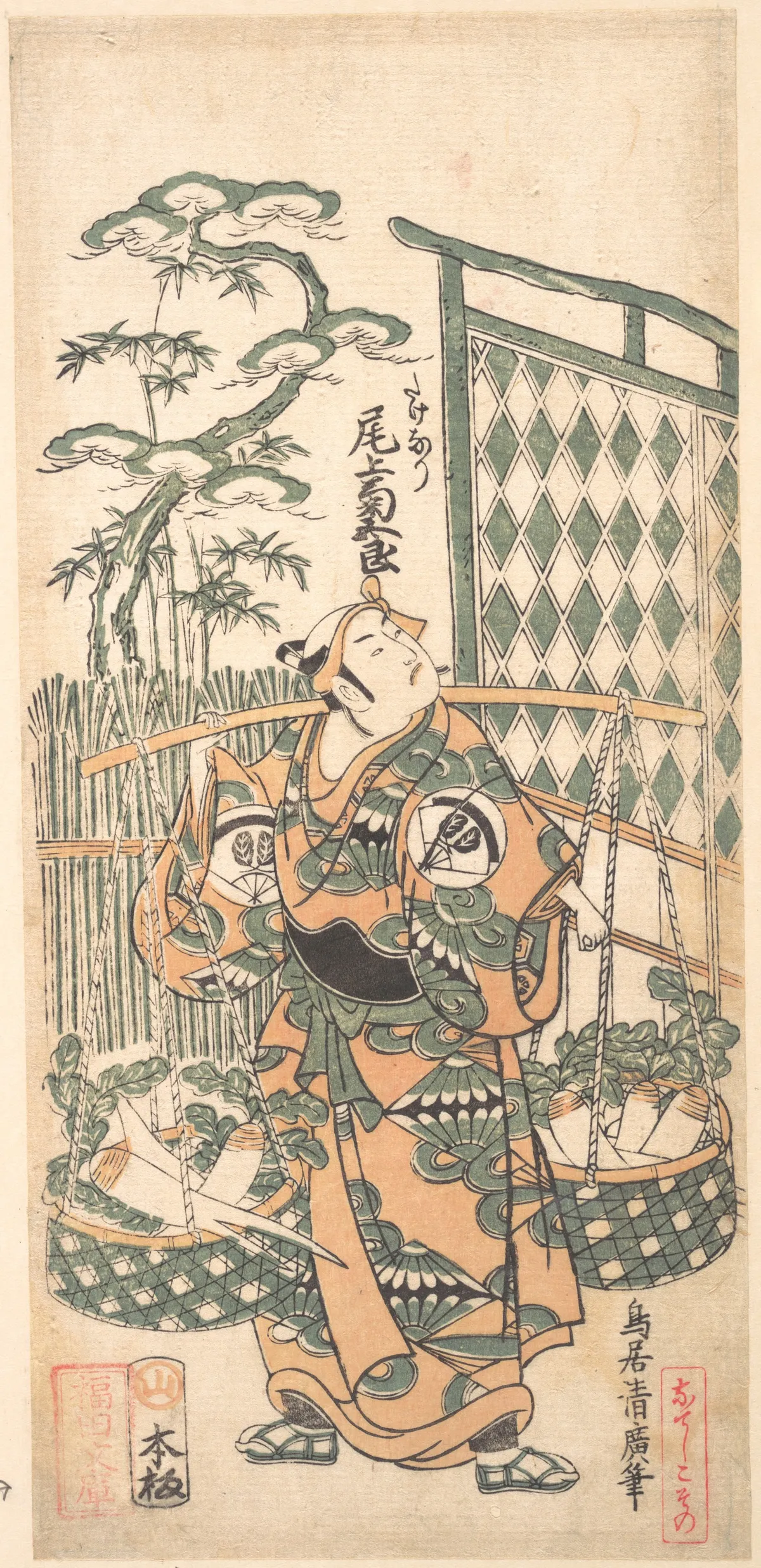
The Belle of Asakusa
The lanterns cast a soft glow over the stage. Shadows dance across the wooden planks. In the centre stands Onoe Kikugorō I, his presence commanding, his eyes piercing. The air is thick with anticipation, the audience silent, waiting. His kimono rustles like whispers of silk, vibrant against the muted tones of the night.
A distant bell tolls from Asakusa Temple. Its sound is deep, resonant, echoing through the cool night. It mingles with the scent of incense, lingering like a memory. Kikugorō raises his fan, his movements deliberate, precise. Each gesture tells a story, a silent dialogue with the beholders.
The audience, cloaked in darkness, leans forward. They are drawn into the tale, a world of beauty and tragedy. The actor's face, painted with care, reflects the flickering lantern light. His expression shifts, capturing the essence of the Belle of Asakusa.
The sound of clogs on stone paths reaches from the distance, a reminder of the world outside. But here, in this moment, time is suspended. The actor transforms, becoming both storyteller and tale. The night deepens, the temple bell tolls once more. Kikugorō bows, the scene fades, leaving only the echo of applause.
Historical Echo
In the Edo period, kabuki thrived as a popular form of entertainment. Onoe Kikugorō I was renowned for his performances, embodying roles with unparalleled skill. The Belle of Asakusa Temple was a beloved play, capturing the imaginations of many. Torii Kiyohiro, an artist of the Torii school, captured this moment in his woodblock print. His work preserves the ephemeral beauty of kabuki, allowing future generations to glimpse its magic. The print serves as both art and history, a testament to the enduring allure of the stage.