

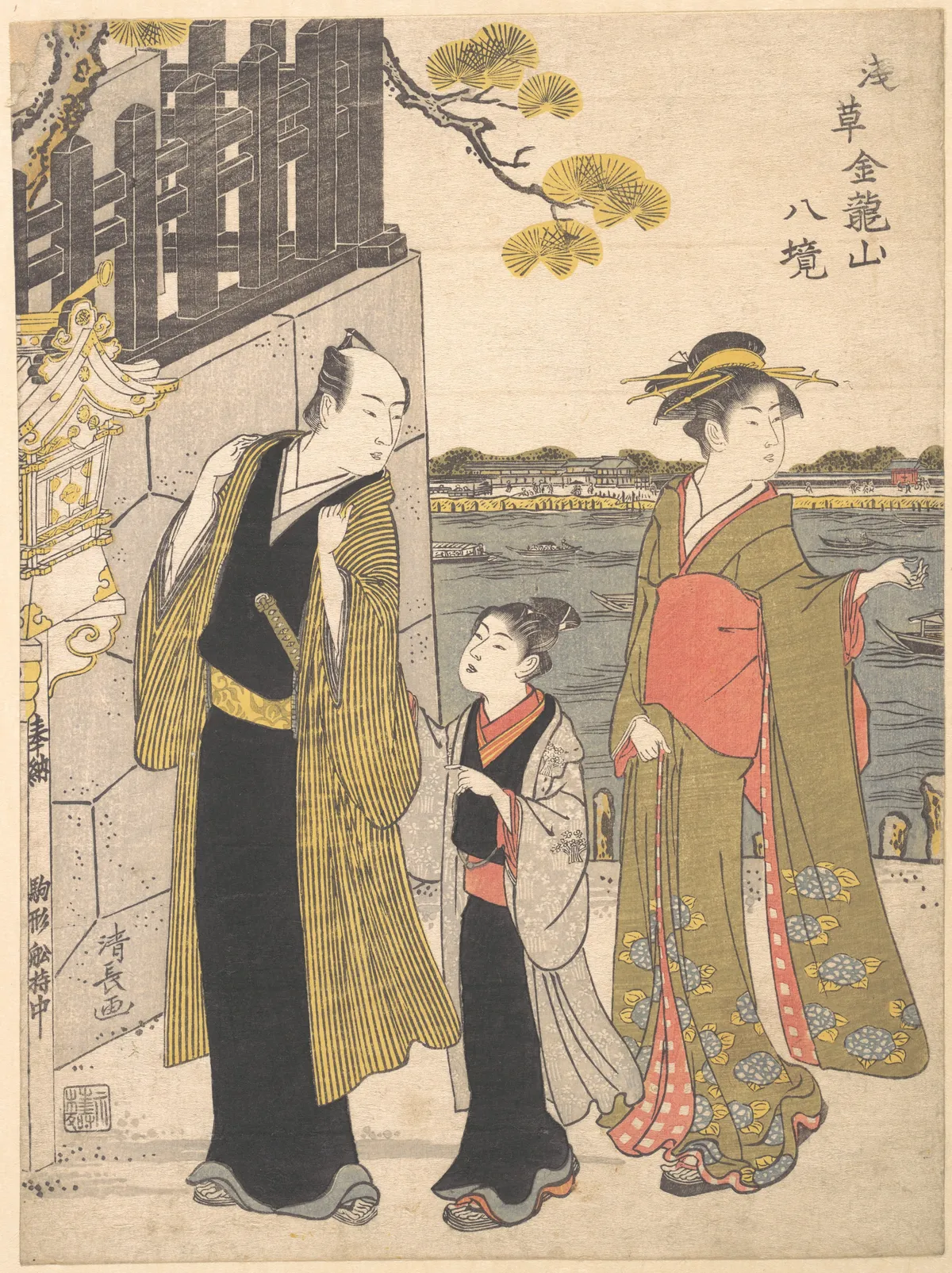
An Evening at Kinryusan
The evening air clings to the skin with a gentle warmth. Lanterns sway softly, their dim light casting elongated shadows across the temple grounds. A man, his posture erect, walks with measured steps. Beside him, a boy, eyes wide with curiosity, matches his pace. The boy's sandals scuff lightly against the stone path.
Ahead, a geisha glides, her kimono a cascade of delicate patterns. Her presence exudes an unspoken grace, each step a whisper on the night air. The temple looms quietly, its wooden beams absorbing the sounds of the city beyond. Incense drifts, a faint tendril of smoke curling into the darkening sky.
They pause, the man and the boy, observing the geisha as she bows slightly before the shrine. Her movements are fluid, practiced, yet imbued with a reverent solemnity. The boy mimics her action, a small, earnest bow. The man's gaze shifts from the shrine to the city lights flickering in the distance.
As they leave the temple, the boy's hand slips into the man's. The geisha turns, her eyes meeting theirs, a silent exchange of shared understanding. Tonight, the city is vast, its stories as numerous as the stars. They walk on, disappearing into the night's embrace.
Historical Echo
In the late 18th century, the Kinryusan Temple was a place of both worship and social gathering. Torii Kiyonaga captures this intersection of the sacred and the secular. The woodblock print reflects the customs of the Edo period, where visits to temples were a blend of spiritual devotion and leisurely promenade. The geisha, a symbol of beauty and culture, represents the artistic elegance of the era. Her presence alongside a man and a boy speaks to the fluidity of social interactions within the temple's serene confines.