

The Stage's Whisper
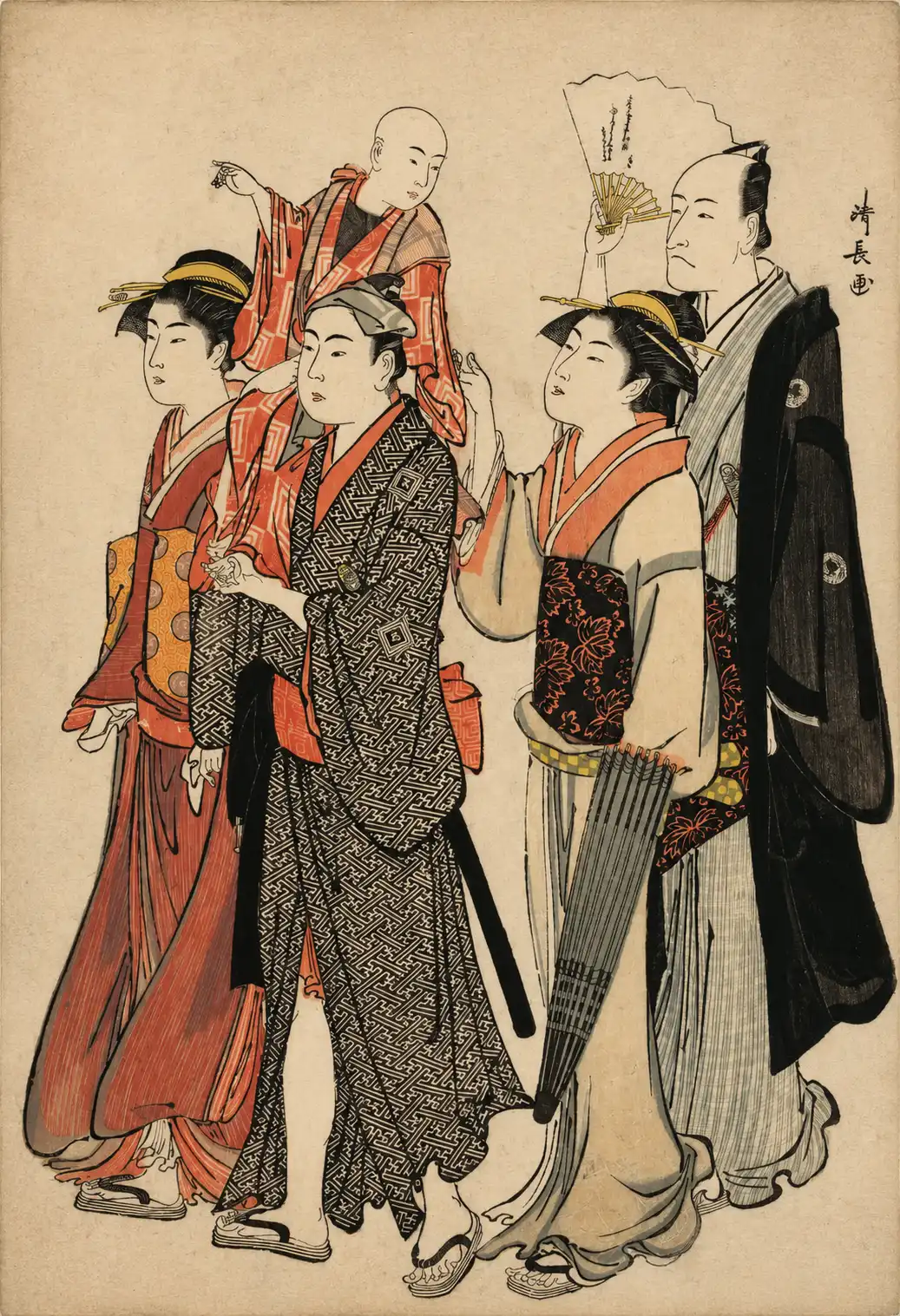
The night air is thick with the scent of burnt pine. Lanterns flicker gently, casting shadows across the wooden stage. Ichikawa Danjuro V stands at the centre, his robe a cascade of rich patterns in the dim light. His family encircles him, each face a study of composed readiness.
Silence holds the room like a drawn breath. The audience, an ink-black sea, waits. Danjuro's voice finally breaks the stillness. It is deep, resonant, shaped by years of performance. Each word he utters seems to hang in the air, a thread tying the past to the present.
His wife, poised with grace, watches him with eyes that understand too well the weight of legacy. Their children, dressed in miniature replicas of kabuki splendour, mimic their father's gestures. The youngest clutches a wooden sword, its polished surface catching the low light.
The world of the theatre is a world apart. Here, reality bends to the will of performance, and the line between actor and role blurs. The Danjuro family stands at its heart, a living testament to the art that defines them.
As the scene unfolds, the sound of rustling silk and murmured anticipation fills the theatre. It is a moment suspended in time, a quiet echo of lives lived in the glow of the stage.
Historical Echo
In 1782, the Torii school of ukiyo-e captured the essence of kabuki theatre. Torii Kiyonaga, renowned for his portraits, immortalised Ichikawa Danjuro V, a pivotal figure in Edo's vibrant theatrical scene. The Danjuro lineage, synonymous with kabuki, is a thread woven through the cultural tapestry of Japan. The print captures not just a family but an era, resonating with the echoes of a stage that never truly sleeps.