

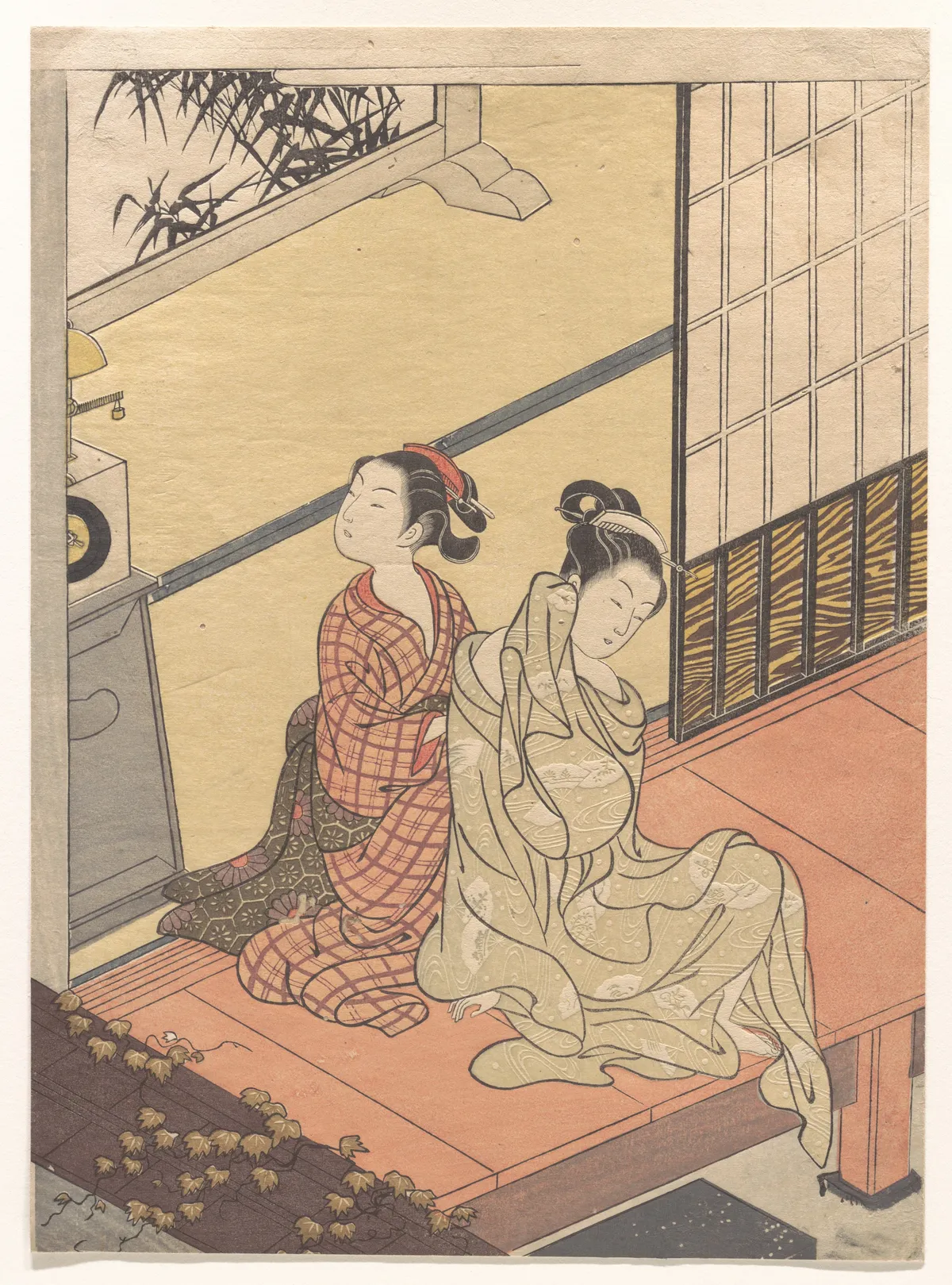
Evening's Quiet Toll
The evening air is thick, heavy with the day's retreat. The room is dimly lit, shadows pooling in the corners. A woman kneels beside a low table, her gaze fixed on a clock. The soft chime echoes, a gentle reminder of time's passage. Her kimono rustles slightly as she shifts, the fabric whispering against the tatami mat. The scent of incense lingers, mingling with the faint aroma of tea. Outside, the world is hushed, the bustle of Edo life softened by distance. She breathes in deeply, the moment suspended, caught between the past day's noise and the night's silence. The clock chimes again, marking another slice of evening. Her thoughts drift, like the smoke curling from the incense, into the realm of quiet contemplation.
Historical Echo
In the Edo period, time was a fluid concept, marked by natural rhythms rather than mechanical precision. Clocks were rare, prized possessions, symbols of modernity and status. Suzuki Harunobu captures this interplay of old and new, the serene interior contrasting with the clock's modern presence. In this woodblock print, time is not just measured; it is felt, experienced through the senses, the quiet chime resonating in the stillness of a fading day.