

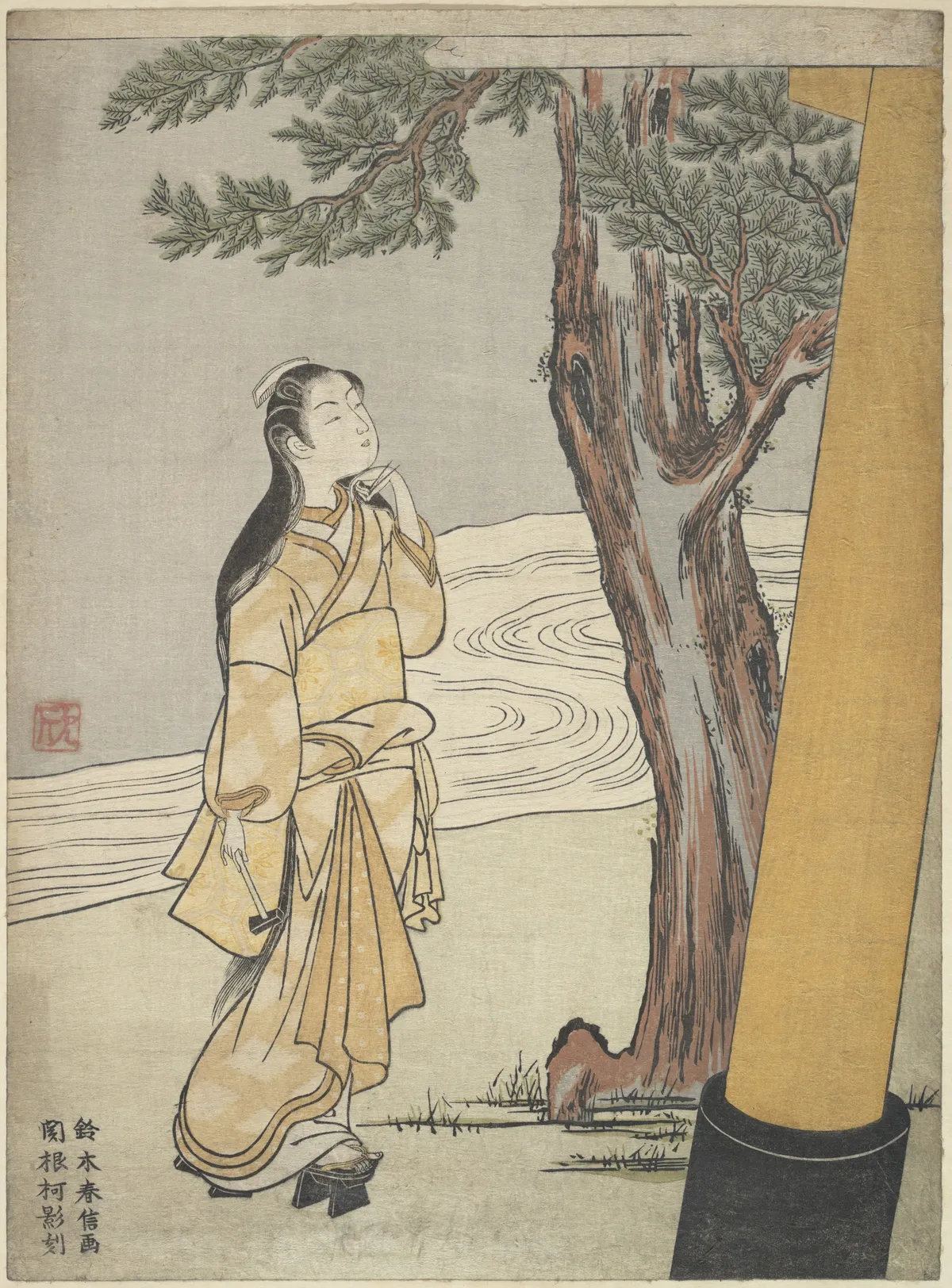
Visit to the Shrine
The night air clings to her. A solitary figure moves with purpose. Midnight shadows stretch long on the path. She clutches a bundle, its contents hidden. The Hour of the Ox, they call it. A time when spirits stir, when curses are cast. Her sandals whisper against the earth.
Trees loom, their branches like arms reaching. The shrine appears, shrouded in mist. Silent, except for the distant call of a night bird. She pauses, listening. Her heart a drum in the stillness.
The lantern light flickers, casting ghostly shapes. She steps forward, her breath a mist before her. With a gesture, she unwraps the bundle. Nails, a doll, strands of hair. Ritual objects for a dark purpose. Her face a mask of determination.
The wind picks up, rustling leaves like whispers. She nails the doll to the tree, each strike echoing in the night. Her lips move in silent incantation. The atmosphere thickens, charged with unseen forces.
Above, the moon watches, pale and distant. Her task complete, she turns away. Her figure fades into the darkness, leaving only the shrine and the silent trees. The night resumes its quiet vigil.
Historical Echo
In Edo Japan, belief in the supernatural was woven into daily life. The Hour of the Ox—between 1 and 3 a.m.—was thought to be when spirits were most potent. People would visit shrines with ritualistic intent, seeking to invoke curses or communicate with otherworldly forces. Suzuki Harunobu captures this eerie ritual, enveloping the viewer in a world where the boundary between the seen and unseen blurs.