

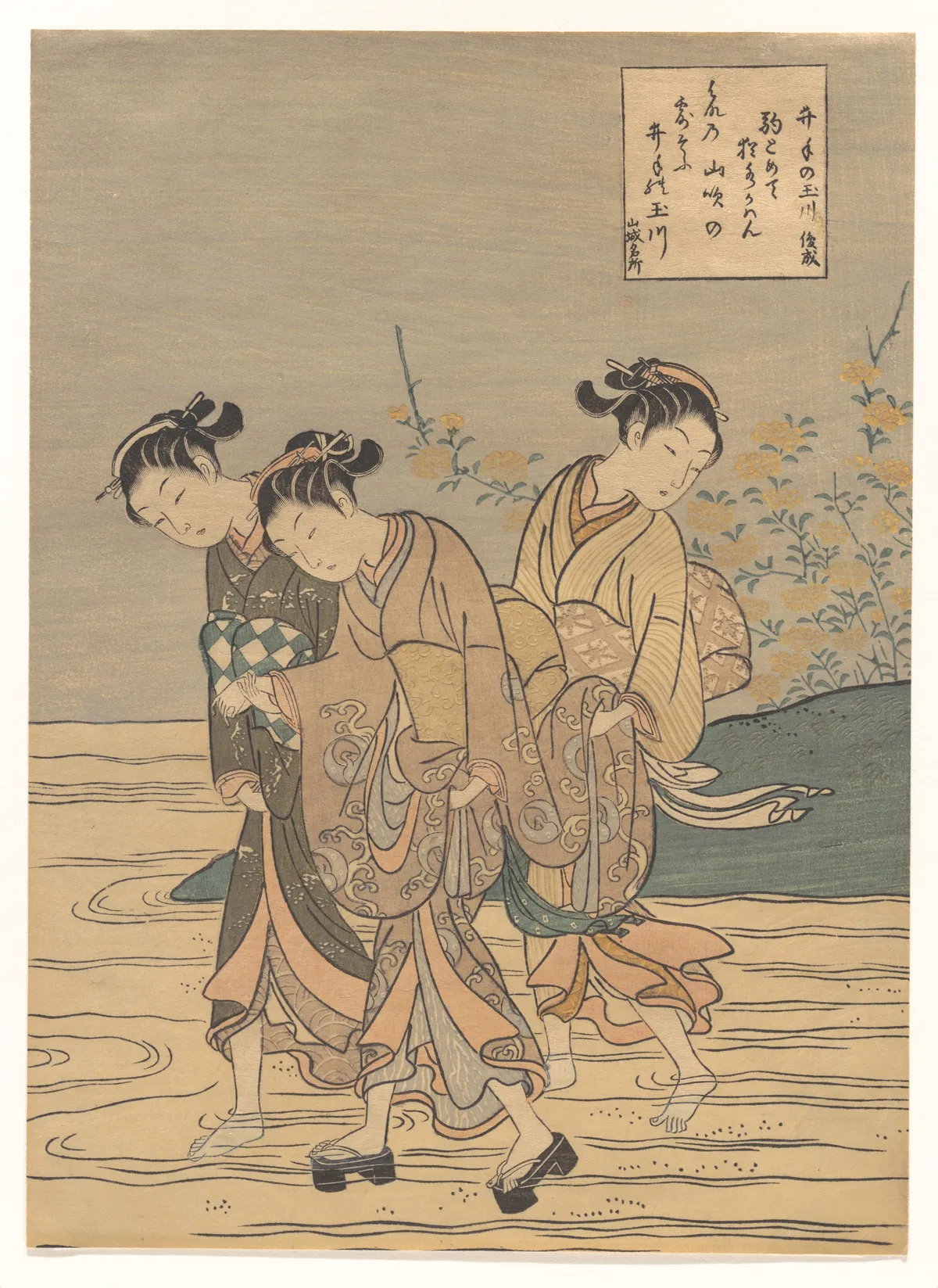
The Whispering Waters
The Tama River runs quietly under a pale sky. The air is crisp, yet gentle, carrying the scent of moist earth and distant pine. A woman steps cautiously across the stones, her kimono trailing in the calm water. She pauses, listening to the river's song, a soft murmur against the silence.
Nearby, a child giggles, chasing after a paper boat. His laughter ripples through the air, mingling with the rustling leaves. The river reflects their world in muted hues, a mirror of delicate tranquillity.
The daylight fades slowly, painting the scene in shades of twilight. Shadows deepen, and the coolness of evening settles over the land. Somewhere, a crane calls, its echo lingering in the stillness. The woman turns, her gaze lingering on the fading light, as if capturing this moment forever.
Historical Echo
In the Edo period, the Tama River was a serene retreat from the bustling towns. Artists like Suzuki Harunobu captured its calm beauty, blending human presence with nature's quiet majesty. Such prints were windows into the peaceful rhythms of Japanese life, where simplicity and elegance danced in harmony. The river's gentle flow, the figures poised in contemplation, all served as reminders of the delicate balance between man and nature.