

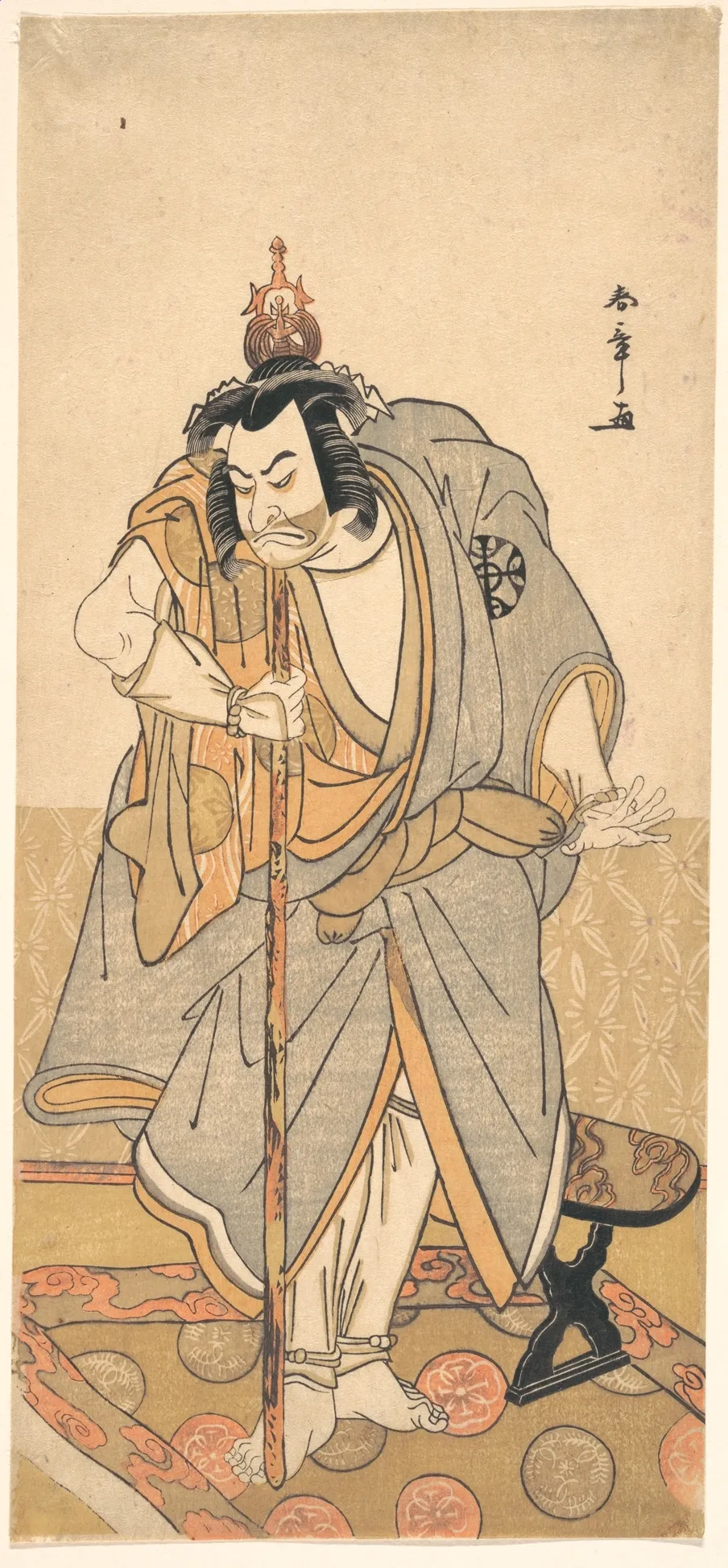
The Pilgrim's Pause
The air is heavy with anticipation. It clings to the actor's robes—a gentle reminder of the journey yet unwalked. Nakamura Nakazo stands still, a lone figure amidst the shadows of the stage. His eyes, half-hooded, gaze into the darkness beyond, where the audience's murmurs barely reach him.
He embodies the rokuju-rokubu, the pilgrim of old, with each thread of his garment speaking of distant temples. A subtle rustle accompanies his slow breath, the sound of silk brushing against itself. The lanterns cast a soft glow, illuminating the intricate patterns on his robes. They whisper of devotion, of paths trodden by countless feet.
The scent of incense lingers, a phantom presence, mingling with the musty aroma of old wood. Somewhere in the distance, a drum beats slowly, echoing the steady rhythm of a pilgrimage. The actor's hand, calloused and deliberate, adjusts the staff he holds—a symbol of his sacred journey.
The audience waits, breath held, for the next move. But for now, time stretches, a silent pause in the pilgrimage of life. The actor remains, a solitary figure bathed in the glow of the floating world.
Historical Echo
In the Edo period, actors often portrayed characters that resonated with the spiritual and cultural journeys of the time. Nakamura Nakazo, a renowned figure, brought life to the roles he played. In this print by Katsukawa Shunshō, created around 1780, we glimpse the duality of performance and pilgrimage—a reflection of the era's intricate dance between reality and artifice.