

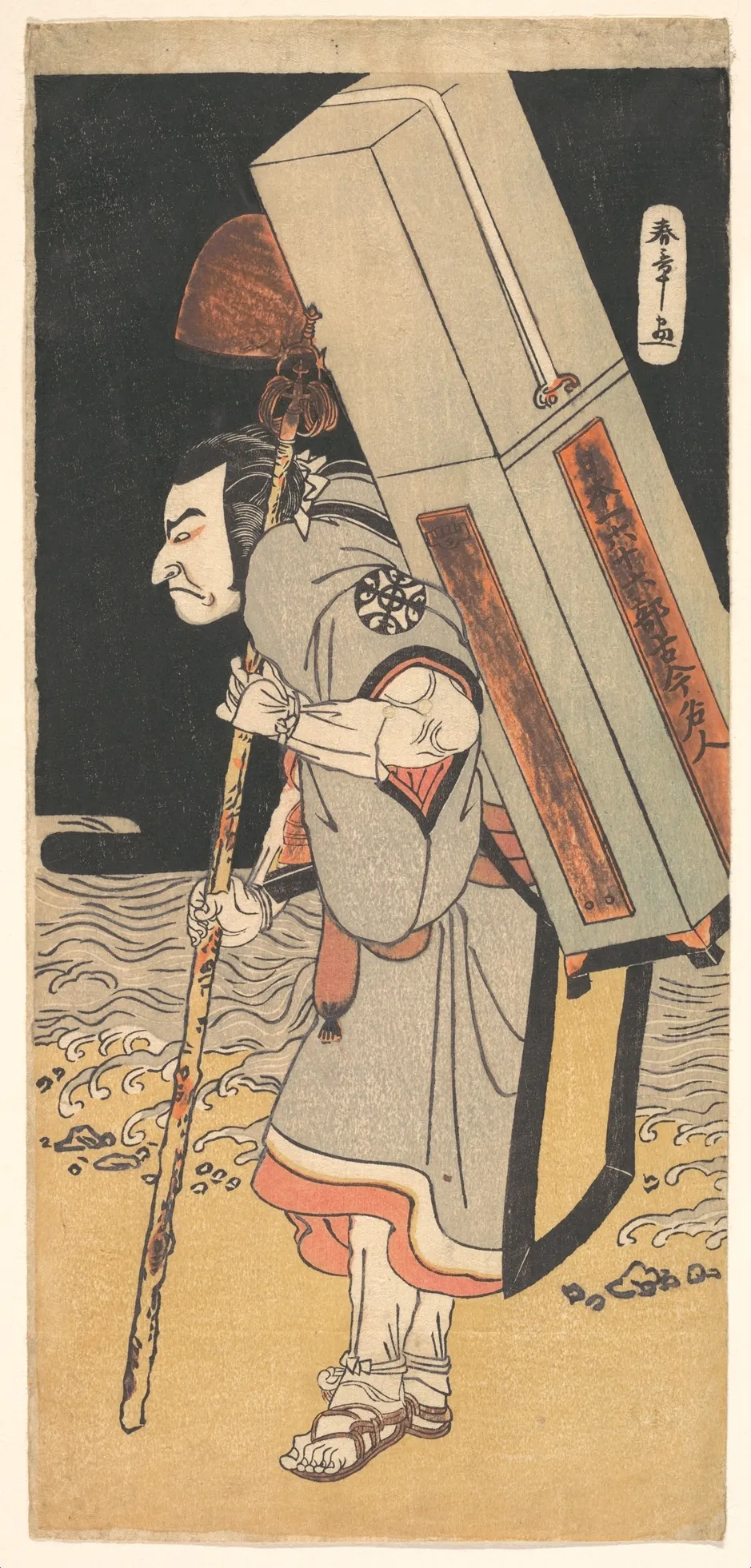
Nakamura Nakazo's Quiet Pilgrimage
In the quiet dawn, Nakamura Nakazo stands alone. The air is cold, clinging to his skin like a thin cloak. His steps are deliberate, each one echoing softly on the stone path leading up to the temple. He wears the simple attire of a rokuju-rokubu, a pilgrim seeking solace in sacred spaces. His face is serene, yet his eyes speak of stories untold, of roles played and lives imagined.
The print captures a moment, frozen like a breath held too long. Ink and paper conspire to bring forth the weight of his presence. The actor, transformed into a seeker, feels the weight of each footfall, the whisper of robes against his legs. Silence surrounds him, broken only by the distant rustle of leaves, the subtle song of the morning breeze.
This is a pilgrimage not just of distance, but of spirit. A journey inward, as much as outward. The temple awaits, a sanctuary of peace amidst the bustling world. Yet, even here, he remains an actor—his life a stage, his role ever-changing.
Historical Echo
Katsukawa Shunshō, a master of ukiyo-e, immortalised actors in their myriad forms. In this print, he offers a glimpse not just of a man, but of an era. Around 1780, the Edo period thrived, vibrant with cultural synthesis. Actors like Nakamura Nakazo were revered, their performances blurring the lines between reality and illusion. Here, Shunshō captures Nakazo in a rare moment of introspection, blending the sacred with the theatrical, the personal with the public.