

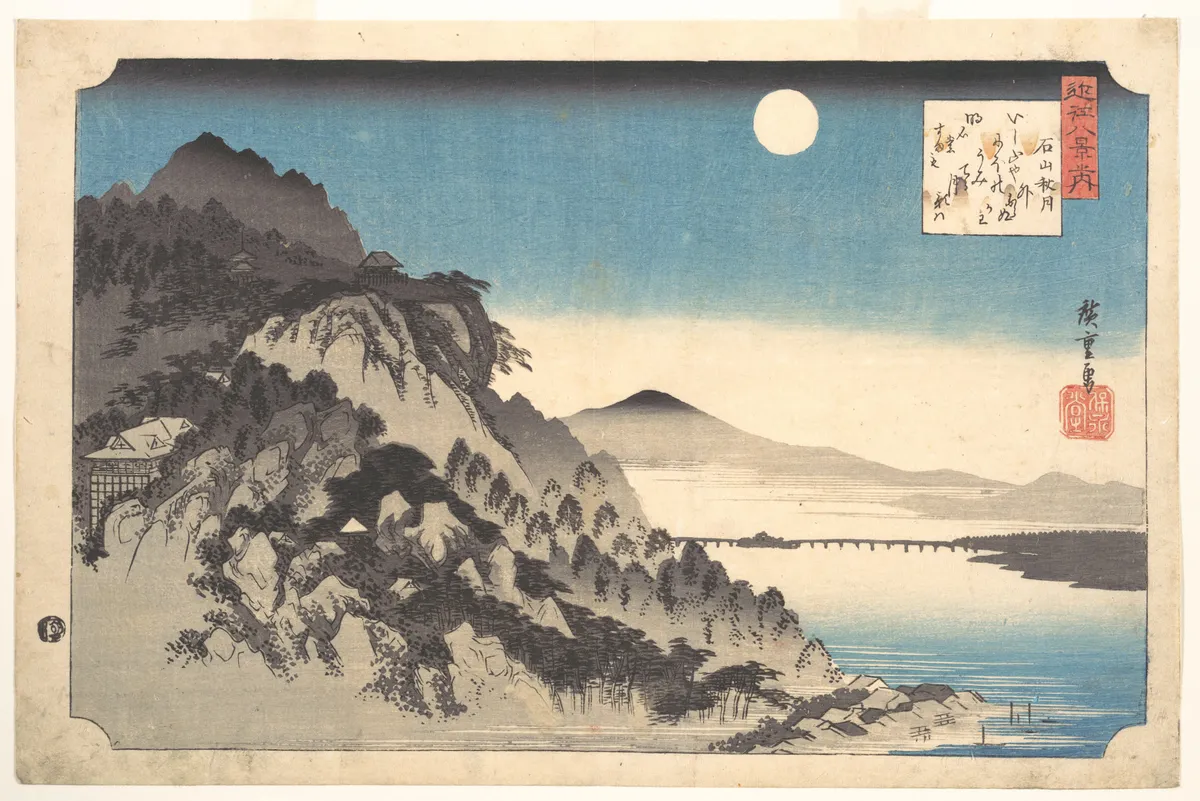
Autumn Full Moon at Ishiyama Temple
The air is crisp with the coming of autumn. Moonlight, silver and cold, washes over Ishiyama Temple. Shadows deepen in the corners where the lanterns fail to reach. A rustle in the leaves whispers secrets of the night. The temple stands in solemn silence, an ancient guardian beneath the vast sky.
A weary traveller pauses on the path, breath visible in the chill. He looks up, eyes tracing the temple’s silhouette against the night. The moon hangs low, its reflection shimmering on the Lake Biwa waters. Somewhere in the distance, a nightingale calls, its song gentle yet piercing.
The traveller breathes deeply, the scent of pine mingling with the cool night air. His footsteps are soft, barely disturbing the silence. He feels the weight of history in the stones beneath his feet, the timeless presence of the temple watching over the changing seasons.
As he moves closer, the temple’s wooden beams creak softly. There is a warmth within, a light flickering from an unseen room. He hesitates, caught between the world of dreams and the pull of the sacred place. The moon watches, patient and eternal, casting its glow over all.
Historical Echo
Utagawa Hiroshige's depiction of Ishiyama Temple captures the serene beauty of Ōmi Province. Created in 1834–35, the print is part of the "Eight Views of Ōmi Province" series. Hiroshige’s work is renowned for its ability to evoke the quiet emotions of a landscape. This print, with its delicate interplay of light and shadow, invites the viewer to step into a moment suspended in time, where nature and human presence exist in perfect harmony. The temple, known for its connection to the famed poet Murasaki Shikibu, stands as a testament to the timeless beauty of Japan's cultural heritage.