

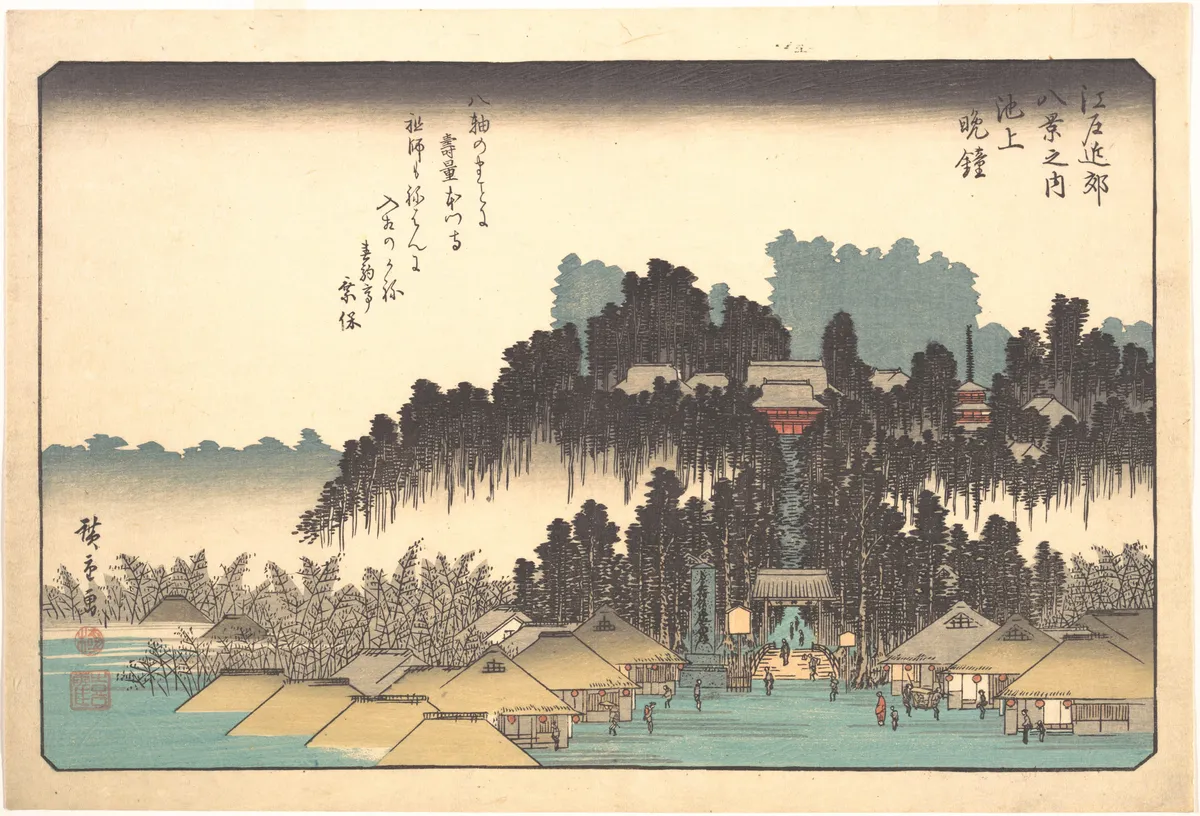
Vesper Bells at Ikegami
The evening air clings damply to the earth. A lone figure treads the path lined with towering pines, their needles whispering under the soft weight of dusk. The sky bruises into twilight, a muted symphony of greys and blues settling over Ikegami. The temple looms, its silhouette carved against the encroaching night.
The tolling of the vesper bell reverberates through the stillness. It is a sound that seems to hang in the air, a resonant hum that shivers the surface of the nearby pond. The water reflects the dim glow of lanterns, their light trembling like distant stars caught in a gentle breeze.
A slight breeze stirs, carrying with it the faint aroma of incense. It mingles with the earthy scent of the temple gardens, where shadows deepen among the stones.
A monk, draped in robes as old as the temple itself, moves slowly across the courtyard. His footsteps are soft, yet purposeful, each step echoing against the stone. The bell continues its measured toll, marking the passage of time in its unwavering cadence.
In this moment, all else fades. The world is reduced to the sound of the bell, the whisper of the pines, the solemn weight of the evening. Here, in the quiet heart of Ikegami, time stands still.
Historical Echo
Utagawa Hiroshige, a master of capturing fleeting moments, painted this scene in the mid-19th century. 'Vesper Bells at Ikegami' invites viewers into a world where time lingers, and every sound is amplified. The temple of Ikegami Honmon-ji, a site of spiritual significance, is rendered with a delicate balance of light and shadow. Hiroshige's work reflects a profound appreciation for the interplay between nature and the spiritual, a testament to the enduring tranquility found within these sacred spaces.