

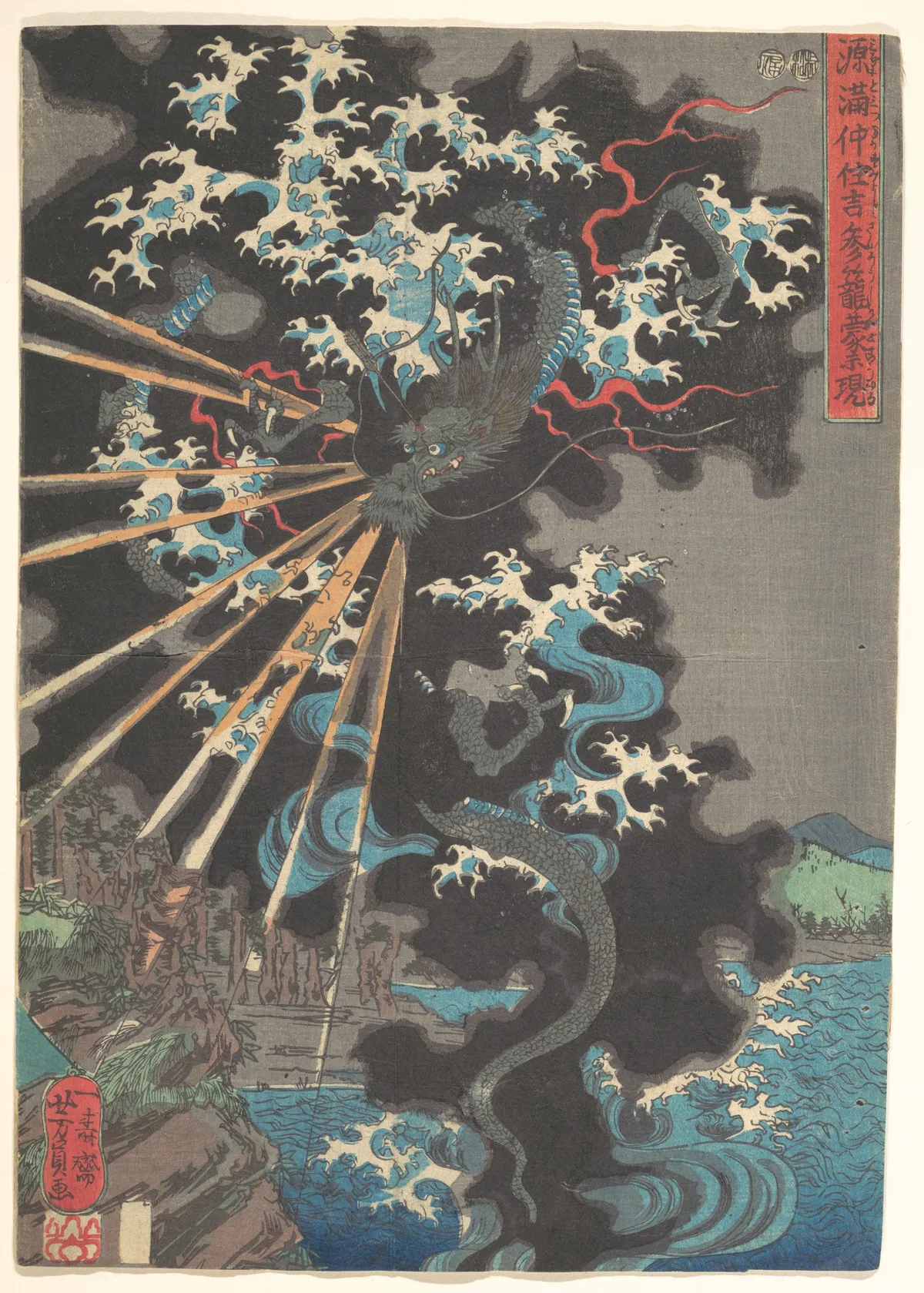
A Dragon's Vision
Moonlight seeped through the branches, casting silver patterns on the ground. Minamoto no Mitsunaka stood alone at Sumiyoshi Shrine. The air was heavy, laden with the scent of pine and salt from the nearby sea. It was a night of omens and whispered legends.
The shrine’s wooden beams creaked softly, ancient spirits shifting in the shadows. Mitsunaka's armour clinked as he moved, the sound swallowed by the surrounding silence. He waited, breath held, for the vision promised by the priests.
A ripple disturbed the stillness. The air shimmered, and from the depths of the night, a dragon emerged. Its scales glistened, wet with mist. Its eyes glowed with a knowing light, meeting Mitsunaka’s gaze with an ancient promise.
The dragon coiled in the air, a graceful dance of power and mystery. Its presence filled the shrine with an electric hum, a silent conversation between the world of men and gods. Mitsunaka felt the weight of history, the burden of a destiny intertwined with this celestial creature.
As dawn approached, the dragon faded like morning mist. Mitsunaka remained, a solitary figure against the coming light, marked by the encounter. The shrine echoed with the memory of scales and whispers, a story etched into the fabric of time.