

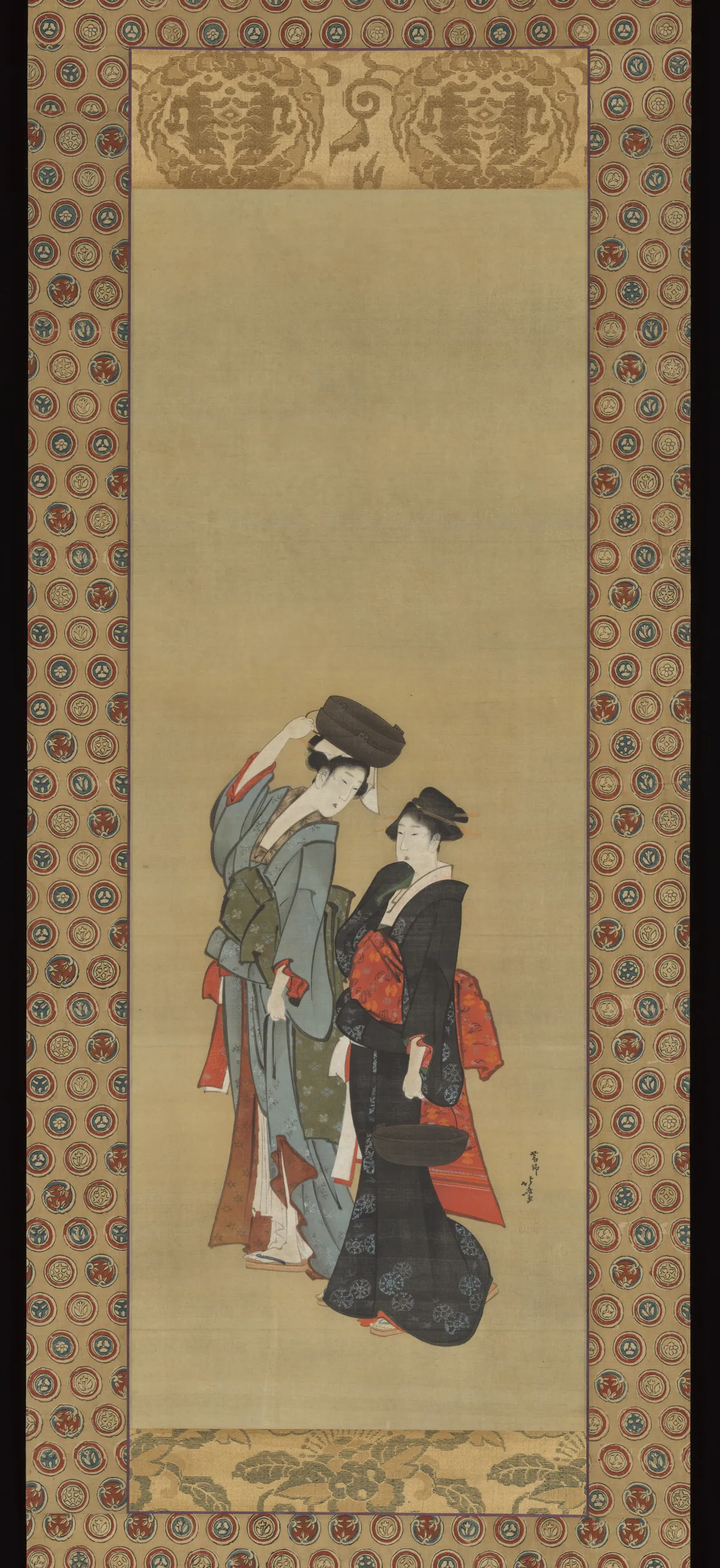
Women in the Whispering Festival
Night air clings to the skin, cool and moist. The moon drifts behind a veil of clouds. Women move in a solemn procession, each step measured and deliberate. Each carries a pot, balanced with care, as if it holds the weight of secrets. The pots are smooth, their surfaces reflecting dim lantern light. Their bodies sway gently beneath layered kimonos, fabric rustling softly, echoing the distant murmur of the Tsukuma Festival.
A faint rhythm pulses through the earth, a heartbeat of ancient tradition. The women's feet, clad in wooden geta, tread the worn path. Shadows stretch and shiver underfoot, mingling with the whispers of the night. The air is thick with the scent of pine, mingling with the distant tang of the sea.
Voices are hushed, almost swallowed by the night. Only the occasional laughter pierces the quiet, a brief glimmer of warmth. The women are like spectres, moving through time, carrying not just pots but the echoes of generations. Each step is a page in a story written on the wind, each breath a link to the past.
The festival's fires flicker in the distance, a constellation of earthly stars. They beckon, drawing the women forward, into the heart of the celebration. In their hands, the pots seem to hum with anticipation, as if the very clay remembers the music of the festival.
Historical Echo
The Tsukuma Festival is an event shrouded in history and mystery, its origins lost in the mists of time. It is a celebration of life, of earth, and of the delicate balance between the two. Women play a central role, their presence a symbol of continuity and renewal. The pots they carry are more than vessels; they are bearers of tradition, each one a silent witness to the passage of years, to the ebb and flow of the human spirit. Hokusai captures this moment with a delicate touch, his lines breathing life into the paper, his vision eternal. The women, the pots, the festival—all are woven into the tapestry of the ukiyo-e, a timeless reflection of a world both distant and near.