

In the Shadow of the Lion
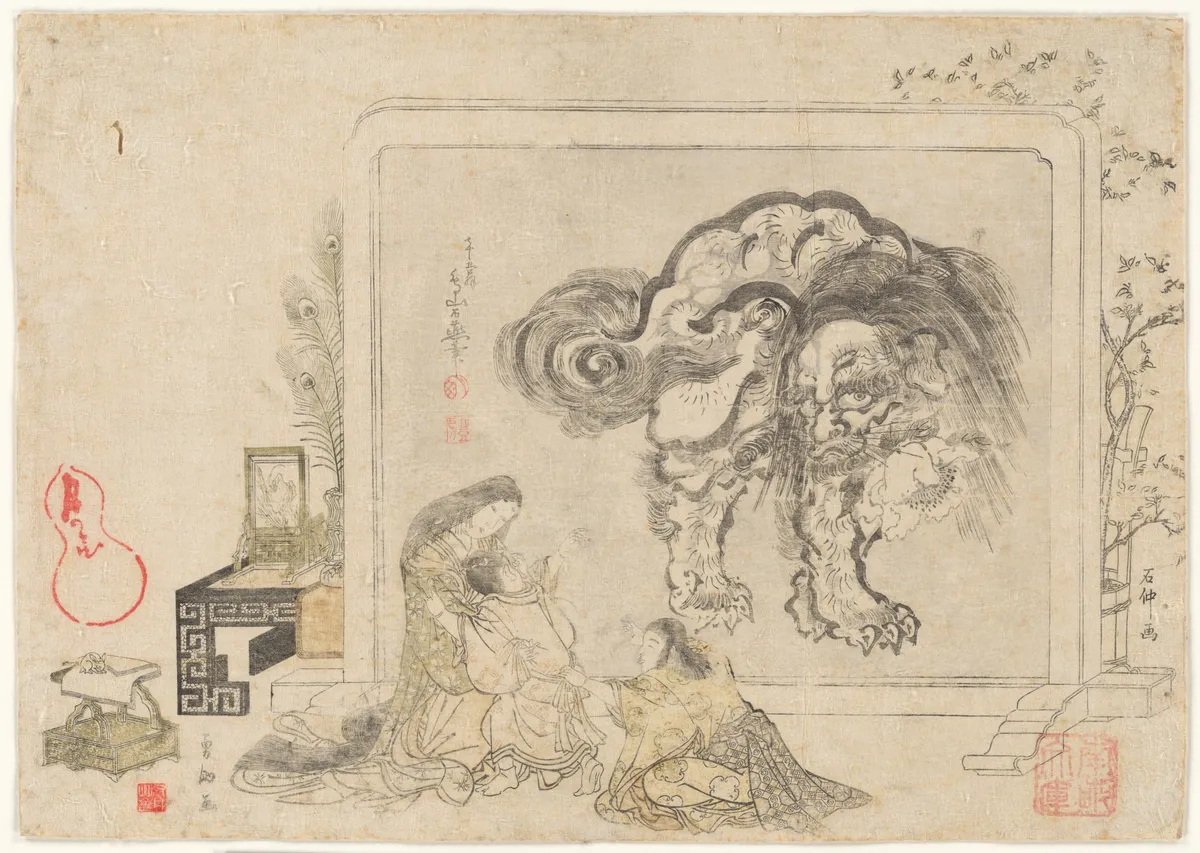
The room was quiet, save for the soft rustling of silk. A mother knelt, her posture serene, her kimono a cascade of delicate patterns. Her children, small and bright-eyed, clustered around her. Their laughter was a whisper, a gentle ripple in the still air. Behind them, a screen stood tall, its surface alive with the image of a Chinese lion. The creature's eyes gleamed with an eternal watchfulness, its presence both majestic and distant.
The children paused in their play, captivated by the lion's silent roar. The mother watched them, her eyes tender, tracing the contours of their fascination. Sunlight filtered through the shoji, casting shadows that danced across the tatami. The lion seemed to breathe, its painted mane a sea of ink and ambition.
The air was heavy with the scent of wood and paper, the ancient aroma of stories untold. The mother spoke, her voice a soft murmur, weaving tales of lands beyond the sea, where lions roamed free and fierce. The children listened, their imaginations kindled, their small hands clutching at the edges of her kimono.
Time slipped by, unnoticed, like a gentle breeze through the trees. The lion remained, a guardian of dreams and whispers, its gaze fixed on the horizon of their imaginations.
Historical Echo
In 1786, Kitagawa Utamaro captured a serene domestic moment, a mother and her children, against the backdrop of a freestanding screen depicting a Chinese lion. Utamaro, renowned for his bijin-ga, masterfully conveyed the intimate world of women and their children. The screen, with its lion motif, bridged the cultural exchange between Japan and China, enriching the visual narrative with layers of meaning. This artwork, now a part of the Metropolitan Museum of Art's collection, continues to echo the quiet beauty of motherhood and the timeless allure of the unknown.