

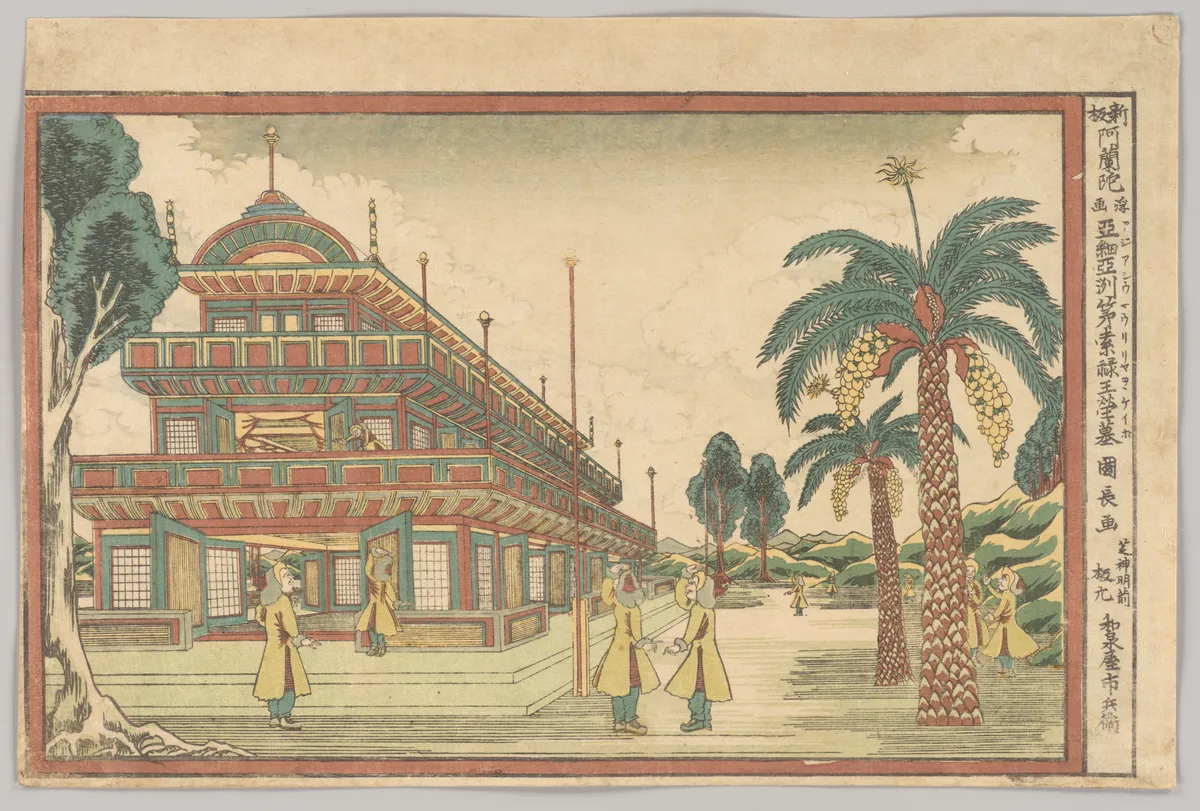
The Tomb of King Mausolus
The air hangs heavy with a foreign scent. Stone and dust. The tomb of King Mausolus looms, casting elongated shadows in the dim light. Marble columns rise solemnly, touching a sky that bears a strange hue. The architecture feels distant, yet familiar. A landscape carved from whispers of antiquity.
Footsteps echo softly on the stone floor. A lone figure moves through the shadows, their silhouette sharp against the backdrop of ancient grandeur. A distant world captured through the lens of Dutch perspective, brought to life by Utagawa Kuninaga's hand.
Silence envelops the scene, broken only by the soft rustle of leaves, a gentle reminder of life beyond the tomb. The weight of history presses down, tangible in the air. A moment suspended between two worlds, where the East meets the West in a dance of light and shadow.
Historical Echo
In the early 19th century, Japan's fascination with Western technology and art forms birthed a unique blend of styles. This ukiyo-e print by Utagawa Kuninaga captures a Dutch perspective, a technique that intrigued Japanese artists. The image of King Mausolus' tomb, a wonder of the ancient world, speaks to the curiosity and reverence for foreign lands that marked this era. Through Kuninaga's vision, viewers glimpse a distant past, refracted through the lens of Edo-period Japan.