

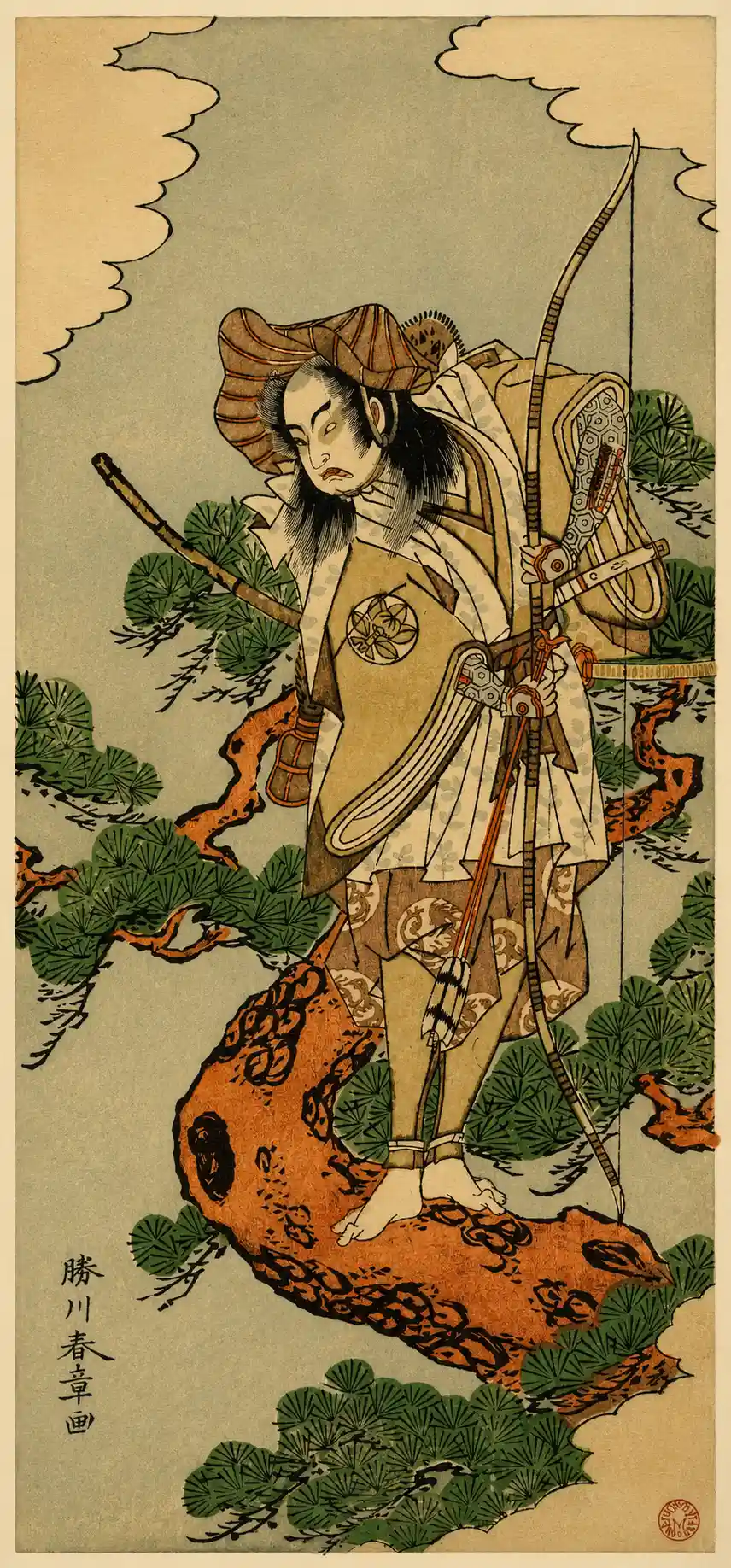
The Warrior's Poise
The air is dense with anticipation. A lone samurai stands in the dim glow of stage lanterns, his posture rigid yet graceful. The Ninth Ichimura Uzaemon embodies the spirit of the warrior. His armour glints under the flickering light, each metal plate a testament to his legacy.
The theatre is hushed. Only the rustle of silk and the soft shuffle of wooden clogs disturb the silence. Uzaemon's gaze is distant, as if reaching beyond the confines of the stage. Shadows dance across his face, accentuating the fierce determination in his eyes.
With a subtle shift of weight, he signals readiness. The audience holds its breath. The scent of ink and aged wood fills the space, mingling with the musty warmth of bodies packed tightly together. Time seems suspended, the moment stretching thin like a taut bowstring.
In this portrayal by Katsukawa Shunshō, the essence of Bushido is captured. It is not merely a role, but a living, breathing history—an echo of the past brought to life with each precise movement.
Historical Echo
Katsukawa Shunshō's print captures the kabuki stage's vibrant energy. Created around 1773, it showcases Ichimura Uzaemon IX, a renowned actor. Samurai dramas were popular, merging theatre with the revered warrior ethos. Shunshō, a master of the Katsukawa school, excelled in depicting actors, immortalising their ephemeral performances. His work reflects the Edo period's cultural fusion, where art, theatre, and tradition intertwined seamlessly.