

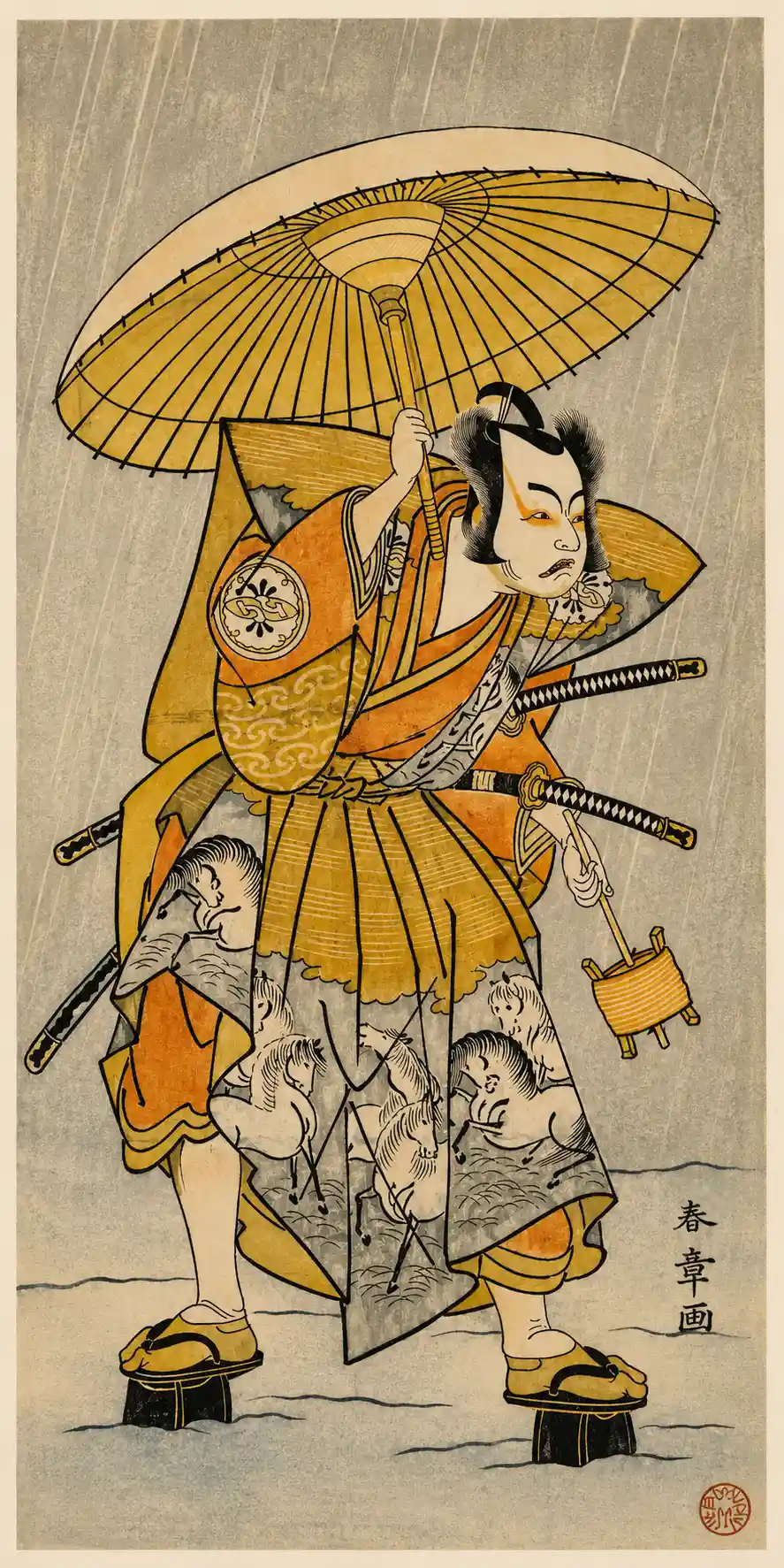
The Quiet Warrior
The lantern cast a soft, flickering glow. Nakamura Juzo stood motionless. His armour gleamed under the dim light. The night air was cool, carrying whispers of pine and distant laughter. He adjusted his kabuto, feeling the weight of tradition on his shoulders. A gentle breeze rustled the fabric of his hakama. Silence enveloped him, broken only by the creak of wood settling in the theatre.
He was not merely a samurai; he was a vessel for stories untold. The audience waited, breaths held in anticipation. His presence spoke of honour, duty, and the eternal dance between life and death. The air was thick with expectation. The scent of ink and fresh woodblock mingled with the earthy aroma of the tatami mats.
Every gesture held meaning. His eyes, sharp and reflective, scanned the unseen horizon. The essence of a warrior, captured in a moment, eternal on paper. He was a ghost of the stage, a shadow of history, forever bound to the tales he portrayed.
Historical Echo
In 1773 or 1774, Katsukawa Shunshō immortalised the kabuki actor Nakamura Juzo. This print captures the synthesis of art and theatre in Edo Japan. The actor's portrayal of a samurai embodies the essence of bushido, reflecting the cultural fascination with the warrior class. The ukiyo-e technique, with its delicate lines and subtle hues, lends a haunting quality to the scene. This piece is a testament to the enduring allure of samurai legends and the performers who brought them to life.