

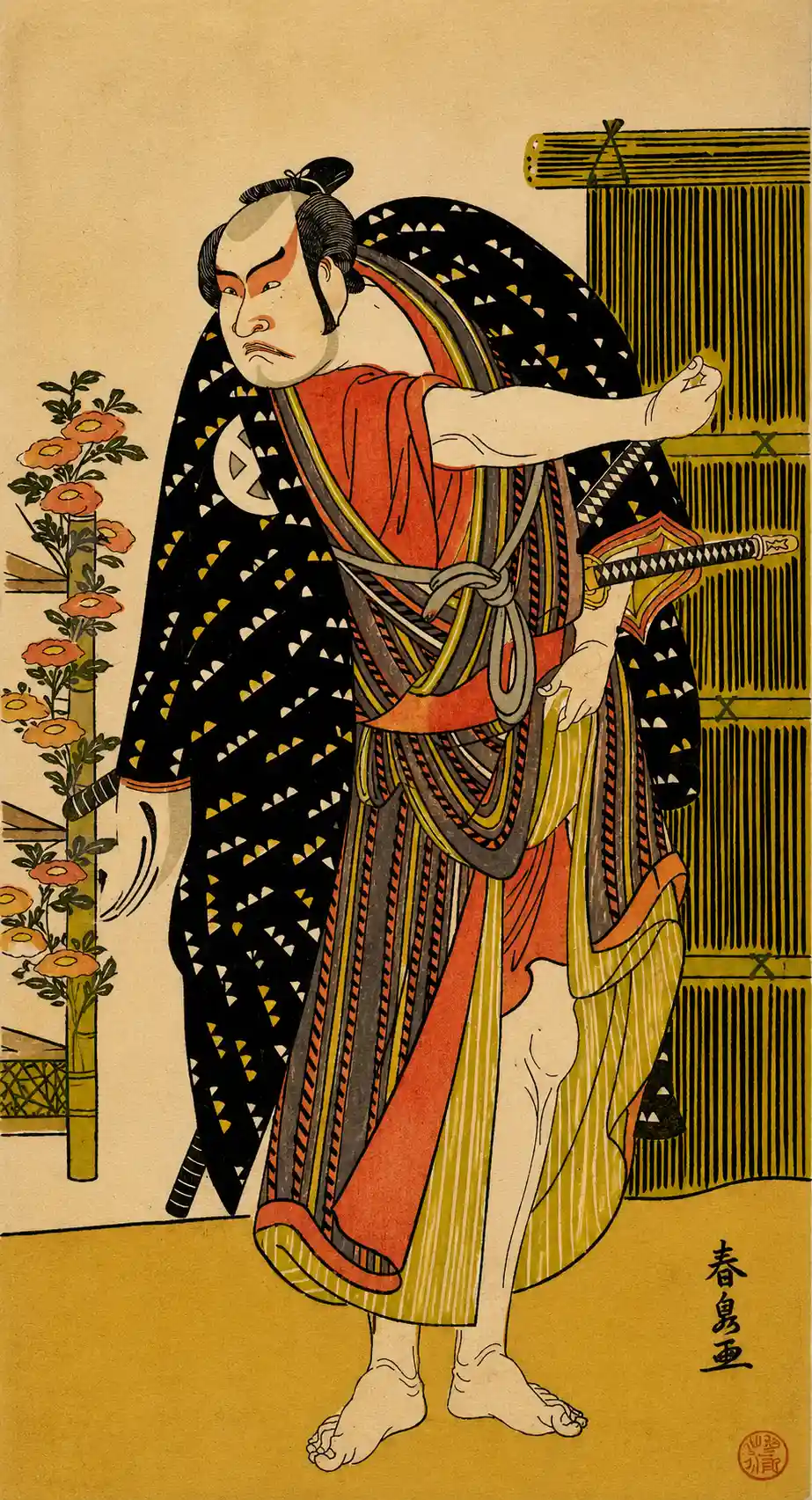
The Actor's Gaze
The lantern light flickers, casting shadows on the worn stage. Ōtani Hiroji III stands still, his eyes piercing through the dimness. The air is heavy with anticipation. His robes rustle softly as he shifts his weight, the fabric whispering secrets of past performances. The audience holds its breath, waiting for his next move.
A single drumbeat echoes, resonating in the hushed theatre. Hiroji's expression changes, a subtle transformation that electrifies the room. Silence stretches, taut and expectant, as he embodies the character's soul. The scent of incense lingers, a reminder of the theatre's sacred space.
He raises a hand, delicate yet commanding, and the story unfolds with each precise gesture. The audience remains entranced, drawn into the world he conjures with mere presence. Every pause, every glance, speaks volumes. The actor's gaze, both fierce and tender, captures hearts long after the curtain falls.
Historical Echo
Ōtani Hiroji III, a name that resonates in the annals of Kabuki theatre. His performances in the late 18th century captivated audiences, his craft honed to perfection. Katsukawa Shunsen immortalised Hiroji's essence through his woodblock prints, capturing the actor's dynamic spirit. The prints serve as a gateway to the past, where the echoes of Hiroji's voice still linger, a testament to the enduring allure of Kabuki. The 1780s, a time when theatre was not mere entertainment but a vital cultural tapestry, remembered through the silent dialogue of ink and paper.