

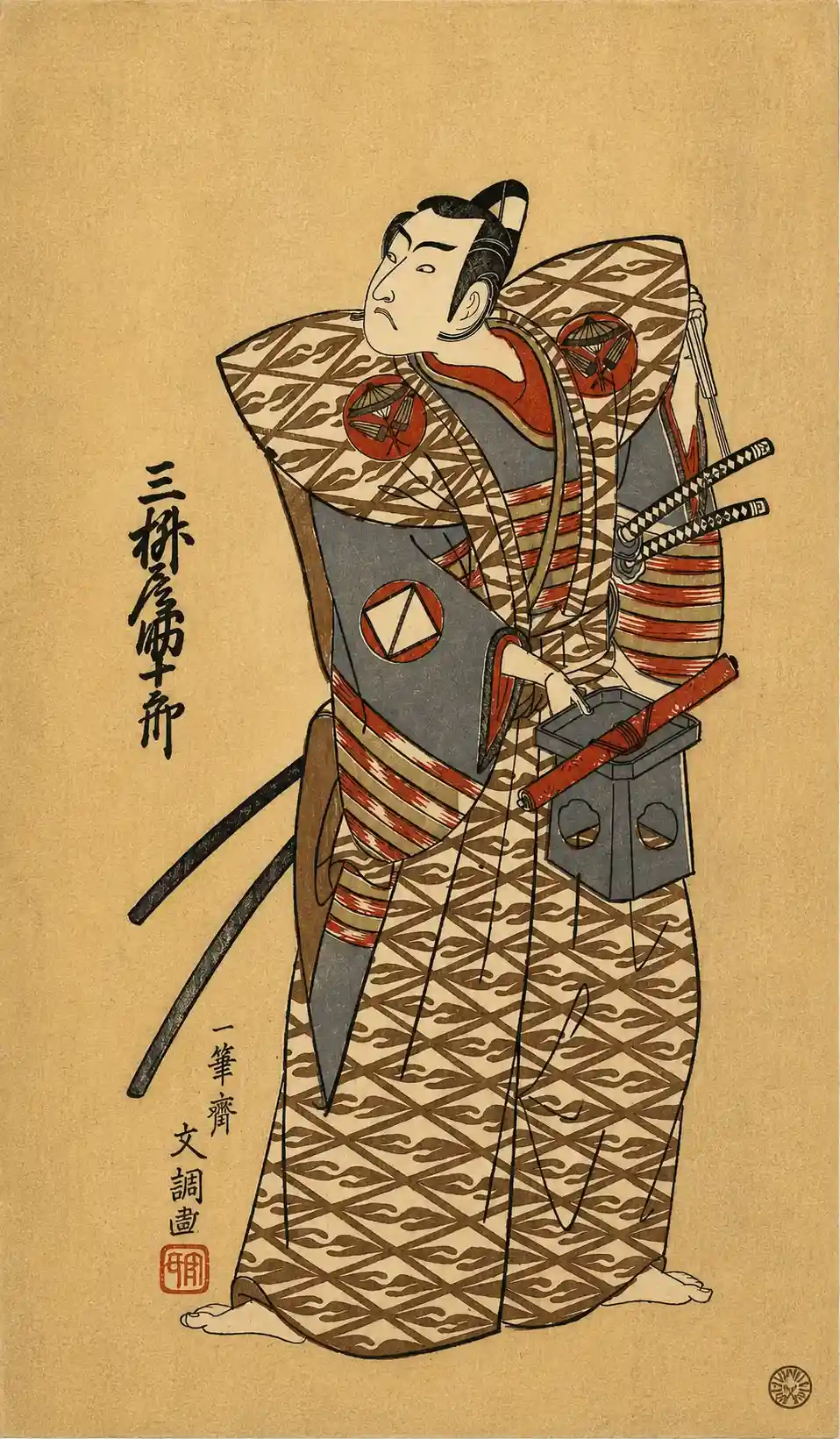
Silence in the Chamber
The chamber was dim. Shadows clung to the corners like old secrets. Mimasuya Sukejuro stood alone, his eyes tracing an invisible line on the tatami. The air was thick, silent but for the rustle of his kamishimo—a garment of stiff silk, cutting the space around him. The heavy fabric whispered with each move, echoing the weight of duties carried and promises kept.
A single lamp flickered by the shoji. Its flame wavered, casting fleeting shapes across the paper screen. Outside, the world slept under a cloak of ink-dark skies, stars hidden behind the thick veil of night clouds. Sukejuro’s hand rested on the hilt of his katana, the metal cool and reassuring. It was a companion in solitude, a testament to a life pledged to the way of the warrior.
Memories played in the silence. The clash of steel, the cries of battle, the solemn oaths made beneath watchful eyes. Each breath was a reminder of the path he walked—a path marked by honour and shadowed by inevitable solitude. His gaze fell upon the floor again, where the past and present entwined like the delicate threads of his attire, each stitch a story, each fold a secret.
Historical Echo
The image of Mimasuya Sukejuro captures a moment suspended in time. Created by Ippitsusai Bunchō around 1770, this woodblock print embodies the Edo period’s fascination with the samurai’s stoic world. The kamishimo, a formal attire of layered garments, signifies status and tradition, framing the samurai’s presence with authority and grace. Within this quiet scene, the echoes of a tumultuous era resonate, where duty and honour defined the very essence of life.