

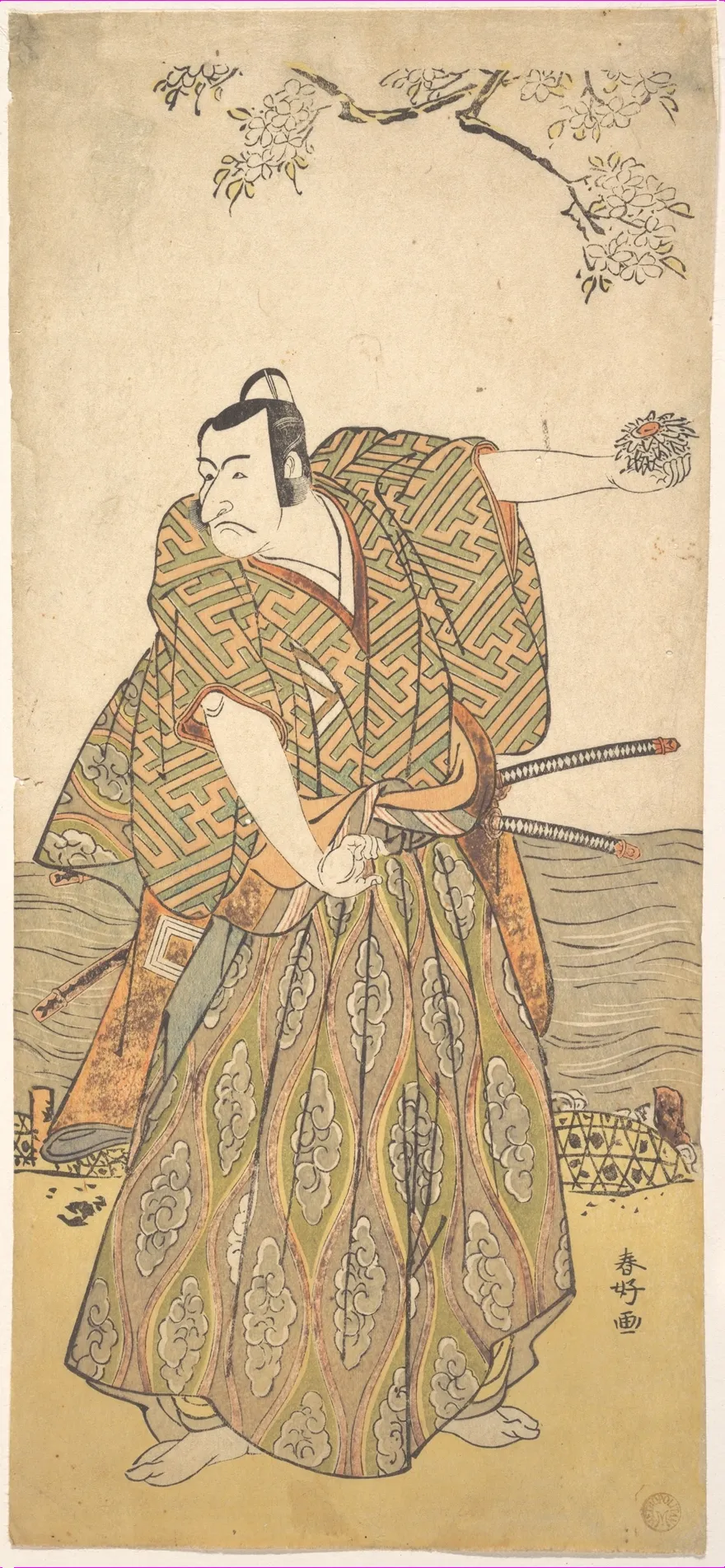
The Fifth Ichikawa Danjuro as a Samurai
In the dim light of the kabuki stage, a lone figure stands resolute. His armour, intricate and dark, absorbs the flickering glow of lanterns. He is Ichikawa Danjuro, the fifth to bear the name. His eyes are fierce, yet a quiet melancholy lingers in their depths.
The air is thick with anticipation. The audience holds its breath, waiting. Danjuro's hand grips the hilt of his sword, the blade hidden yet palpable. His stance is strong, grounded, like an ancient tree weathering a storm.
The silence is heavy, broken only by the rustle of silk robes and the distant murmur of the restless crowd. Danjuro raises his head, the shadow of his kabuto casting a sombre veil over his face. He embodies the spirit of the samurai—a warrior bound by duty and honour.
Behind him, the painted backdrop of mountains looms, eternal and unyielding. It whispers of battles long past, of victories and losses etched into time. Danjuro breathes in deeply, the scent of the stage mingling with the memories of his ancestors.
He steps forward, each movement deliberate, echoing with the weight of tradition. The stage is his battlefield, the audience his witnesses. A faint tremor runs through the wooden floor, as if the earth itself acknowledges his presence.
In this moment, Ichikawa Danjuro is not merely an actor, but a living relic of a bygone era. His performance is a dance with history, a fleeting glimpse into the soul of a samurai.
Historical Echo
Ichikawa Danjuro V was a renowned kabuki actor of the Edo period, celebrated for his dynamic portrayals of samurai. Katsukawa Shunkō captures this essence in his woodblock print, immortalising Danjuro's commanding presence on stage. The piece reflects the cultural fascination with the samurai ethos during the late 18th century, a time when kabuki thrived as an art form, bringing stories of heroism and tragedy to life. Shunkō's work remains a testament to the enduring legacy of kabuki theatre and its ability to convey the profound depth of human emotion.