

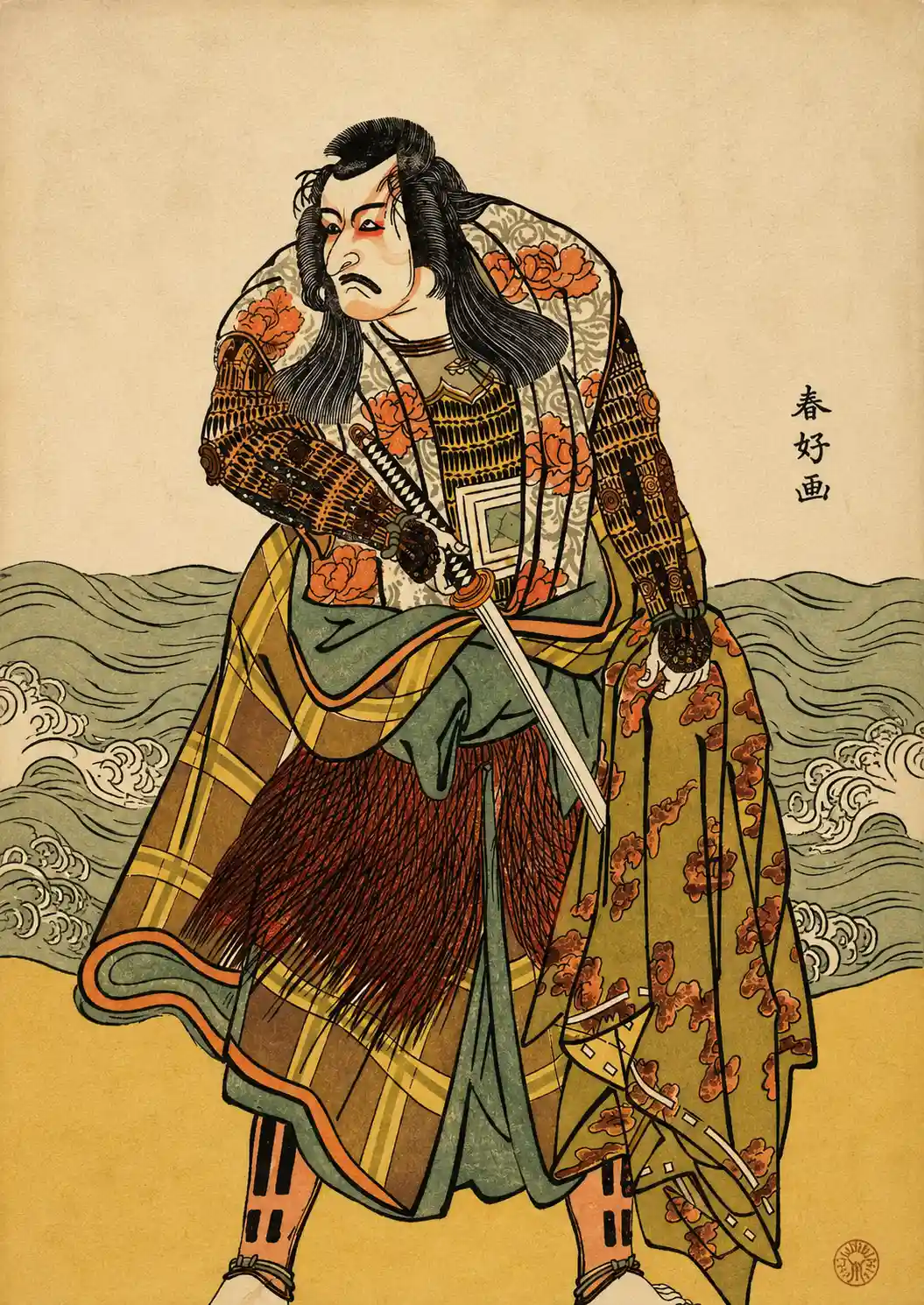
The Fifth Danjuro's Gaze
Lanterns flickered in the dim evening. Shadows swayed across the wooden stage. The Fifth Ichikawa Danjuro stood, samurai armour gleaming under the muted light. Silence wrapped the audience, their breaths held in anticipation.
His eyes, dark and piercing, scanned the room. He embodied a warrior's spirit, every muscle tense, poised for action. The rustle of his armour was the only sound, a soft whisper against the backdrop of hushed expectation.
The air was heavy with the scent of incense, mingling with the earthy fragrance of the old theatre. A slow, deliberate step forward. The stage creaked softly beneath his weight, a testament to countless performances past.
In that moment, time seemed suspended. The boundary between actor and character blurred. Danjuro was not merely performing; he was the samurai, living the ancient tales of honour and duty. The weight of his lineage pressed upon him, yet he stood undeterred.
A delicate breeze filtered through the open shoji screens, rustling the paper walls. It carried with it echoes of distant battles, the clang of swords, the cries of warriors long gone. The audience, entranced, became part of this timeless tableau, drawn into the stillness, the intensity of the Fifth Danjuro's gaze.
Historical Echo
In the late 18th century, kabuki theatre was a vibrant cultural force. Ichikawa Danjuro, a name synonymous with strength and drama, was an icon. Katsukawa Shunkō captured this essence in woodblock prints, immortalising the power of performance.
These prints were more than art; they were vessels of emotion and history. Shunkō's work spoke to the soul of Edo, a city alive with stories, vibrant and yet quietly introspective. Through his skill, the spirit of the samurai and the world of kabuki fused into a single, timeless moment. The Fifth Danjuro's presence lingered, a haunting reminder of the past's enduring resonance.