

The Quiet Stage
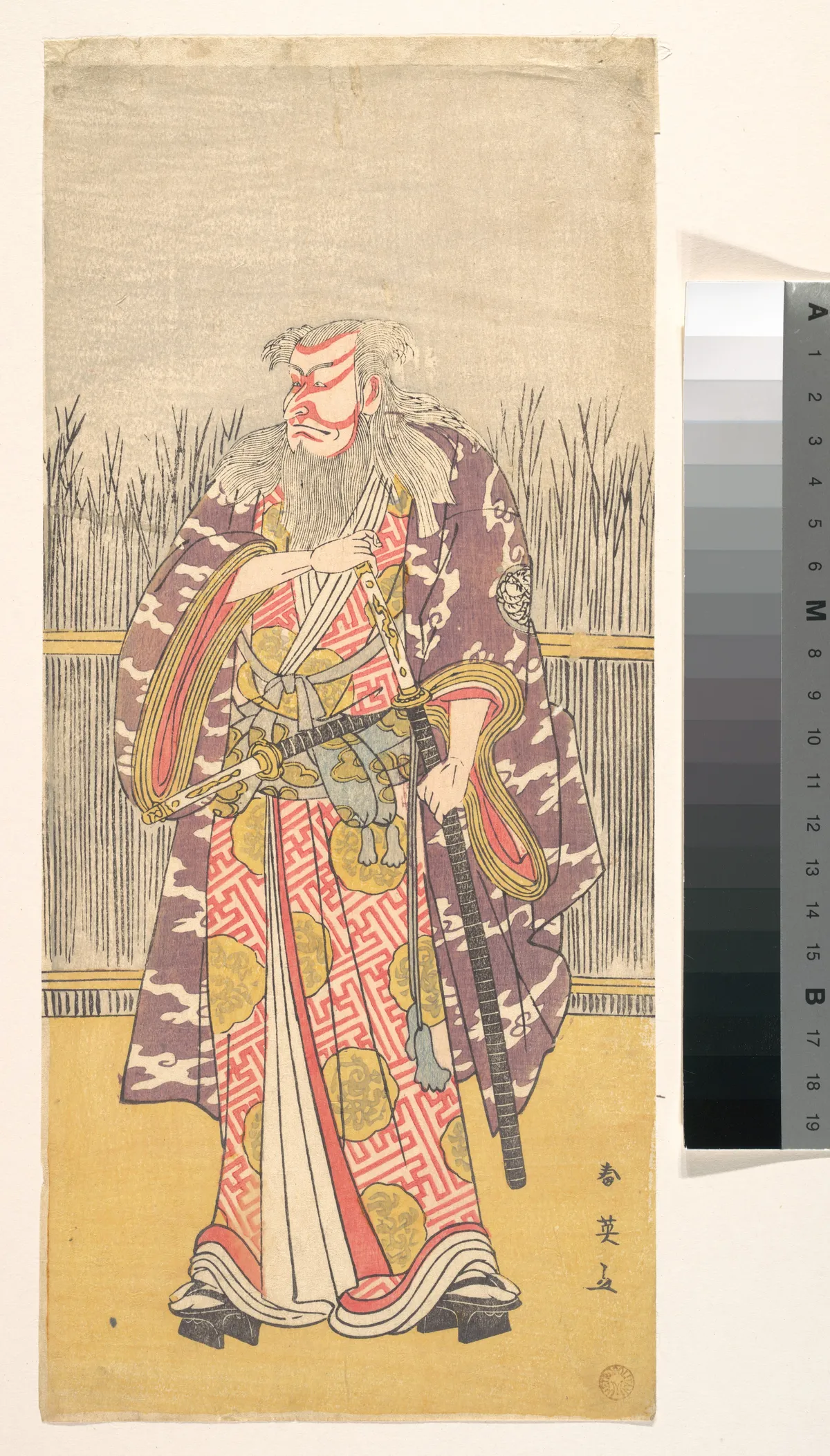
The candles flickered softly. Shadows danced across the wooden stage. In the dim light, the actor stood motionless. His kimono, layered and heavy, rustled like a whisper in the silence. The audience held its breath. Ichikawa Ebizō, known to many as Danjūrō V, embodied the aging samurai Sasaki Ganryū. His eyes, deep and weary, spoke of battles long past.
The air was thick with anticipation. The scent of incense lingered, mingling with the earthy aroma of fresh tatami mats. Ebizō's presence commanded respect, each subtle gesture a testament to his craft. His hands, calloused yet graceful, moved deliberately. The room was still, save for the occasional creak of the wooden floorboards.
This performance, captured in ink by Katsukawa Shun'ei, was more than mere entertainment. It was a glimpse into the soul of a warrior, a reflection on honour and mortality. The actor, through his portrayal, became the samurai. Time seemed to slow, each moment stretched like silk across the stage.
As the final act approached, a hush fell over the crowd. The rustling of silk, the soft patter of distant rain against the theatre's roof, these were the only sounds. In that suspended moment, actor and character merged, a single entity in the echoing silence.
Historical Echo
Katsukawa Shun'ei crafted this woodblock print in the late 18th century. It captures Ichikawa Ebizō V, a famed kabuki actor, embodying a storied samurai. The performance reflects the Edo era's fascination with bushidō—the way of the warrior. Audiences in 1792 would have recognised the layers of meaning in each movement, each expression, as art and life intertwined on stage.