

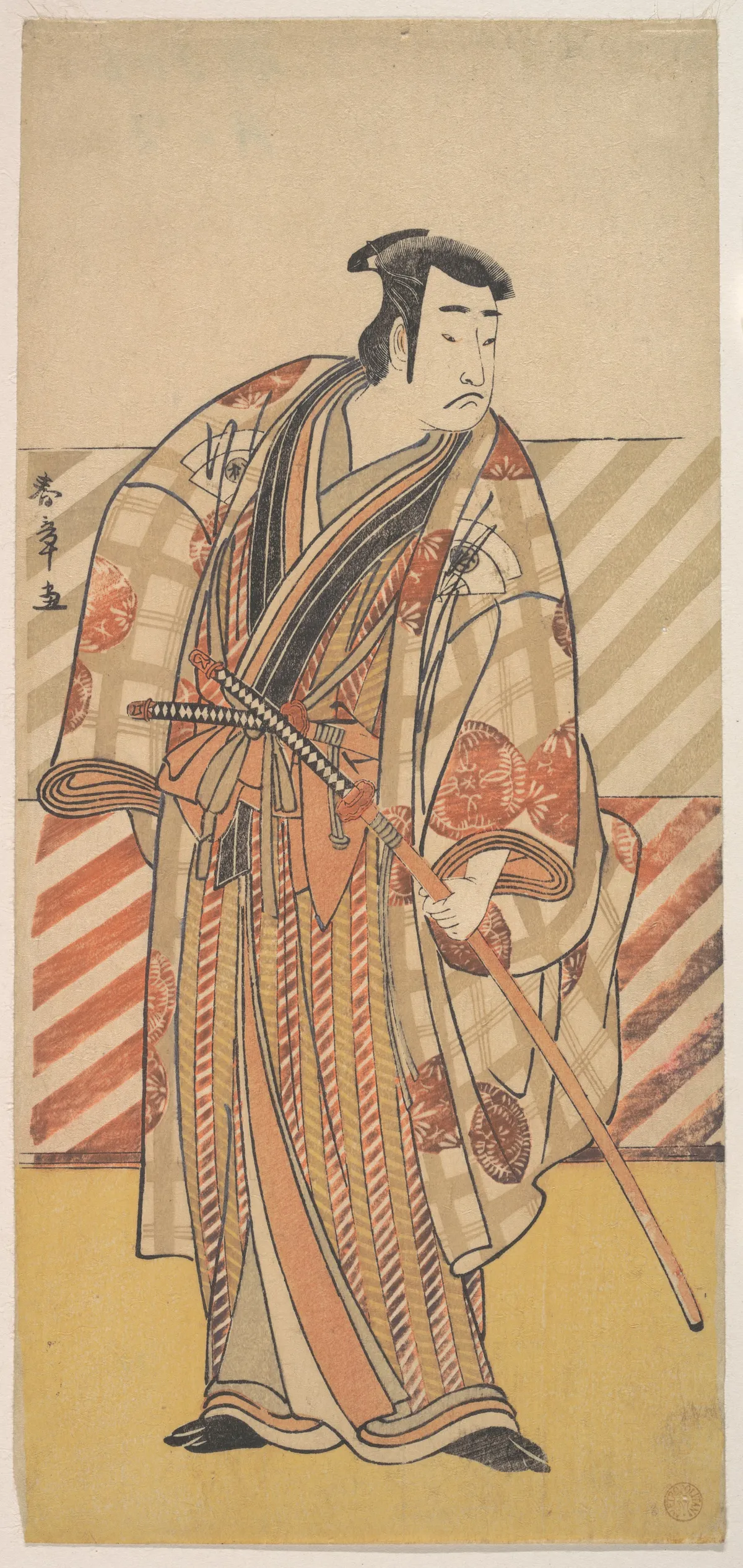
The Silent Stage
The lantern light flickers. Shadows dance across the wooden stage. Onoe Matsusuke stands, resolute, draped in the heavy robes of a Fujiwara clan samurai. His eyes pierce the dimness, fixed on an unseen horizon. The air is dense, the weight of the audience’s anticipation palpable.
In his hand, a fan. It snaps open with a sharp crack, the sound echoing like the clash of distant swords. His movements are deliberate, each gesture a brushstroke on the canvas of silence. The scent of ink and aged wood mingles, held in the breath of the onlookers.
The fabric of his costume rustles softly, an audible reminder of battles fought, victories claimed. The stage is his battlefield. Each step, a calculated strategy. His voice, when it comes, is low and commanding, weaving tales of honour and legacy.
The theatre holds its breath, enraptured by the samurai’s ghost brought to life by Matsusuke’s craft. Time slows, the world outside forgotten, held in the thrall of this Edo night.
Historical Echo
Onoe Matsusuke was a famed kabuki actor of the Edo period, celebrated for his ability to embody powerful samurai roles. In this print by Katsukawa Shunshō, created around 1782, Matsusuke is captured in the guise of a samurai from the noble Fujiwara clan. This woodblock print is a testament to the intricate art of ukiyo-e, where actors were immortalised in their most iconic roles, blending the worlds of theatre and visual art into a singular, evocative form.