

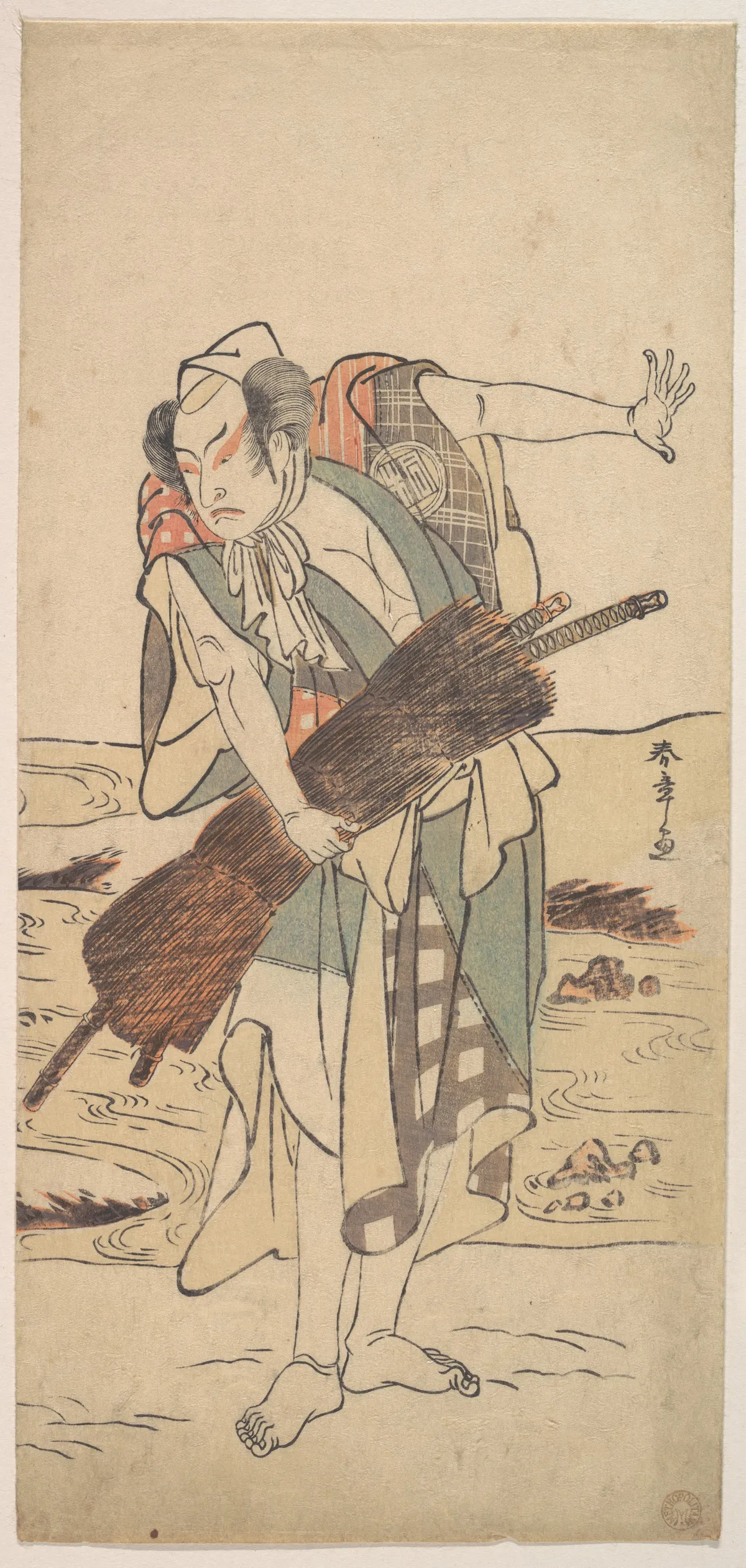
Arashi Sangoro on the Edge
A lone figure stands by the riverbank. His silhouette casts a long shadow on the damp earth. Arashi Sangoro, once a samurai, now a ronin. His armour is absent. Instead, he wears the robes of a wanderer. The fabric, heavy with the scent of smoke and travel, clings to him with an intimacy born of solitude.
The river murmurs quietly, its surface reflecting the muted glow of the moon. The air is thick with the promise of rain. Each droplet, an echo of battles fought and lost. Sangoro's gaze is steady, fixed on the horizon. Yet, in the silence, his heart beats a rhythm of past loyalties and the weight of honour.
A gentle breeze stirs the reeds. They whisper secrets only the night can keep. Sangoro listens to their rustling, his grip tightening on the hilt of his sword. The blade, cool and familiar, rests at his side. It is the last remnant of a life once bound by duty and service.
The night deepens, wrapping the world in its velvet embrace. Sangoro remains, a sentinel at the edge of both river and destiny. His breath mingles with the river mist, a silent vow to the life he has chosen, or perhaps, the life that has chosen him.
Historical Echo
In the twilight of the Edo period, the figure of the ronin became a poignant symbol. Masterless samurai, like Arashi Sangoro, roamed the lands. They were bound neither by clan nor lord, driven by personal codes of honour. Katsukawa Shunshō captures this solitude with quiet intensity. The woodblock print echoes the era's shifting tides, where tradition met the inevitability of change. Sangoro's stance, resolute yet contemplative, embodies the spirit of an age on the brink of transformation.