

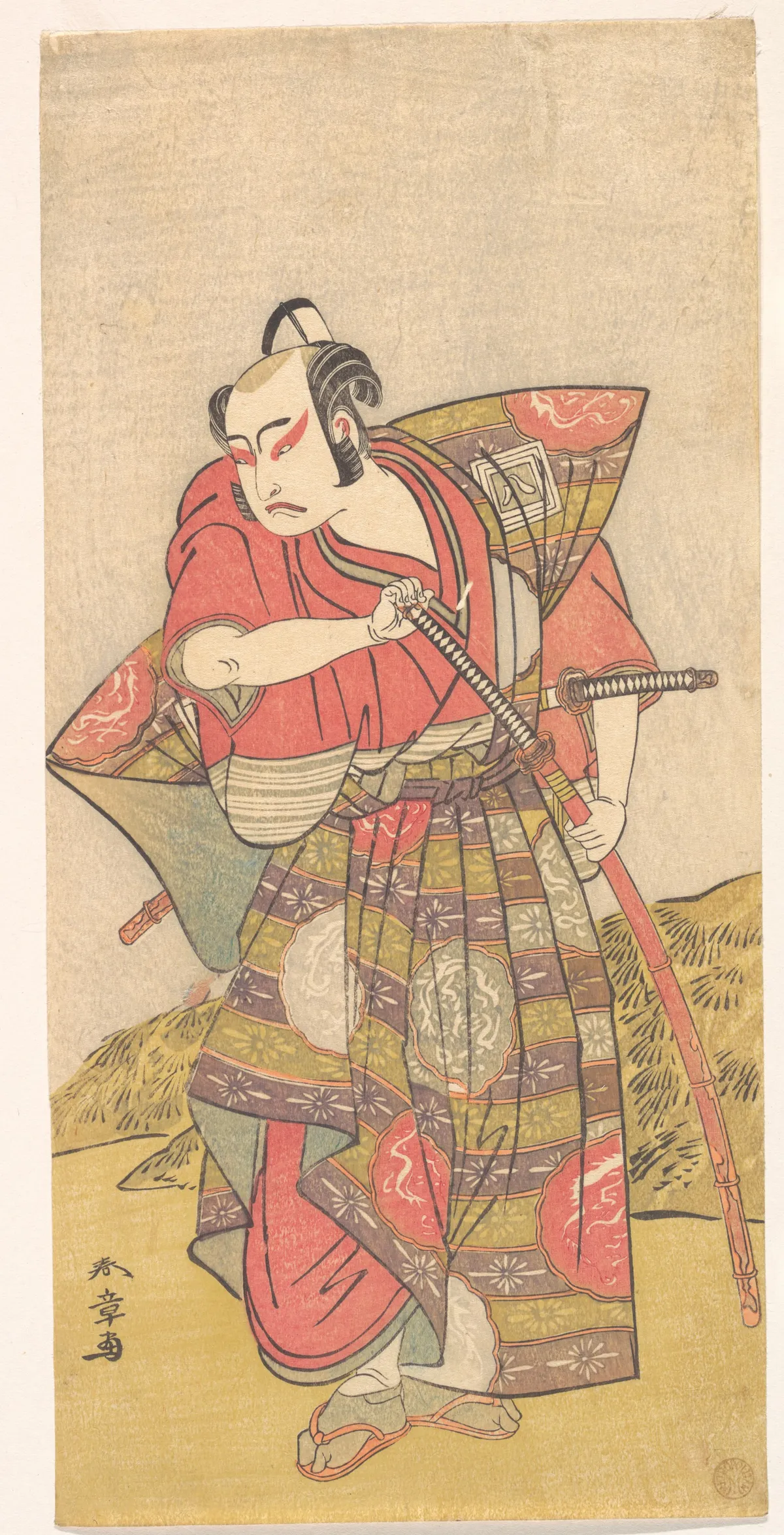
The Gaudy Armour
In the dim light of dawn, a samurai stands still. His gaudy kamishimo catches the first light, colours muted yet vibrant. The silk whispers against his skin as he shifts. The air holds a chill, the kind that pricks the skin and sharpens the senses. His gaze, steady and unyielding, pierces the morning mist.
The distant sound of a bell echoes. It rings through the stillness, a reminder of the world beyond the theatre. This is not a battlefield of blood and honour, but a stage of illusion and grace. Yet, in this moment, the line blurs. The actor becomes the warrior. The warrior becomes the legend.
His hand rests on the hilt of a katana. The metal is cold, yet alive with potential. The weight of the sword is nothing compared to the weight of expectation. The audience awaits, unseen but felt, their anticipation hanging heavy in the air.
The samurai breathes in. The scent of pine and earth fills his lungs, grounding him. He is ready. The performance is about to begin. The world holds its breath.
Historical Echo
Katsukawa Shunshō captures the essence of kabuki theatre in this print. The Second Ichikawa Yaozo, a celebrated actor, embodies the samurai's spirit. In 1773, such portrayals were not mere entertainment. They were a reflection of Edo's fascination with samurai ideals. The gaudy kamishimo, with its extravagant patterns, speaks of a time when performance and reality intertwined. The air of the theatre mingles with the echoes of history, leaving an indelible mark on this woodblock print.