

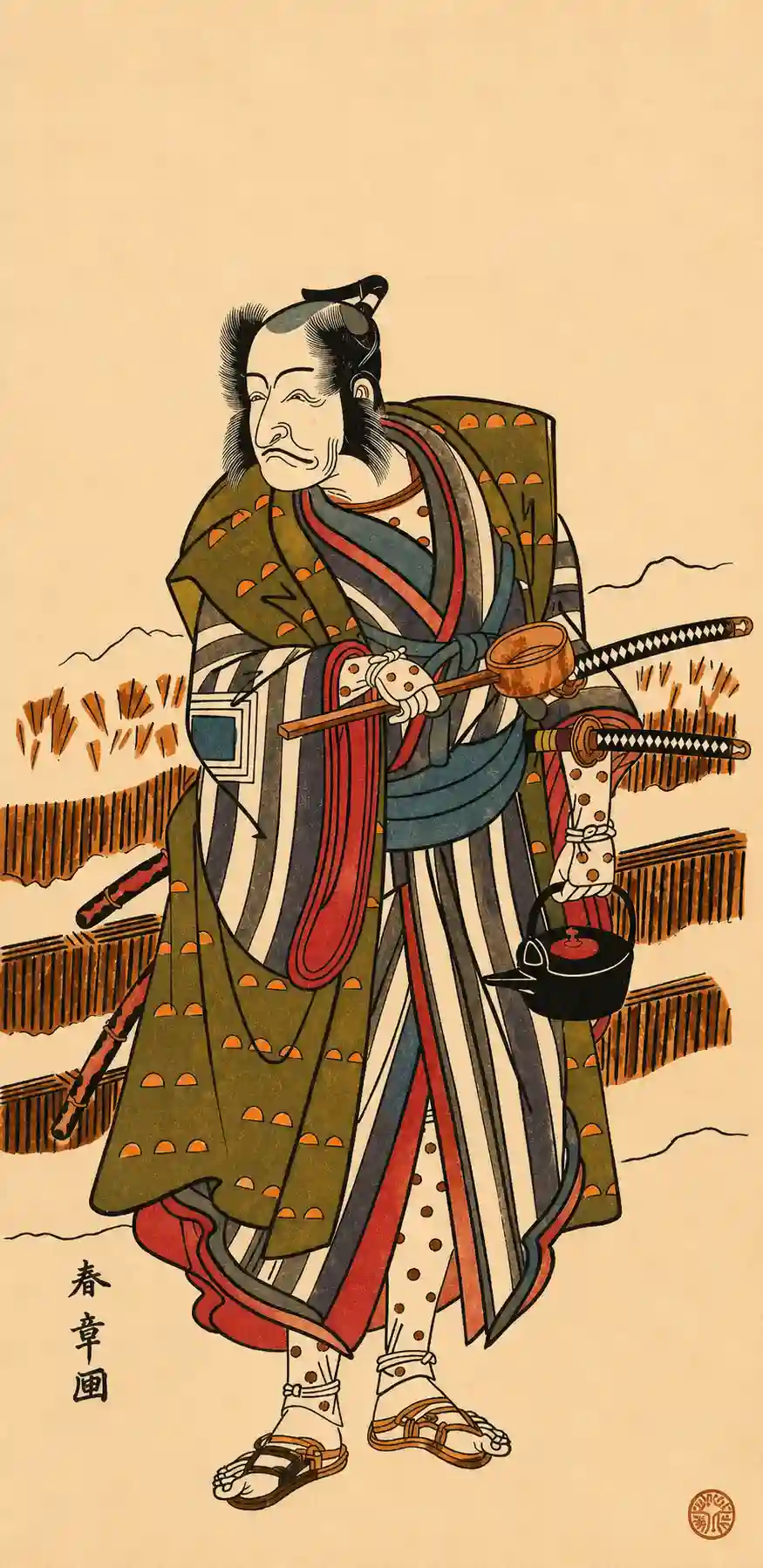
The Silent Stage
The stage lay dim under the weight of flickering lanterns. Shadows danced across paper screens. Ichikawa Ebizo, bearing the spirit of a samurai, moved with the deliberate grace of a seasoned actor. His robes whispered against the polished wood, a gentle rustle breaking the temple-like silence.
His eyes, sharp as a hawk's, scanned the unseen audience. The heavy air carried the scent of incense, mingling with the faint musk of old costumes. Each breath was measured, a testament to years of training and discipline.
Ebizo's hand, steady and sure, wrapped around the hilt of his sword. The polished steel glimmered under the lantern light, a promise of both protection and destruction. His posture, a perfect blend of poised tension and serene calm, spoke volumes.
The audience, shrouded in darkness, held their breath. The anticipation was palpable, a living entity within the theatre. Ebizo's movements told a story older than words, the tale of honour and duty echoing through time.
The kabuki theatre was his domain, a sacred space where every gesture held meaning. As he moved, the fabric of his kimono caught the light, a silent dance of colour and shadow. The scene was set, and the samurai stood ready, a symbol of strength and resolve in the face of chaos.
Historical Echo
Katsukawa Shunshō captured the essence of Edo's kabuki theatre in this woodblock print. Ichikawa Ebizo, the Fourth Ichikawa Danjuro, was a celebrated actor known for his powerful portrayal of samurai roles. In the late 18th century, kabuki was both entertainment and cultural reflection. The actors, revered and influential, embodied the spirit of their characters, blurring the lines between reality and performance. Shunshō's art immortalised these fleeting moments, allowing the echoes of Edo's vibrant theatre scene to resonate through history.