

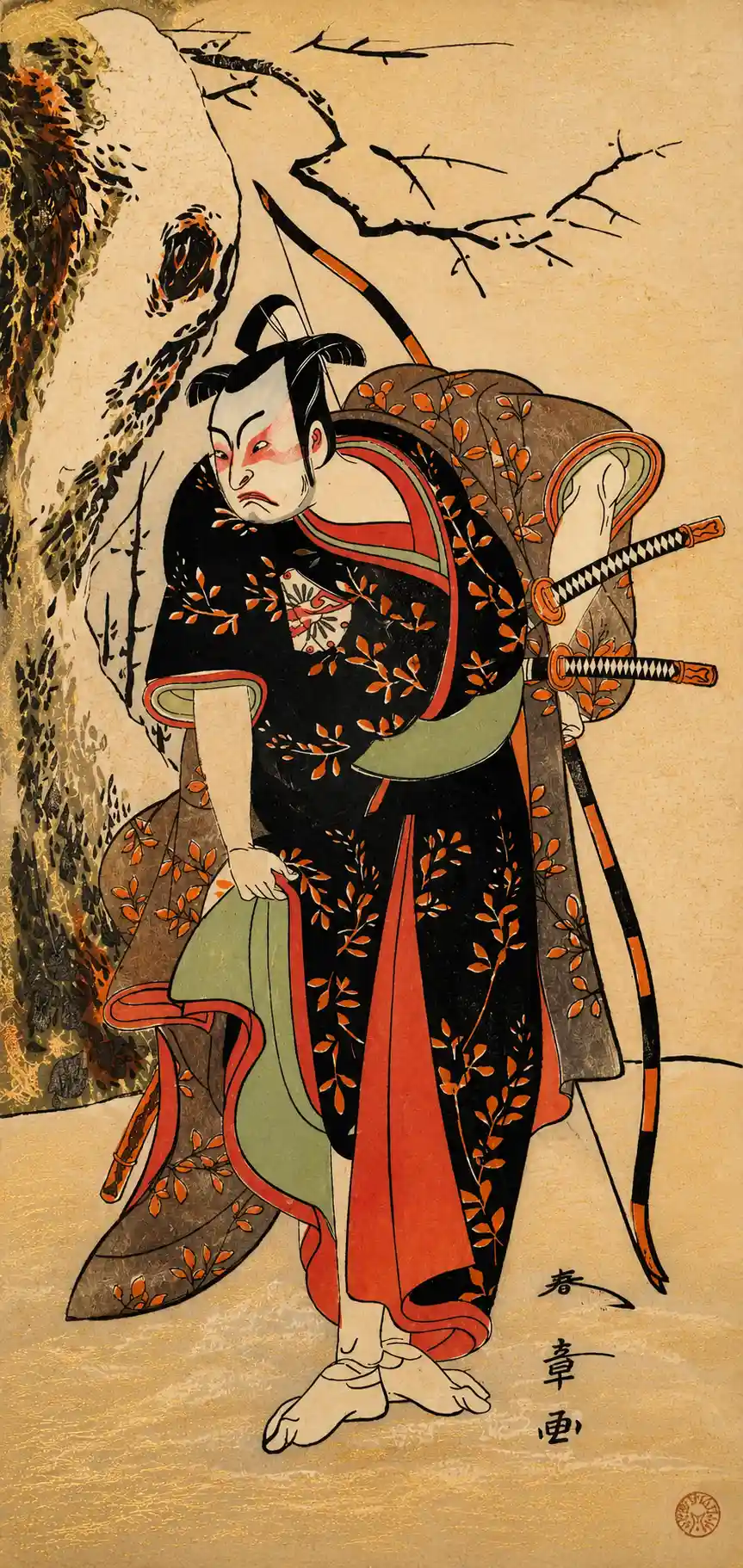
The Silent Watch
The room is silent. Heavy drapes keep the outside world at bay. A lone lantern flickers, casting long shadows across the tatami. The air is thick with incense. Its scent lingers, mingling with the faint odour of aged wood.
In the centre stands Nakamura Juzo, a figure of authority and grace. His armour shines in the dim light, each plate meticulously polished. He wears his rank like a second skin, comfortable yet commanding. His gaze is steady, eyes reflecting the flicker of the lantern.
A soft rustle breaks the silence. The sound of silk brushing against itself as he adjusts his stance. The weight of his katana by his side is reassuring. Its presence is a silent promise, a testament to the life he leads.
Outside, the wind whispers through the trees. A gentle reminder of the world beyond these walls, of the duties that await. Yet for now, time is suspended, held in this moment of quiet introspection.
His thoughts drift to the stage, to the role he embodies. The samurai, the warrior, the protector. Each performance a dance between reality and illusion, history and the present. He breathes deeply, feeling the steady rhythm of his heart.
The lantern flickers again, casting new shadows. The room is unchanged, yet alive with unseen movement. A testament to the spirit of the samurai, captured in wood and ink by the hand of Katsukawa Shunshō.
Historical Echo
In the late 18th century, Edo thrived on the vibrant culture of kabuki theatre. Actors like Nakamura Juzo captivated audiences with their portrayal of legendary samurai. Katsukawa Shunshō, a master of ukiyo-e, immortalised these performances through his art. His prints captured the essence of the kabuki world, blending reality with the stylised grandeur of the stage. As the curtain fell each night, the echoes of clashing swords and impassioned monologues lingered, haunting the silent streets of Edo.