

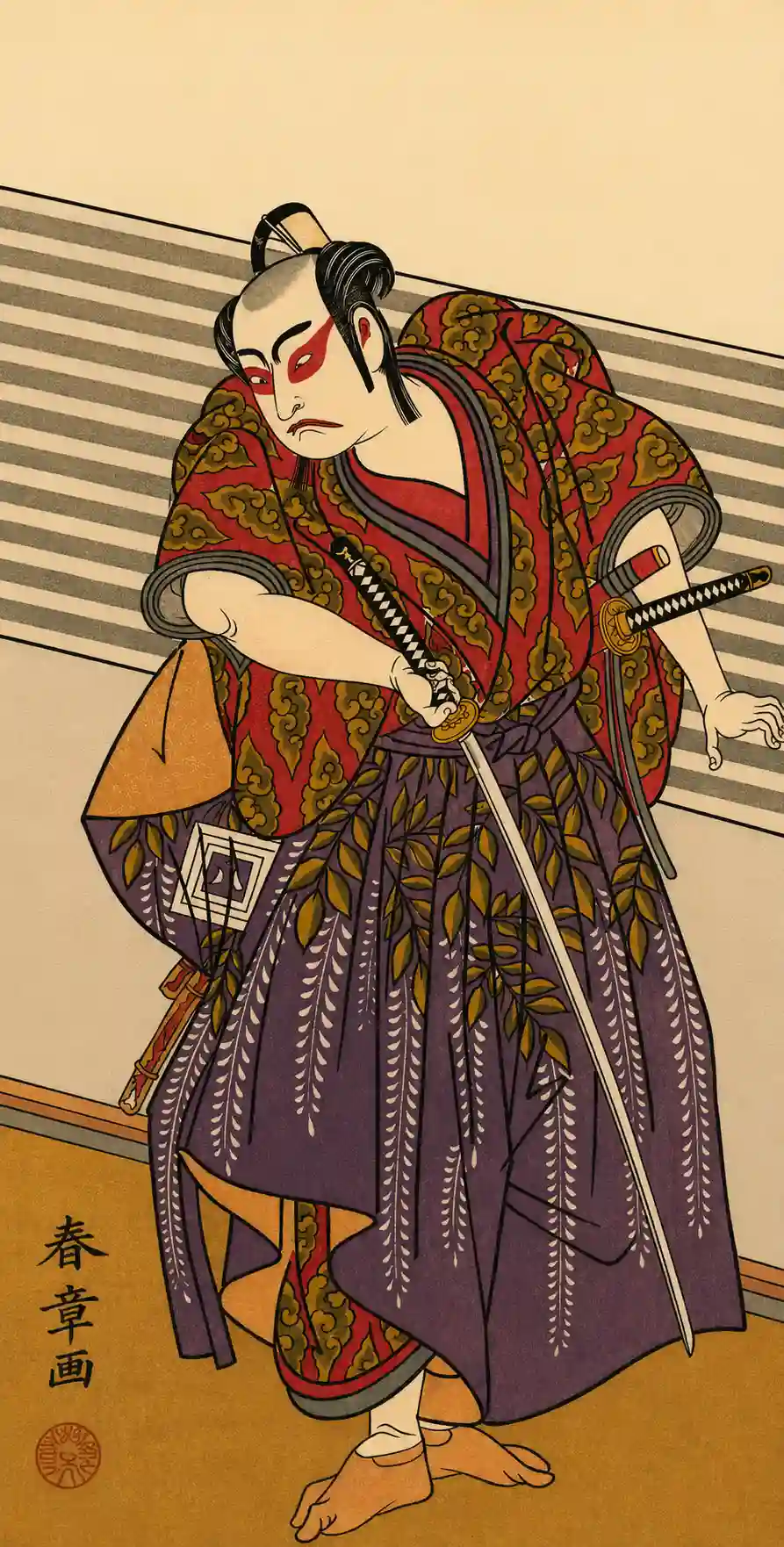
The Second Ichikawa Yaozo as a Samurai
A faint rustle of silk echoes in the dim room. The wooden floor creaks under the weight of heavy sandals. Candlelight flickers against the shoji screens, casting a dance of shadows across the tatami mats. The air is thick with the scent of ink and wood, mingling with the faint aroma of burning incense.
Ichikawa Yaozo, the actor, stands poised. His eyes, sharp and penetrating, reflect the stoic resolve of the samurai he embodies. The kabuki stage is silent, yet charged with anticipation. His armour, meticulously detailed, glints under the sparse light, each piece a testament to craftsmanship and tradition.
The audience, hushed and expectant, holds its breath. Yaozo's presence commands the space, the weight of history and performance resting on his shoulders. He draws his katana with deliberate grace, the steel whispering against its scabbard. As he moves, the fabric of his attire sways, a rhythmic accompaniment to the silent drama.
Outside, the city of Edo hums quietly. A world of shadows and echoes, where the past lingers in every corner. The performance is both a reflection and a defiance of this world—a timeless dance between reality and illusion.
Historical Echo
In the late 18th century, kabuki theatre flourished in Edo, a city of transient beauty and eternal stories. Katsukawa Shunshō captured this era, immortalising actors like Ichikawa Yaozo in woodblock prints. These prints were not mere portraits but windows into a world where performance and reality intertwined. The samurai depicted were both historical figures and theatrical characters, embodying the duality of Edo's cultural landscape.