

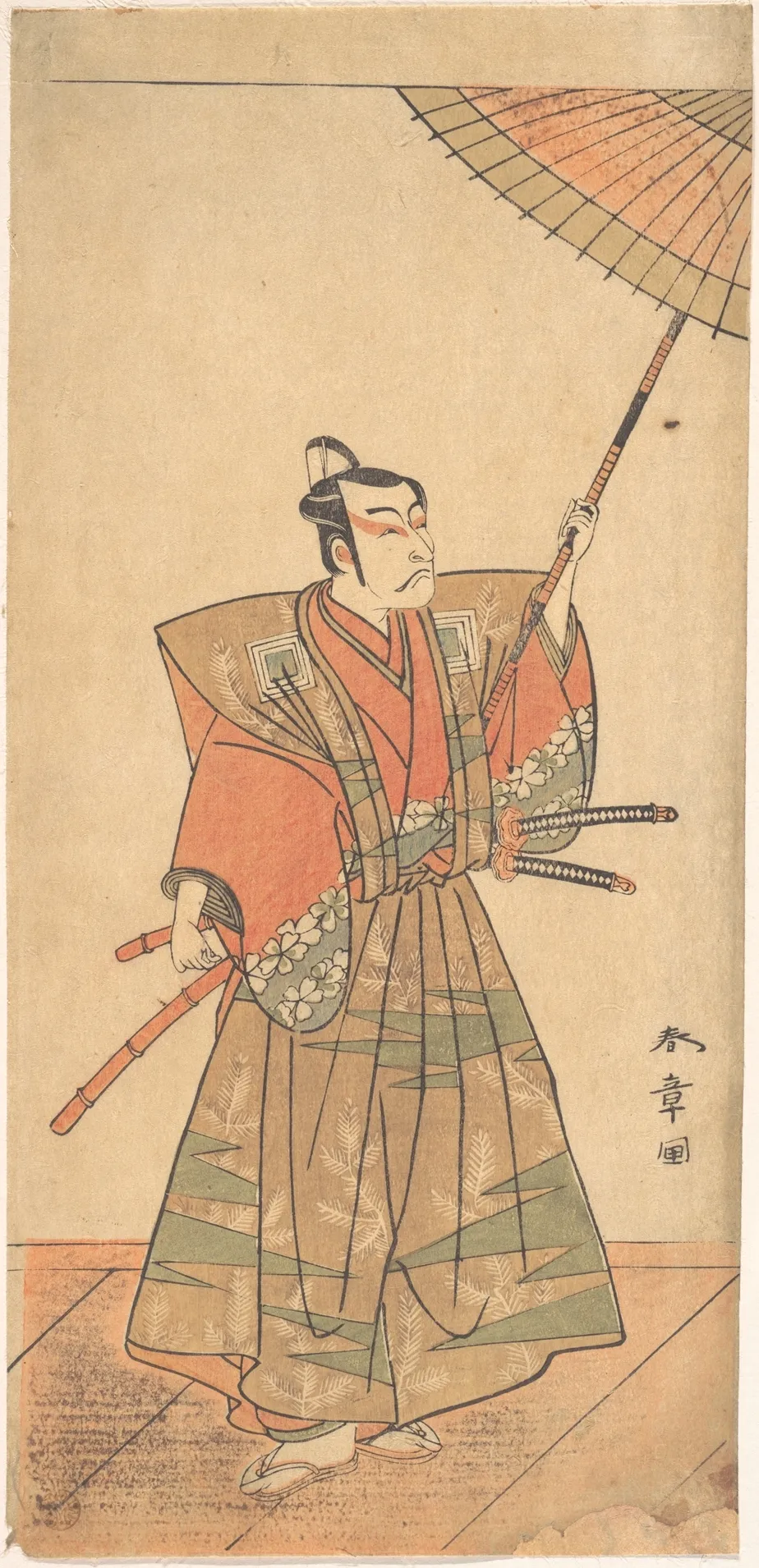
The Silent Stance
In the dim light of a paper lantern, the samurai stood motionless. His robes, the ceremonial kamishimo, whispered with each subtle shift. The air was heavy with the scent of incense, curling in thin tendrils around him. Silence reigned, broken only by the distant rustle of bamboo leaves outside.
His eyes, shadowed beneath his brow, gazed forward with intent. The room was sparse, the tatami mats soft underfoot. The weight of tradition pressed upon him, as tangible as the fabric draping his shoulders. Outside, the moon cast a pale glow, filtering through the paper screens.
In the stillness, his presence was commanding. The Fifth Ichikawa Danjuro, embodying a legacy of samurai prowess and theatrical heritage. The lines of his posture were sharp, echoing the precision of a blade. His expression, a mask of serene determination, held the echoes of countless performances before him.
A breeze stirred the edges of the room, bringing with it the chill of night. Yet, within, the air remained warm, thick with the unspoken stories of honour and duty. The samurai's hand rested lightly on the hilt of his katana, a silent promise of action should the need arise.
Time stretched, the moment suspended like a held breath. In this quiet tableau, the samurai's heart beat like a distant drum, steady and unyielding.
Historical Echo
In the Edo period, the kabuki stage was a realm of transformation. Actors like the Fifth Ichikawa Danjuro embodied not just characters, but the spirits of the samurai. Katsukawa Shunshō, with deft strokes, captured this essence in woodblock prints. The ceremonial kamishimo, a garment of status, signified the samurai's role and his connection to a storied past. As audiences watched, history and performance intertwined, leaving an indelible mark on Japanese culture.