

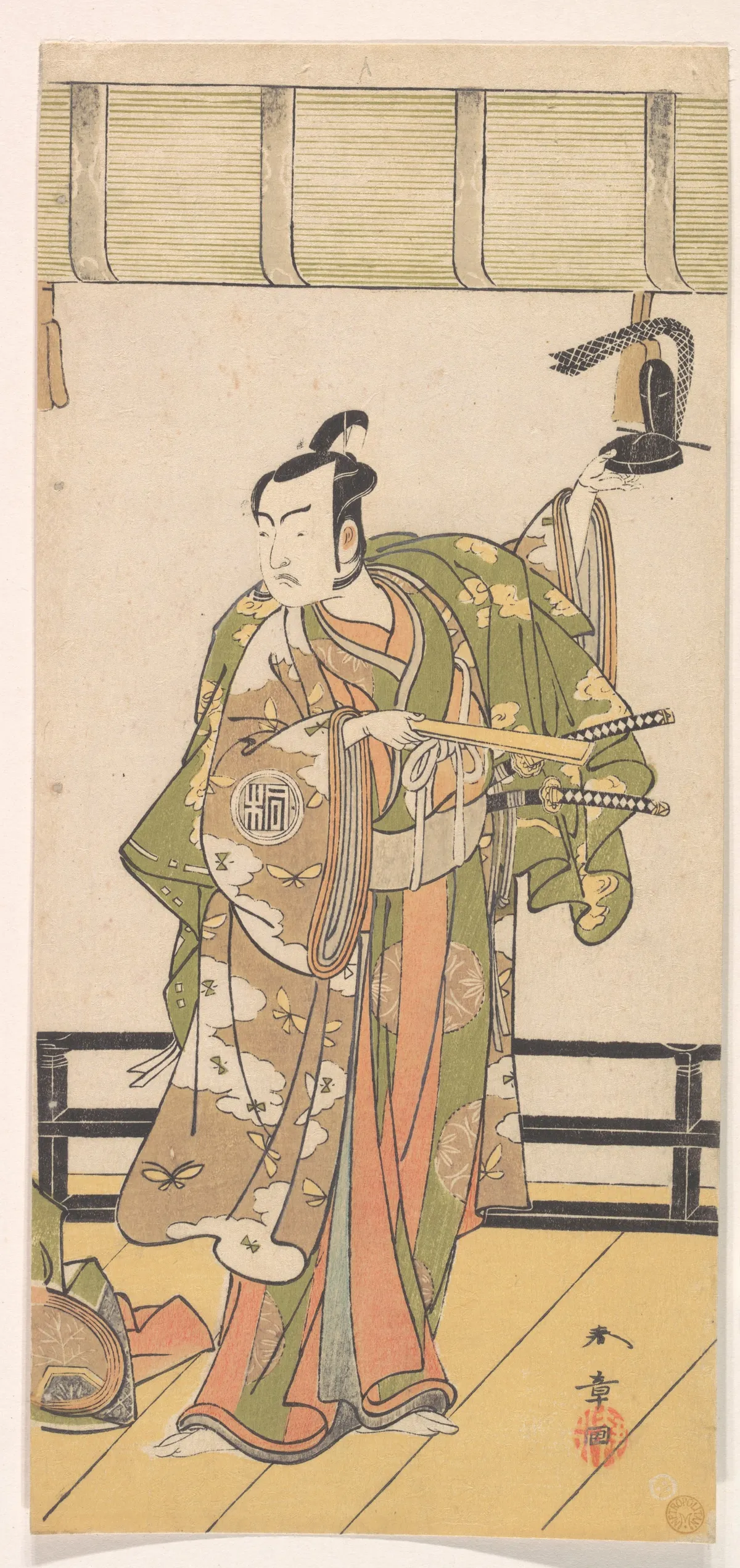
Arashi Sangoro's Vigil
The veranda stretched under the weight of silence. Arashi Sangoro stood, unmoving. His armour clung to his frame, a second skin. The air was thick, holding its breath. Sangoro's eyes scanned the garden; shadows danced in the lantern light. Night's chill seeped through the wooden planks beneath his feet.
A distant rustle. The wind, or a whisper? The great house loomed behind him, its walls a fortress of secrets. The scent of pine mingled with the lingering smoke of extinguished lamps. In the garden, moonlight pooled like silver ink.
Sangoro listened. Each creak of the veranda, a question. Each rustling leaf, an answer. The weight of his sword, reassuring at his side. He felt the history in the air, the echo of warriors past. The night was a tapestry, woven from duty and silence.
He shifted slightly. The armour clinked softly, a reminder of his resolve. Duty bound him here, to watch, to wait. The night stretched on, a silent companion. The world held its breath with him.
Historical Echo
The print captures Arashi Sangoro, a renowned actor of the Edo period, depicted as a samurai. Katsukawa Shunshō, a master of capturing theatrical presence, etched this scene in 1774 or 1775. The samurai stands vigilant, embodying the stoic honour and silent strength of his role. Such prints were not mere portraits; they were echoes of an era where actors embodied the spirit of warriors, bringing stories of the past to life on stage. The palpable tension and serene night reflect the nuanced artistry of Shunshō's work, where every detail speaks volumes.