

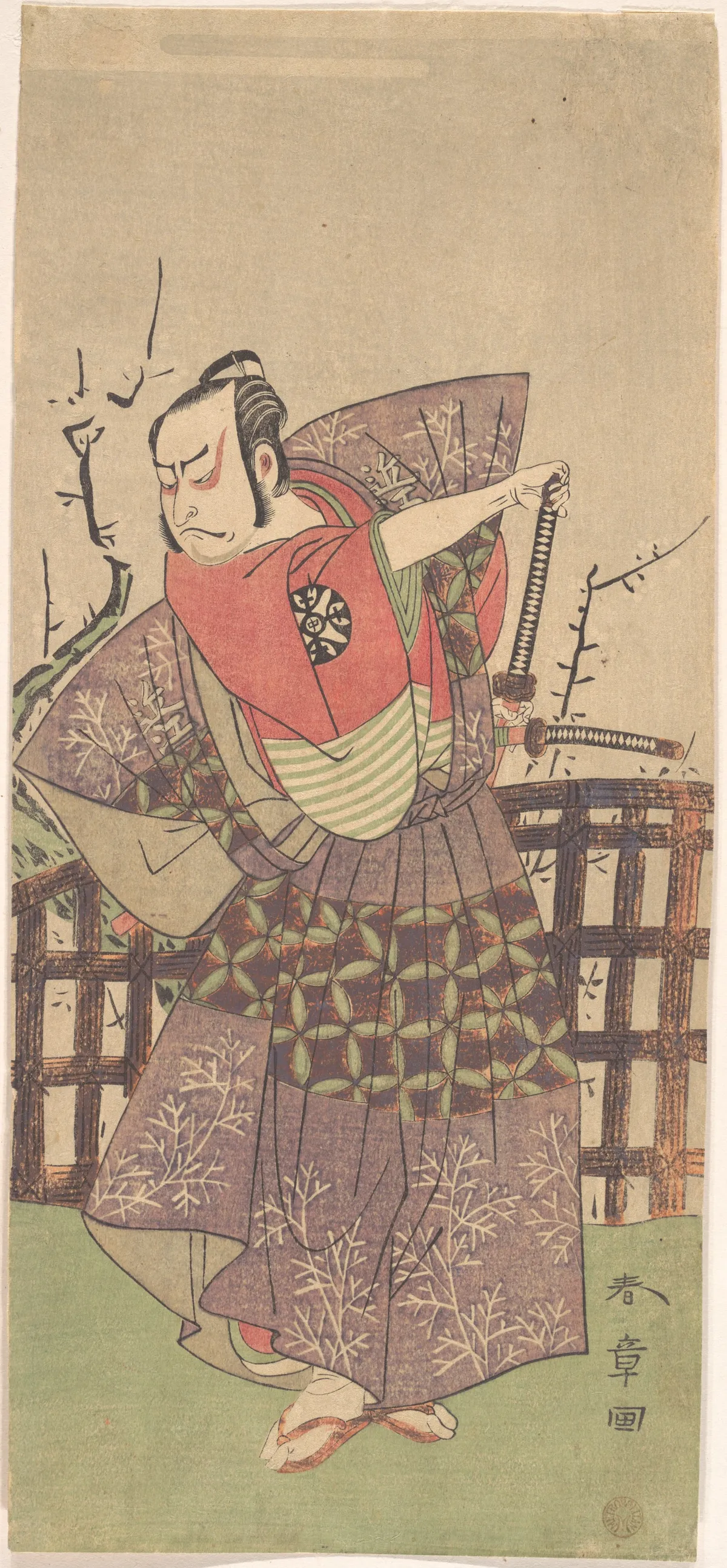
The Unspoken Presence
His presence filled the room. Nakamura Nakazo stood in a silence that was as heavy as the Kamishimo he wore. The layered fabric, stiff and ceremonial, whispered as he adjusted his stance. Around him, the air was thick with anticipation, the weight of unseen eyes pressing in from the edges of the dimly lit space.
A lantern flickered on the wooden floor, casting shadows that danced like restless spirits. Outside, the wind carried the faint scent of pine, mingling with the earthy aroma of damp earth. His samurai persona was formidable, yet the theatre was his true battleground.
The actor's gaze was steady, his face a mask of calm determination. The sharp lines of his costume mirrored the angular grace of his movements. Every gesture was deliberate, every pause filled with the unyielding strength of a warrior.
Nakazo's heart matched the rhythm of the distant drum, a quiet thunder that resonated within him. The echoes of the past lingered in the silence, a reminder of the legacy he embodied. Shadows clung to the corners, listening, waiting for the story to unfold.
Historical Echo
In the Edo period, the stage was a place of transformation. Katsukawa Shunshō captured the essence of Nakamura Nakazo, a celebrated actor, in the guise of a samurai. The Kamishimo, a formal dress, signified both status and tradition. This print, crafted around 1775, reflects the intersection of art and theatre, where actors became the storytellers of an era long past.