

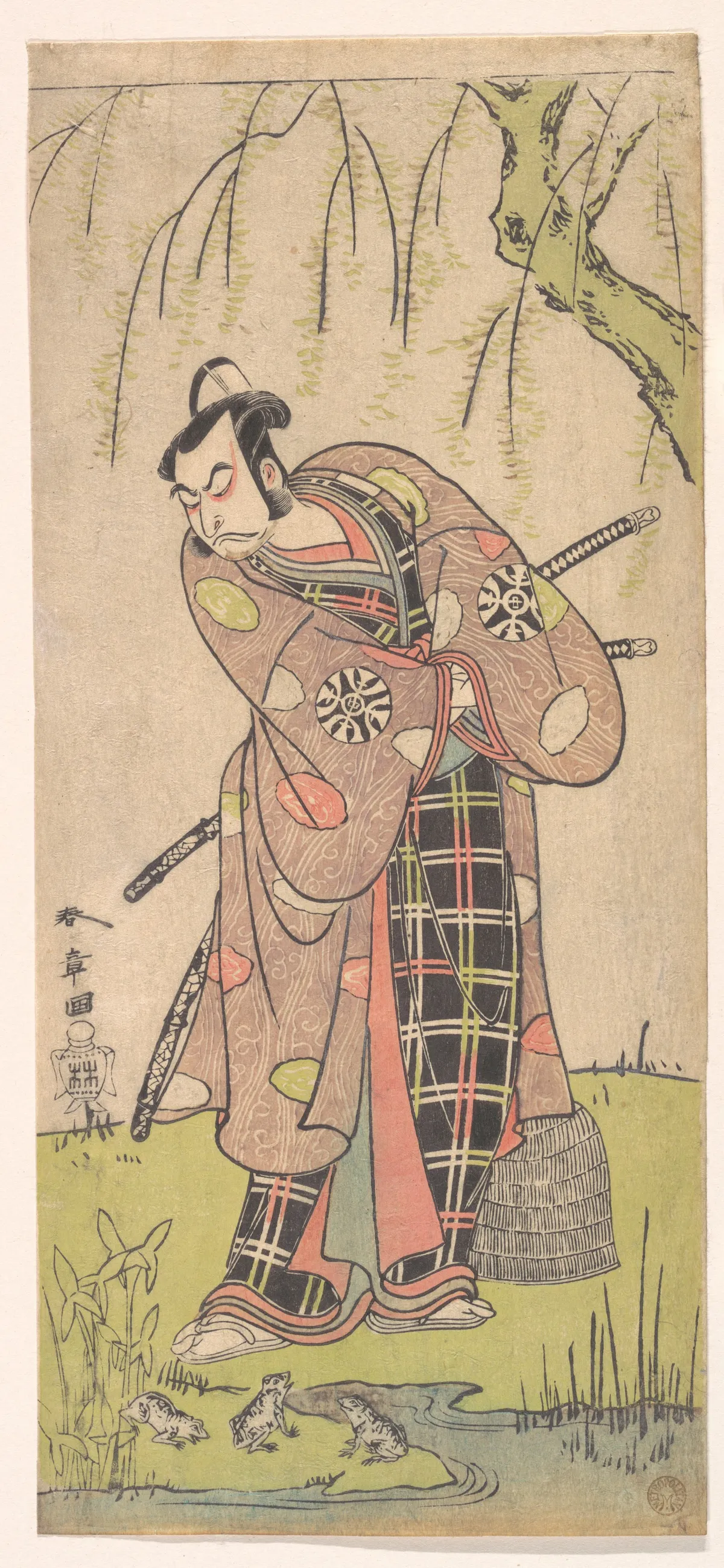
The First Nakamura Nakazo
The air is thick with the scent of rain-soaked earth. A lone samurai stands beneath the drooping branches of a willow tree. His armour glistens with moisture, catching the faint glow of distant lanterns. Nakamura Nakazo, the actor, inhabits his role with an intensity that blurs lines. His eyes, shadowed beneath the helmet's rim, search the darkness for unseen foes.
The willow sways gently, whispering secrets to the night. The samurai's hand rests upon his katana, fingers brushing the hilt with a practiced grace. He listens, attuned to the rustle of leaves and far-off footsteps.
The silence is heavy, punctuated only by the occasional drip of water from leaf to ground. The world contracts to the space beneath the willow, where a story of honour and duty unfolds.
Historical Echo
In the 18th century, the kabuki stage was a realm of transformation. Actors like Nakamura Nakazo became legends, their performances immortalised in woodblock prints. Katsukawa Shunshō captured this duality—the actor as both man and myth. The willow tree, a symbol of grace and resilience, frames the samurai's solitary vigil. It stands as a testament to the ephemeral beauty of Edo's theatrical world.