

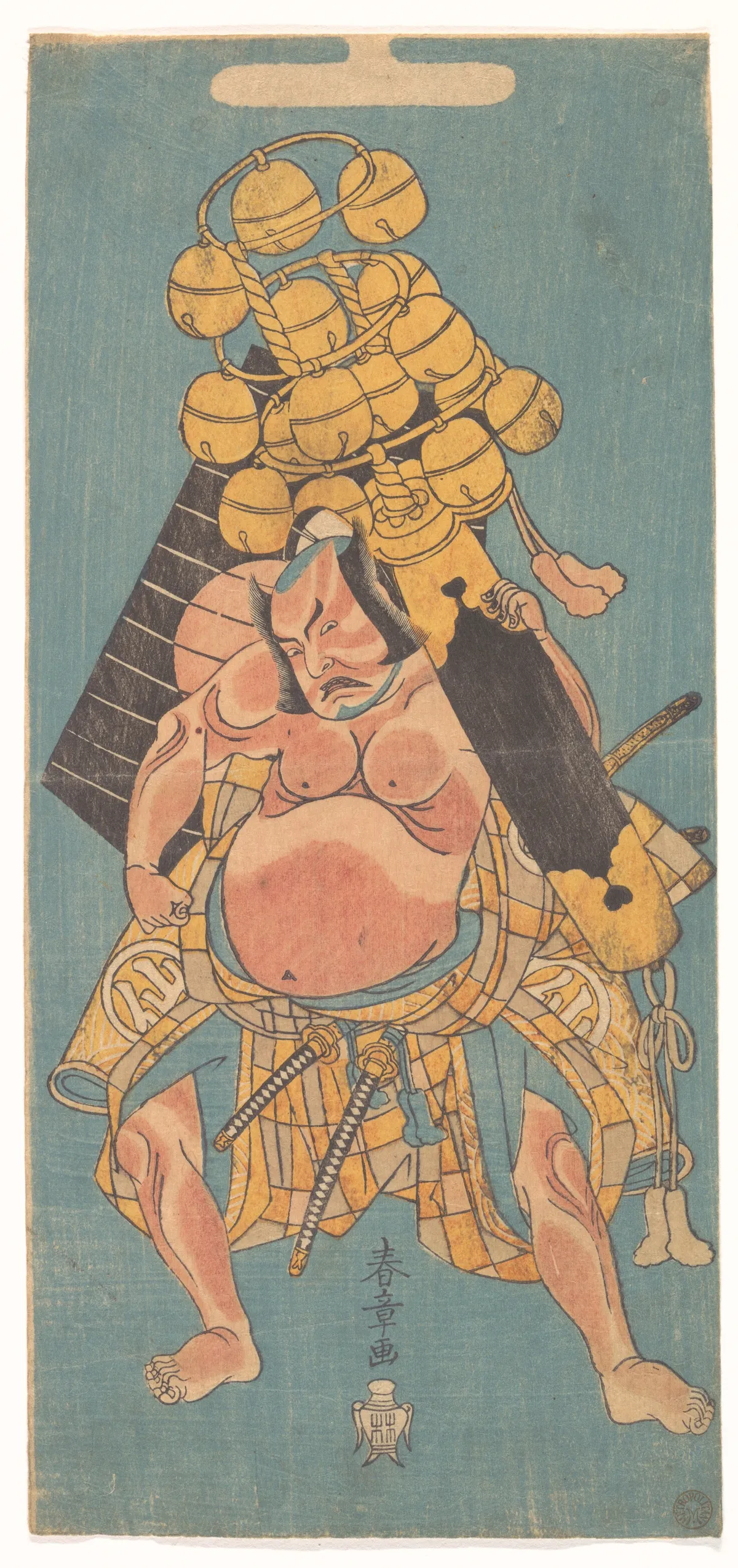
The Weight of Silence
A lone samurai stands on a dim stage. His armour glimmers under the soft glow of paper lanterns. The air is heavy, filled with the scent of incense and damp wood. He carries a suzu, its small bells whispering with each movement. The audience remains silent, their breaths held, suspended in the moment.
His eyes, shadowed beneath the helm, are distant. Perhaps they see beyond the theatre, into a world of battles and honour. The suzu, a symbol of purity, hangs lightly yet bears the weight of tradition. Each step he takes resonates with quiet authority, a dance of strength and grace.
The rustle of his garments echoes like distant waves. Outside, the night is still, save for the faint rustling of leaves. The samurai pauses, his presence commanding. In the silence, histories unfold, unseen yet deeply felt.
Historical Echo
Katsukawa Shunshō, a master of ukiyo-e, captured the essence of Edo's theatre world. In this print, The Second Nakamura Sukegoro embodies the samurai spirit on stage. Created in 1769 or 1770, it reflects the period's fascination with kabuki and the warrior's code. The suzu he carries is more than an accessory; it is a bridge between the sacred and the theatrical. Shunshō's work remains a window into a world where art and life were inseparable, where each performance was both an act and a rite.