

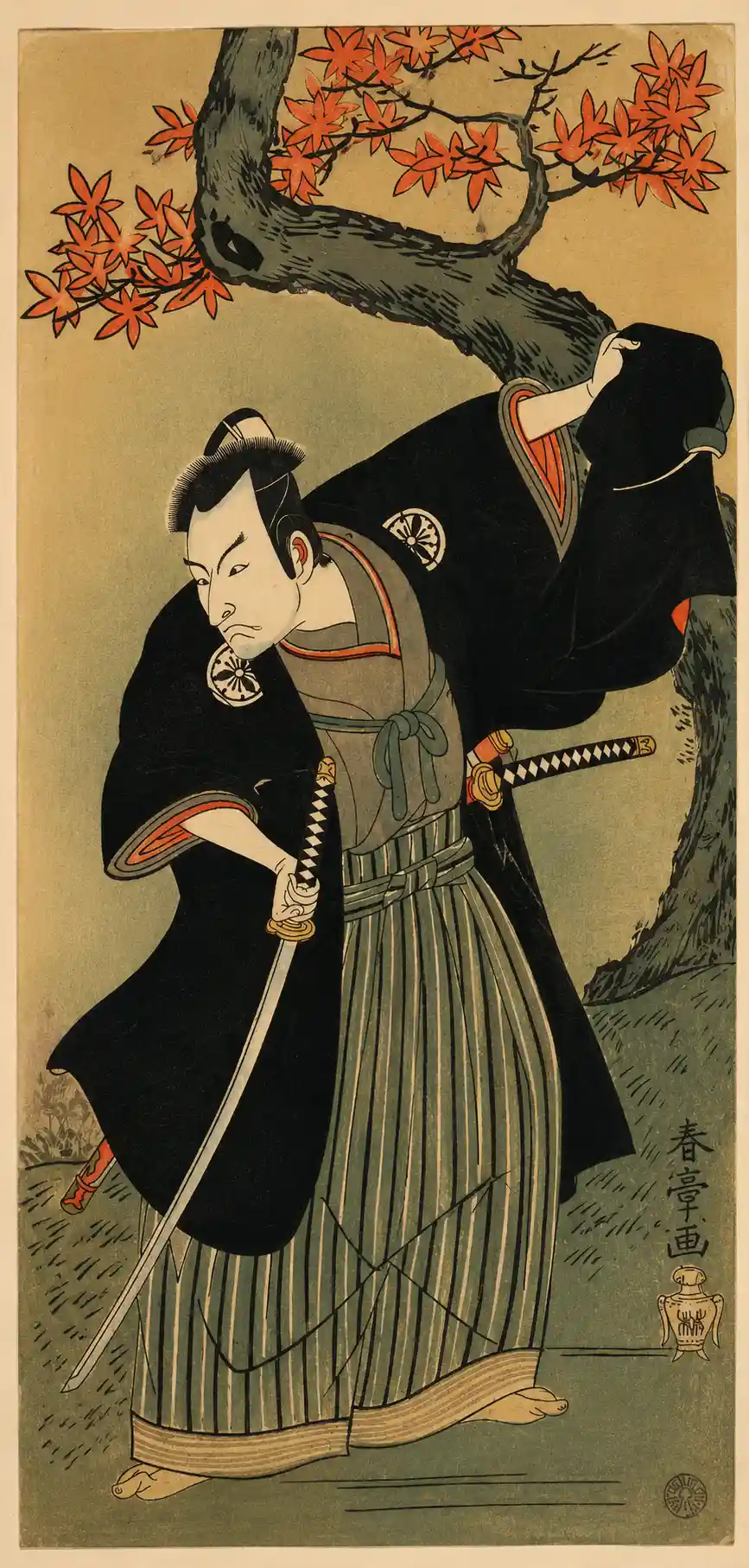
The Silent Shadow
The lanterns flickered in the dim air of the theatre. Matsumoto Koshiro stood alone, the silence thick around him. His armour gleamed softly, catching the faint glow of oil lamps. His gaze was steady, holding the weight of untold stories. The scent of ink and old wood mingled with the distant murmur of the city. His stance was poised, every muscle tense beneath layers of silk and metal.
A soft rustle echoed as his hand brushed the hilt of his sword. The audience, unseen but felt, held their breath. Koshiro's presence was a quiet storm, a force contained within the calm. He was the embodiment of the warrior spirit, a living reflection of the tales whispered through generations.
Time seemed to pause, the world narrowing to the space he occupied. His figure was a bridge between reality and the ethereal stage of Kabuki. Each line of his form was precise, deliberate, a testament to the discipline of his craft. As shadows danced along the walls, the echo of battles long past lingered in the air.
Historical Echo
Matsumoto Koshiro III was a renowned Kabuki actor, famed for his powerful portrayals of samurai. Katsukawa Shunshō captured this essence in woodblock prints, immortalising the theatrical majesty of the Edo period. In this print, the actor's presence transcends the role, becoming a part of the cultural memory of Japan. The art form was not just entertainment but a reflection of the times, a mirror to the values and aesthetics cherished by Edo society.