

Silent Duality
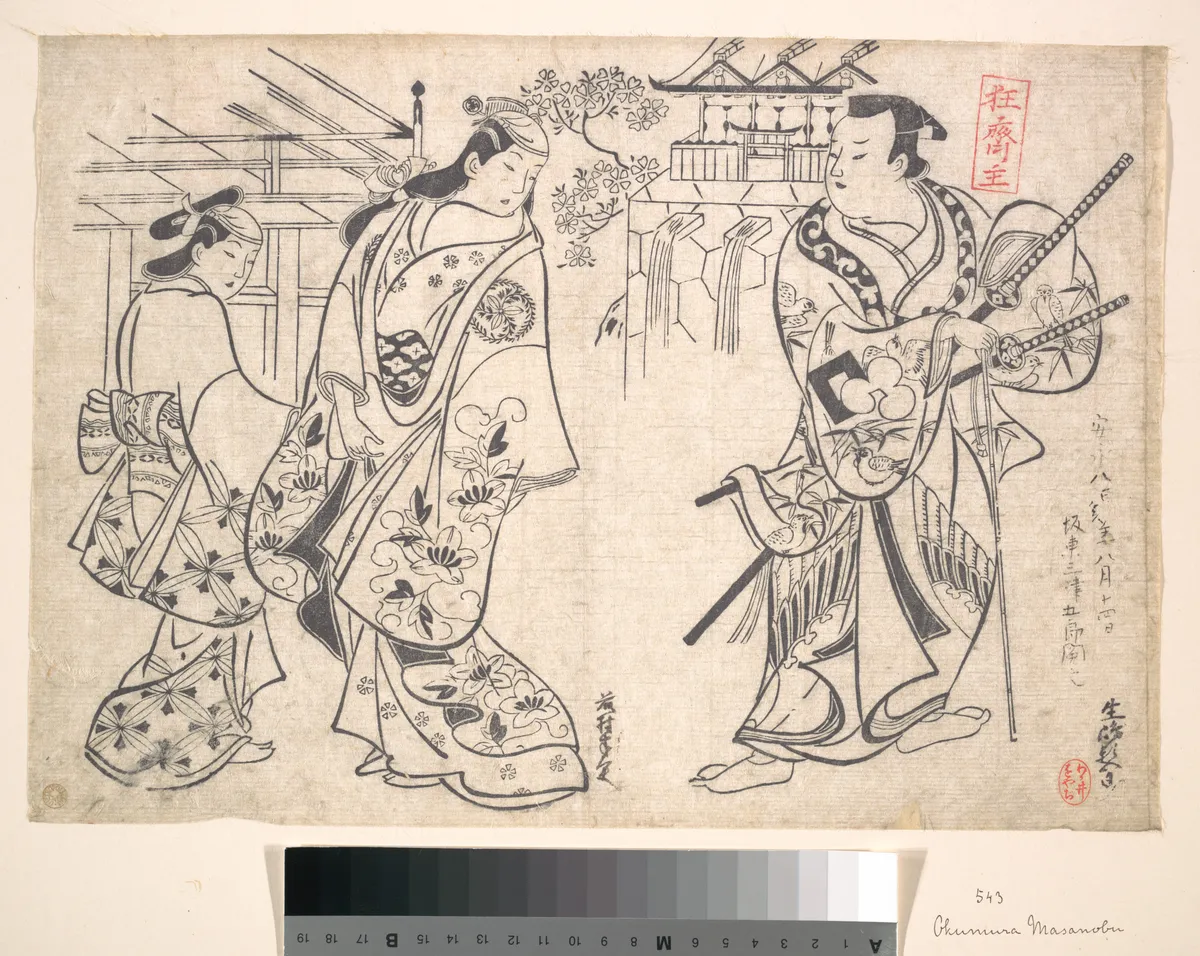
The dim light flickers against the paper walls. Shadows dance, extending long fingers over the tatami. The samurai stands, still as the mountain, his armour gleaming with the lustre of moonlit steel. His hand rests lightly on the hilt of his sword, a silent promise of protection—or threat.
Beside him, the woman, Ogino Yaegiri, sits with poised grace. Her kimono whispers with each subtle movement, a cascade of silk and restraint. Her eyes, like deep wells, gaze into the distance, past the room, past the present. A young girl, her attendant, lingers near her feet, holding a delicate fan, her presence as light as breath.
Outside, the wind murmurs through the pines. The air is thick with the scent of earth and rain, a reminder of the world beyond this tense tableau. The samurai says nothing. The woman says nothing. Silence, heavy and potent, fills the space between them, between their worlds of duty and defiance.
The candle flickers once more, casting a brief glow over the scene. A moment suspended, caught between history and the shadows of the night.
Historical Echo
This print by Okumura Masanobu, crafted in the Edo period, captures the poised elegance of a samurai and a woman in quiet confrontation. The scene, dated to around 1709, reflects the duality of roles and the unspoken stories within the rigid structures of Edo society.