

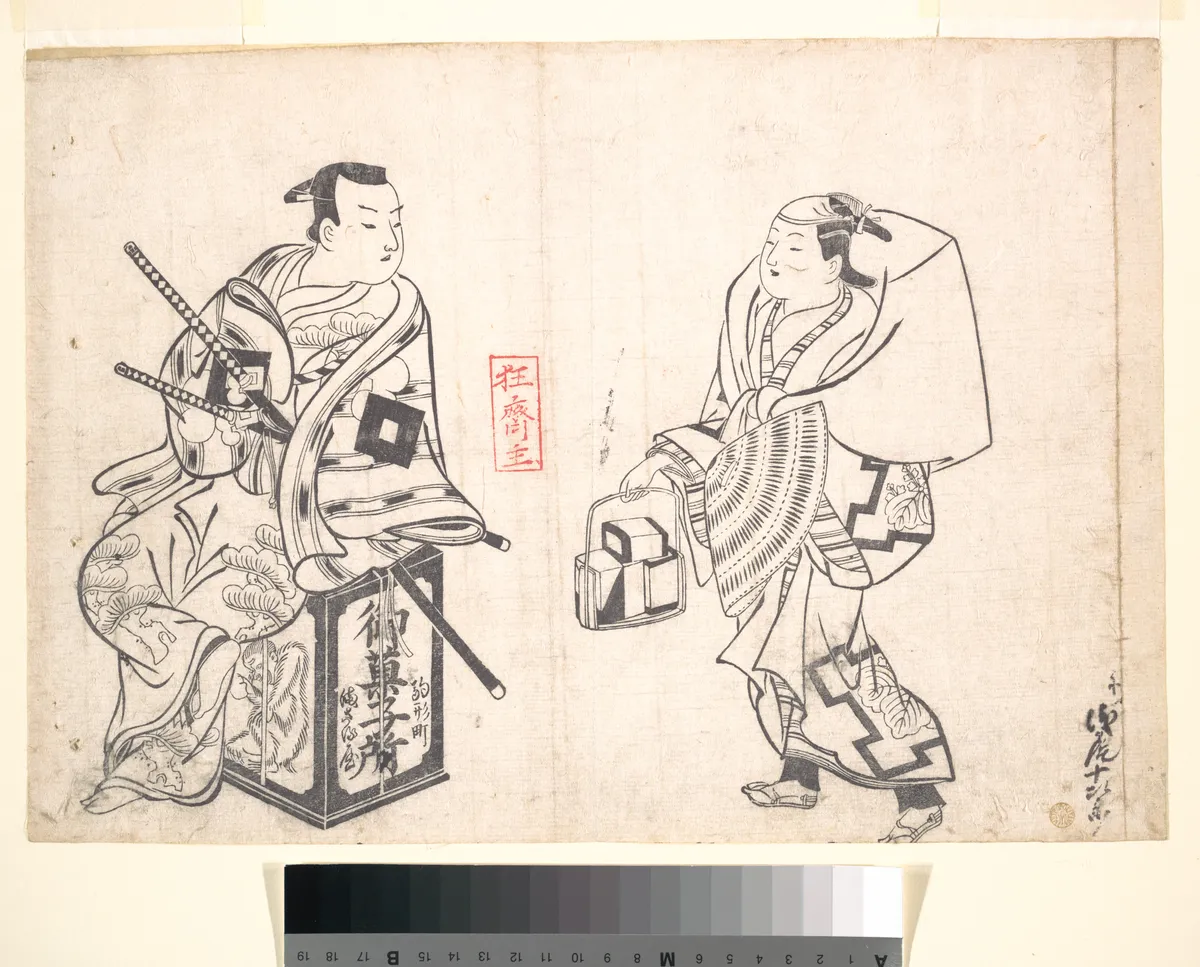
The Lacquer Box Encounter
In a dimly lit corner of Edo, a cake seller pauses. His wooden sandals tap softly on the cobblestones. Beside him, a samurai sits with quiet authority. He rests on the vendor's lacquer box, the wares beneath ignored for now. The air is thick with the scent of sweet bean paste. The samurai, Ikushima Shingoro, examines his surroundings with a steady gaze. His armour reflects the glow of a nearby lantern. The cake seller, Asao Jujiro, adjusts his robe, the fabric whispering against the night.
Their eyes meet. A wordless story unfolds. This is no ordinary meeting. The lacquer box, lacquer smooth and black, holds more than confections. It holds secrets. The samurai, ever vigilant, senses the weight of unsaid words. He shifts slightly, the box creaking under his weight. Jujiro, accustomed to the mundane rhythm of sales, now finds himself in a silent play. His heart beats, a subtle drum in the stillness.
All around, the night continues. The city breathes. Somewhere, a paper lantern sways, casting shadows that dance like fleeting memories. The two men remain, bound by the moment. An unspoken understanding sparks between them, a connection as ephemeral as the woodblock print itself.
Historical Echo
During the Edo period, kabuki actors often portrayed dramatic encounters in ukiyo-e prints. Okumura Masanobu captured such moments with precision. His work reflects the era's fascination with theatre and samurai culture. The actors, Asao Jujiro and Ikushima Shingoro, embody roles beyond mere performance. They become the very essence of their characters, blurring the line between reality and artifice. This print, from 1709, whispers tales of Edo's vibrant streets, where every corner held a potential story waiting to unfold.