

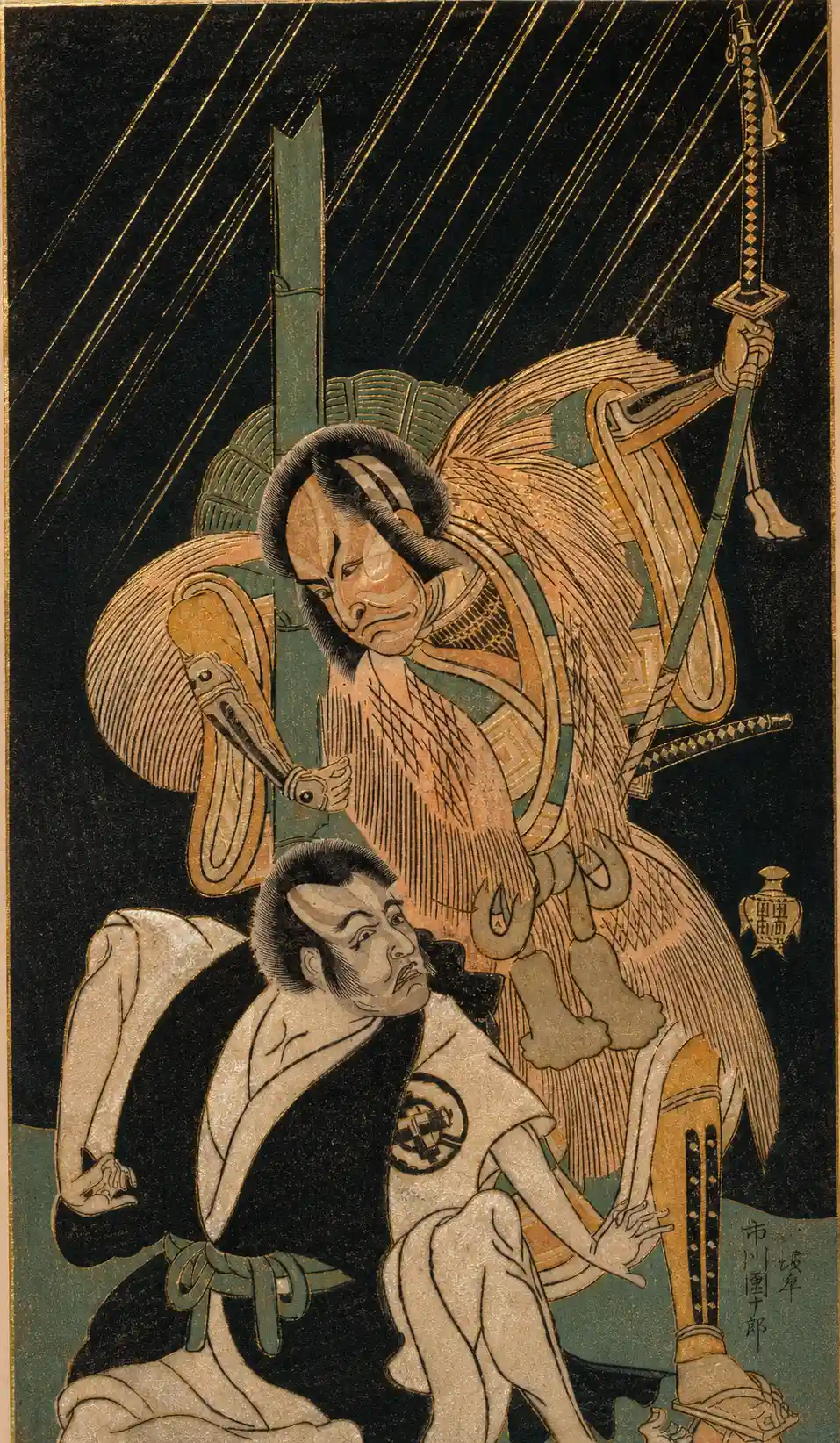
In the Glow of Candlelight
The dim light flickered over the stage. Shadows danced across the faces of the actors, Ichikawa Danjūrō IV and Nakamura Utaemon I. The air was thick with anticipation, the scent of incense curling through the theatre. Ichikawa, as Yakko Yodohei, stood firm. His posture was defiant, eyes sharp beneath the painted eyebrows. Beside him, Nakamura as the monk Kiyomizu no Seigen, exuded a serene presence. His robes draped elegantly, whispering against the wooden floor with each subtle movement.
The audience sat in silence, breaths held, eyes wide. The weight of history pressed upon the room. Each gesture, each pause, was steeped in tradition. The actors moved with practiced grace, their voices resonating with the authority of their lineage. The play unfolded like a whispered secret, the echoes of past performances clinging to the air.
Outside, the night was still. The moon cast its pale light upon Edo, a city caught between shadows and dreams. Within the theatre, time seemed to stand still. Here, in this sacred space, the actors brought to life stories that had been told for generations. The audience, spellbound, became part of the tale, their lives momentarily entwined with the characters on stage.
The performance reached its climax. Ichikawa and Nakamura, locked in a silent exchange, conveyed a thousand unspoken words. The final notes of the music lingered, a haunting echo that would remain with the audience long after the curtain fell.
Historical Echo
In 1769, the world of Kabuki thrived in Edo. Katsukawa Shunshō, a master of capturing theatre's essence, immortalised these moments. Actors like Ichikawa Danjūrō IV and Nakamura Utaemon I were revered, their performances a blend of artistry and tradition. In this print, the essence of Kabuki's golden age is captured, a testament to the enduring power of performance.